
Same-day & Next-day Delivery

Quality Guaranteed

Unlock Your Welcome Offers: FREE Delivery | Up to 80% OFF | Free 30-day JoyPlus trial
Download the APP
A first-aid kit often contains several types of adhesive bandages and medical tape, but each is designed for a specific purpose. A ready-to-use bandage is sufficient for a small cut on a finger, while medical tape is primarily used to secure a dressing. Sensitive skin, sports activities or exposure to water : choosing the right adhesive material can make all the difference.
Before buying, three common mistakes are worth avoiding :
A bandage for minor wounds generally includes a dressing pad and is applied directly to cleansed skin. It is available in several formats : ready-to-use strips, stretch versions and cut-to-size rolls.
Medical tape, also known as fixation tape, is mainly used to secure a sterile dressing, a bandage or certain medical devices. It should not be confused with a bandage designed to cover an open wound directly. Some rolls can be torn by hand, making them convenient for use at home without having to find a pair of scissors.
To prevent a blister, a blister-prevention strip should be applied to an area exposed to friction before the lesion appears. It is not intended to treat an existing blister or damaged skin.
Stretch textile materials follow the body’s movements. They are especially practical for fingers, joints, elbows and knees. Micro-ventilated or breathable materials encourage airflow around the covered area, in line with the characteristics stated on the packaging.
If your skin reacts easily, look for the terms natural latex-free, for sensitive skin, hypoallergenic adhesive or gentle removal. These indications describe the product’s design, but do not constitute an individual medical guarantee. If redness, itching or discomfort occurs, remove the bandage and stop using it.
Measure the area to be covered and check the product’s exact dimensions. A 5 m x 1 cm roll is suitable for securing small dressings, while a 6 cm x 1 m or 8 cm x 1 m roll can be cut to cover larger or irregular areas.
For waterproof bandages, check that they feature a non-stick dressing pad and a material advertised as water-resistant. Replace the bandage as soon as it comes loose, becomes damp or gets dirty, following the manufacturer’s recommendations. Single-use products must not be reused.
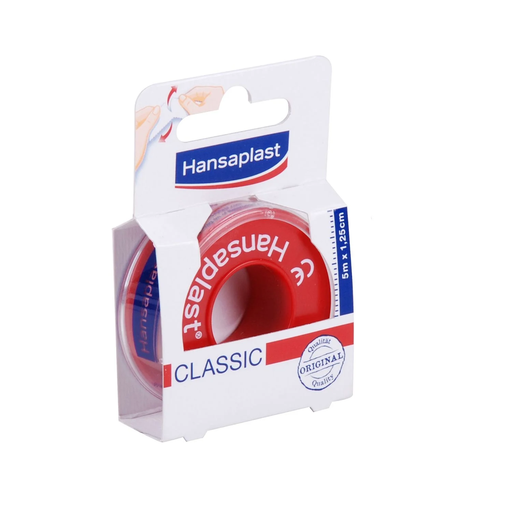
Why it suits this profile : a versatile roll to keep at home for securing dressings or bandages.
Its dimensions are clearly stated and the tape tears by hand. There is no need to buy a pre-cut format for simple fixation tasks.
5 m x 1 cm roll, adhesive designed to secure dressings and latex-free construction.
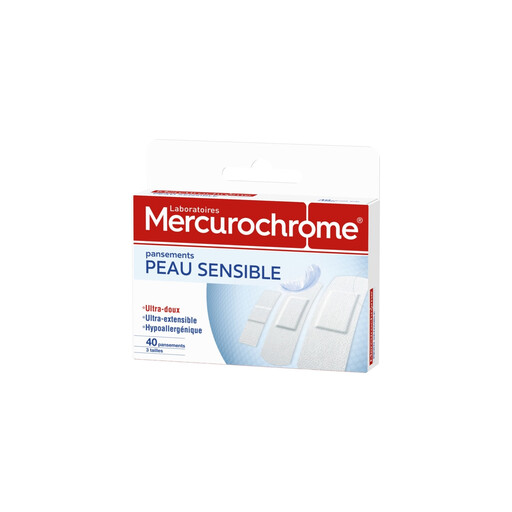
Why it suits this profile : three sizes and a stretch textile for everyday minor cuts and grazes.
The hypoallergenic design claim is complemented by an ultra-soft material and removal described as gentle.
Box of 40 bandages in small, medium and large sizes, with stretch, breathable textile.
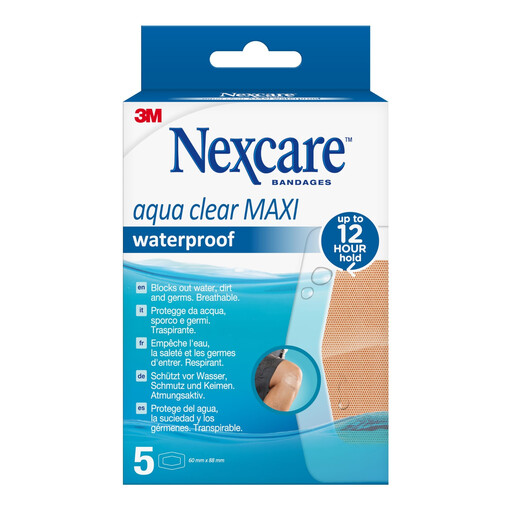
Why it suits this profile : a maxi format for minor wounds, grazes or blisters exposed to moisture.
The product specifies its dimensions, water-resistant material and stated wear time of up to 12 hours.
Five bandages per box, non-stick dressing pad, flexible and breathable material, natural latex-free.
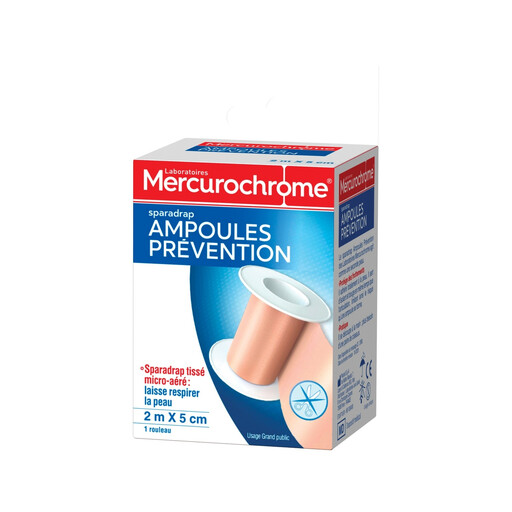
Why it suits this profile : a strip to apply to heels, toes or any area exposed to friction before walking or taking part in sports.
Its intended use is clearly limited to blister prevention : the product is not presented as a treatment for an existing blister.
2 m x 5 cm roll, woven material, hand-tear design and removal advertised as leaving no residue.
We have brought together an up-to-date selection of products suited to different first-aid needs, from fixation and protection to comfort.
Sterile bandages are suitable for situations requiring individually wrapped protection. In the event of a deep, infected or heavily bleeding wound, an animal bite or a serious burn, an over-the-counter bandage is not a substitute for medical advice.
It depends on the model and its condition. Some waterproof bandages claim to stay in place for up to 12 hours. In all cases, replace it sooner if it becomes damp, dirty or begins to peel away. Always consult the instructions or information provided on the packaging.
Choose a natural latex-free, breathable or micro-ventilated material with a sensitive-skin claim or hypoallergenic design. Remove it gradually and stop using it at the first sign of irritation.
A cut-to-size roll allows you to adjust the length precisely to a dressing or irregular area. A ready-to-use format is quicker for minor wounds and easy to store in a bag or first-aid kit.