
Livraison le jour même ou le lendemain

Qualité garantie

Débloquez vos offres de bienvenue: Livraison GRATUITE | Jusqu'à -80 % | 30 jours d'essai gratuits à JoyPlus
Téléchargez l'application
By the Joybuy Team, Your Product Experts – August 26, 2026
Looking to give your kitchen or bathroom a fresh new look without committing to a lengthy, expensive project? The adhesive backsplash is a game-changing solution: it's fast, affordable, and accessible to any DIY enthusiast, even beginners. However, the market is flooded with products making various claims, and it's easy to fall into common traps that can turn this clever renovation project into a real headache.
As product experts at Joybuy, our mission is to help you navigate the options. We're breaking down the mistakes to avoid and the essential criteria for making a choice that will stand the test of time.
Before you fall for a trendy pattern, be wary of these common flaws, which aren't always visible at first glance.
To avoid buyer's remorse, focus on three features that make all the difference.
Forget simple printed vinyl sheets. High-quality models consist of a vinyl base coated with a layer of epoxy resin gel. It's this layer that creates a true 3D adhesive wall panel effect.
This is a non-negotiable criterion, whether for a kitchen or a peel-and-stick bathroom backsplash. Always check the manufacturer's recommendations.
The size of the tiles or panels matters. The larger the panels (e.g., 30x30 cm), the fewer joints you'll have to align, resulting in a faster installation and a more uniform look. Some models feature overlapping edges, ensuring a perfect junction and better sealing. It's a detail that makes all the difference for an easy kitchen renovation without the hassle.
To help you visualise these criteria, here are a few options that meet specific needs while avoiding the pitfalls mentioned.
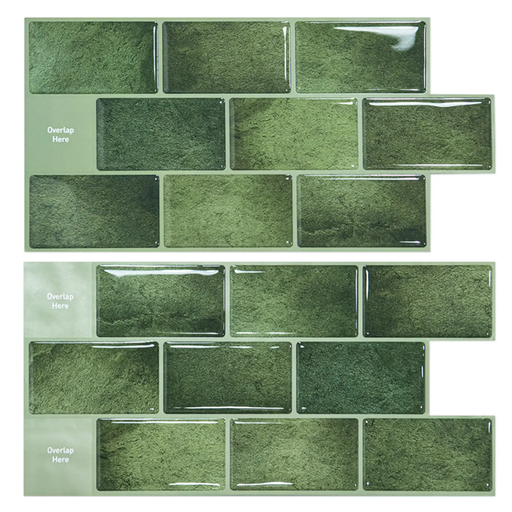
Why we love it: Perfect for getting the subway tile look, a huge star in modern kitchens. The green colour adds a fresh touch without the installation hassles of traditional tile.
Its 3D epoxy resin finish offers a realistic texture, a world away from the flat effect of a simple sticker. The material is designed to be water-repellent and easy to clean.
Its large panel format (30x30 cm) ensures a quick installation and a uniform finish with minimal visible seams.
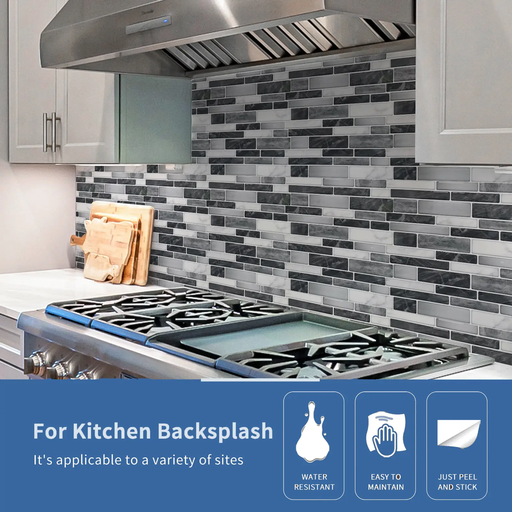
Why we love it: The ultimate robust solution for covering old tile, even if it's slightly uneven. Its powerful adhesive is a major plus for long-lasting application on tile, cement, or plaster.
It counters the risk of peeling with its powerful adhesive, designed for long-term hold, even in humid environments. The thickened gel layer ensures excellent durability.
Highly versatile, it adheres to many surfaces and isn't afraid of moisture. It's a trusted ally for renovating a kitchen, laundry room, or toilet.
Is your wall looking brand new? Now, think about optimising your space's organisation. The right storage and protection solutions can complete your kitchen's transformation and make it even more functional.
Discover our selection of products to protect and organise your kitchen, all compliant with the strictest standards.
It all depends on the quality of the product and the care taken during installation. A good adhesive kitchen tile, properly installed on a clean, dry, and smooth wall, can last for several years without shifting. Of course, direct exposure to high heat or continuous water will reduce its lifespan.
Yes, but with a few precautions. It is imperative to consult the manufacturer's specifications on heat resistance. Most vinyl and epoxy resin models can tolerate indirect heat, but it is crucial to maintain a safety distance of at least 15 to 20 cm from the heat source. For gas hobs, which generate more intense heat, installing a stainless steel or glass hob backsplash panel between the hob and the adhesive backsplash is highly recommended.
Removal is quite simple if done correctly. Use a hairdryer to heat the surface and soften the glue. Then, gently peel it off starting from a corner. Pull slowly, keeping parallel to the wall to avoid tearing off the paint or the underlying surface. For any glue residue, a bit of rubbing alcohol or an adhesive remover will do the trick, after testing on an inconspicuous area.