
Livraison le jour même ou le lendemain

Qualité garantie

Débloquez vos offres de bienvenue: Livraison GRATUITE | Jusqu'à -80 % | 30 jours d'essai gratuits à JoyPlus
Téléchargez l'application
Looking to modernise your kitchen or bathroom without committing to a messy, full-scale renovation? The adhesive backsplash promises an effortless upgrade at a great price. But be warned: not all products are created equal. Our editorial team's mission is to guide you through the jungle of options to help you make the right choice. We're breaking down the key things to watch out for to ensure a successful purchase.
The market is full of tempting promises, but disappointment is often just around the corner. Here are the 3 traps you must avoid.
To get it right the first time and ensure a durable, beautiful result, scrutinise these three criteria before making a purchase.
The choice of material determines the look, longevity, and ease of maintenance of your future backsplash.
A non-negotiable criterion for kitchens and bathrooms.
One of the main selling points of an adhesive backsplash is its simple installation. To avoid turning the project into a nightmare, choose products that come with clear instructions. The golden rule: the application surface must be perfectly smooth, clean, and dry. Proper surface preparation is the key to flawless adhesion. A crucial point for renters: make sure the backsplash can be removed without leaving behind stubborn adhesive residue.
Let's get practical with our selection of products that check all the boxes for the criteria we've just discussed.
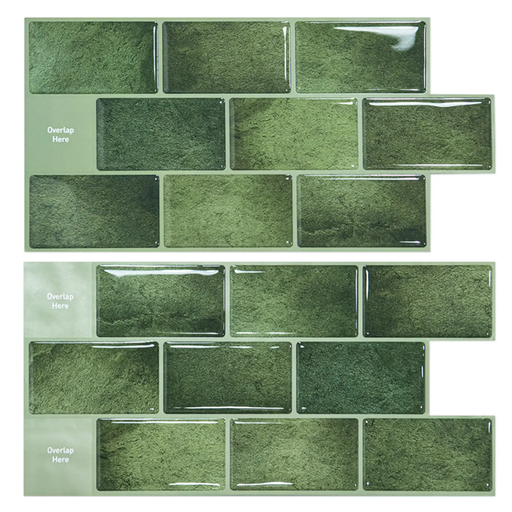
Why we chose it: Perfect for recreating the timeless aesthetic of subway tile without the installation hassles. Its subway green colour brings a fresh, modern touch to a kitchen or laundry room.
Its 3D epoxy gel layer offers a strikingly realistic depth and shine, a far cry from the flat, *cheap* look of simple stickers. The finish does an excellent job of mimicking the texture of a real tile.
Its large panels (30 x 30 cm) speed up installation and reduce the number of seams. The result: a more seamless and professional-looking finish.
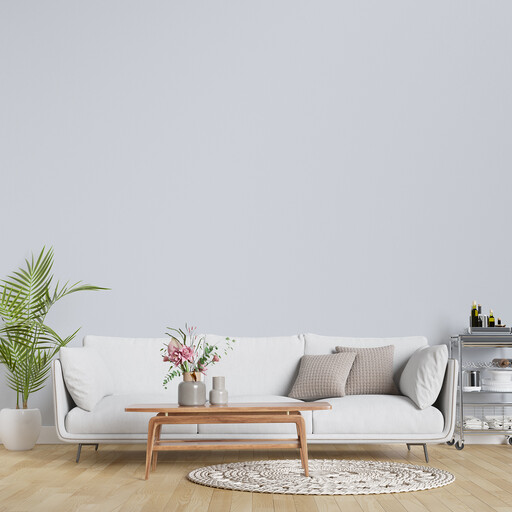
Why we chose it: The perfect solution for a clean, contemporary look. More versatile than a simple faux-tile sticker, this wall covering can be used to create an accent wall, update cabinet doors, or modernise a piece of furniture.
Made from high-quality PVC vinyl, it is both durable and washable. Its excellent water resistance makes it far more reliable than budget paper alternatives that wouldn't survive splashes.
Its roll format (covering approx. 1.8 m?) is very economical for large projects. It offers an excellent price-per-area value for a major renovation.
Discover our full selection of products that meet our quality standards and all current regulations.
1. Can an adhesive backsplash be installed behind a cooktop? It all depends on the material. As a general rule, standard vinyl backsplashes are not suitable for this purpose. For use as a backsplash behind a stove, it is imperative to choose a product explicitly designed to be heat-resistant (like aluminium composite) or to verify that the technical specifications permit installation behind a cooktop, while respecting a safe distance (usually a minimum of 15 cm).
2. How long does an adhesive backsplash last? The lifespan of an adhesive backsplash depends on three factors: the quality of the product, the preparation of the surface, and the usage conditions. A high-quality model, properly installed on a sound surface in a low-exposure area, can last for several years without peeling. In a kitchen or bathroom, you can expect an average lifespan of 2 to 5 years for a mid-range product.
3. Are peel and stick tiles truly waterproof for a bathroom? Yes, most models of peel and stick bathroom tiles are designed to be water and humidity resistant. However, this does not mean they can withstand continuous submersion. You can confidently install them around a sink or over old ceramic tiles, but you must avoid applying them inside a shower enclosure, where contact with water is direct and constant. Ensuring the seams between the panels are well-sealed is also crucial to prevent water infiltration.