People who prepare meals in advance
If you freeze a variety of portions and ingredients that you use regularly, drawers or compartments can help you sort them and find what you need. Check the layout of the model you’re considering.


If you often reach for pre-prepared portions, choose an upright freezer with compartments. For bulk storage, consider a chest freezer, provided you can keep food at the bottom organised and easy to find. A compact model is suitable if you only need a little extra space, while a larger fridge freezer is worth comparing if you also need to replace your current appliance. In every case, check the usable capacity, the space needed to open the door or lid, annual energy consumption and, if the freezer will be kept in an unheated room, the model’s permitted ambient temperature range.
If you freeze a variety of portions and ingredients that you use regularly, drawers or compartments can help you sort them and find what you need. Check the layout of the model you’re considering.
If you can set aside floor space for bags, large packs or batches of prepared food, compare the net capacity and baskets of chest freezers. You’ll need to be able to find food stored at the bottom easily.
In a small kitchen, under a worktop or in an unheated room, measure the space needed for installation and opening. If you’re placing the freezer in a cellar, pantry or garage, also check the permitted ambient temperature range for the exact model.
UFC-Que Choisir highlights factors such as freezer type, capacity and climate class when choosing a freezer. Before comparing appliance specifications, decide whether your priority is finding individual portions, storing food in bulk or fitting the appliance into the space available.
Consider this if: you regularly need to find individual portions and a variety of frozen foods in drawers or compartments.
Bear in mind: how much room there is for your larger containers depends on the model’s internal layout.
Consider this if: you buy food in bulk and have floor space for a freezer with top access.
Bear in mind: food at the bottom is less accessible, so baskets and storage zones become more important.
Consider this if: you only need a modest amount of extra space to supplement your existing freezer compartment in a small space.
Bear in mind: it may not have enough capacity for bulk shopping or lots of meals in containers.
Compare this if: you need to replace your current appliance and also need more fridge space.
Bear in mind: the freezer capacity and layout are limited to those of the fridge freezer you choose, with no separate storage reserve.
| Factor | What to check | Relevant to |
|---|---|---|
| Access to portions | Layout of the drawers or compartments; room for your usual containers. | When I often reach for a prepared meal, I want to find it without moving the rest of the food. Around 31% of consumers prioritise easy everyday access. |
| Available space | Appliance dimensions, delivery access, door or lid clearance and ventilation gaps. | In a small kitchen, I need an appliance that leaves enough room to move around and open it. This is a priority for around 31% of consumers. |
| Bulk storage | Net capacity, internal dimensions if provided, and baskets suitable for large packs. | For storing bags of frozen food or several prepared meals at once, I want a freezer where I can organise the bottom. Around 23% of consumers put storage capacity first. |
| Unheated rooms and energy use | The model’s ambient temperature range and the room’s temperatures; annual energy consumption in kWh and net capacity for comparing similar appliances. | If the appliance is going in a cellar, pantry or garage, I need to make sure the room’s temperatures are suitable while keeping an eye on its ongoing energy use. This is the priority for around 15% of consumers. |
Portions and food you use often can be difficult to find behind your reserve stock.
Check which baskets are supplied or compatible, then create storage zones and label containers with their contents and date.
According to Whirlpool France, the climate class indicates the ambient temperatures an appliance is designed for; check this for each model.
Note the room’s minimum and maximum temperatures, then compare them with the range stated in the technical specifications or user manual.
Two appliances may not meet the same storage needs. ADEME points out that a freezer runs continuously, so annual energy consumption should also factor into your decision.
For similar capacities and uses, compare the energy label, stated kWh/year, net capacity and noise level.
An upright freezer needs space in front of its door, while a chest freezer needs clearance above its lid. The user manual may also specify ventilation gaps.
Before ordering, measure the delivery route and the space where the freezer will go, then check the opening clearance and required ventilation gaps.
A brand worth considering if the internal layout of an upright freezer is important to you.
A brand worth considering for both upright freezers and some chest freezers designed for cold rooms.
A brand to consider when comparing the layouts of chest and upright freezers.
A brand to consider if you’re comparing a large upright freezer with the option of replacing your fridge freezer.
These models offer three ways to add frozen food storage: an upright freezer for portions, chest freezers with storage zones, and a small upright freezer when space is limited. If you’re thinking of replacing your fridge freezer instead, compare the freezer capacity of the combination models separately.
 Image unavailable
Worth considering if you want to store portions in a dedicated upright freezer. The product name lists a capacity of 161 L, No Frost and an energy rating of C. Confirm the exact storage layout, then check the dimensions, kWh/year and ambient temperature range for your intended location.
 Image unavailable
Worth considering for bulk frozen food, if you can access the freezer from above and organise the food at the bottom. The product name lists fridge or freezer modes, a removable basket and an E energy rating. Check the ambient temperature range before installing it in a garage or cellar.
 Image unavailable
Worth comparing if you need a little extra storage rather than space for bulk shopping. The product name lists a reversible door and an E energy rating. Measure the space and check the annual energy consumption and ambient temperature range before buying.
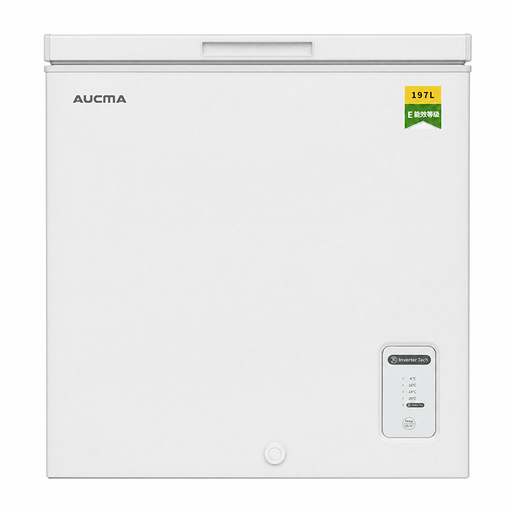 Image unavailable
Worth considering if you want to build up a stock of frozen food in a chest freezer while setting aside zones to help you find what you need. The product name lists fridge or freezer modes, a removable basket and an E energy rating. Check the clearance needed for the lid and the model’s ambient temperature range.
 Image unavailable
Worth considering for a modest storage boost if a top-opening lid suits your room. 95 L may not be enough for lots of prepared meals or bulk shopping. The product name lists a removable basket, fridge or freezer modes and an E energy rating. Check the ambient temperature range before installing it in an unheated room.
No. The ambient temperature range specified for the model must cover the temperatures in the room. Whirlpool France says the climate class is shown on the rating plate and in the technical specifications. Check the room’s minimum and maximum temperatures. Liebherr’s stated suitability for its FrostProtect chest freezers at temperatures down to –15 °C does not extend to other appliances.
Compare the energy rating and annual energy consumption in kWh for appliances with similar capacities and uses, then look at net capacity and noise level. ADEME points out that a freezer runs continuously, so the energy rating alone doesn’t tell you everything about the balance between capacity and electricity use.
No. NoFrost is designed to limit ice build-up and the need for defrosting, but care instructions vary by model. Check the user manual for guidance on ventilation, cleaning and installation.