
Livraison le jour même ou le lendemain

Qualité garantie

Débloquez vos offres de bienvenue: Livraison GRATUITE | Jusqu'à -80 % | 30 jours d'essai gratuits à JoyPlus
Téléchargez l'application
What a joy it is for a parent or grandparent to watch a child explore, climb, and build self-confidence! An activity gym is the ideal solution for channelling this boundless energy at home, especially on rainy days. But be warned: the market is vast, and it's easy to fall into common traps that turn a great investment into a bulky, neglected object.
Before you decide, beware of these two common pitfalls:
This guide is here to help you see more clearly and make an informed choice, focusing on the criteria that truly separate a purchase you'll regret from a play area that will grow with your child for years.
To choose an activity gym that is both safe and durable, two parameters are non-negotiable. They are the foundation of a smart purchasing decision, far beyond marketing claims.
Safety is the number one criterion. A product intended for toddlers must comply with European standards. The "CE" mark is a prerequisite, but the real seal of approval is compliance with the EN 71 standard, known as the "toy safety standard." It is broken down into several parts:
In practical terms, here’s what this means for each type of gym:
A good activity gym should be able to evolve with a child's age and imagination. The ability to reconfigure the elements is what maintains long-term interest.
Because every family and every child is unique, here is a selection of products that meet different needs, while respecting the safety and modularity criteria we've just discussed.
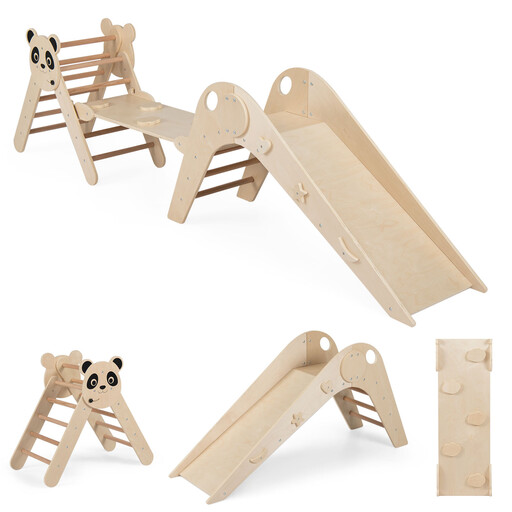
Why we love it: Ideal for a safe introduction to climbing. Its 3-in-1 design (triangle, slide/tunnel, balance bridge) offers a great variety of play without taking over the living room. Perfect for apartments or families who want an easy-to-store play solution.
Its solid beech wood and plywood construction ensures excellent stability and durability, a far cry from low-end models. The foldable feature directly addresses the problem of bulkiness and lack of modularity in a limited space.
Versatility and space-saving design. The triangle folds for easy storage against a wall, making it a practical solution for everyday use.
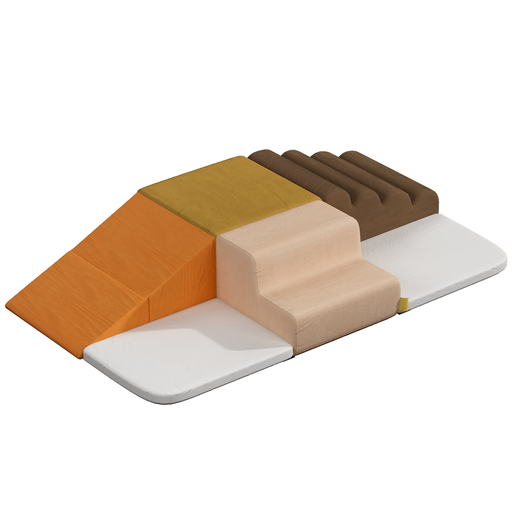
Why we love it: This set of soft play modules is a true invitation to creativity. It allows for building an infinite number of courses, forts, or slides. It's the ideal solution for children who love to invent their own games and for parents looking for a Montessori-inspired toy that promotes autonomy.
The certified high-density foam ensures the blocks won't sag, thus avoiding the low-durability trap. Compliance with EN71 standards, a non-slip base, and washable covers make it a safe product designed for intensive use.
Modularity and easy maintenance. The play possibilities are limitless, and the removable, machine-washable covers make cleanup a breeze.

Why we love it: For those who want to create a true indoor play area. This set combines climbing blocks and a ball pit (balls not included), offering dual stimulation: motor and sensory. It's the perfect all-in-one solution for siblings or daycare providers.
By offering a wide variety of activities, it combats boredom and the lack of modularity. The quality of the materials (high-density foam, EN71 compliance) and safety details (non-slip bases, sturdy fasteners) make it a long-lasting investment.
2-in-1 Solution. Combines active climbing with the sensory play of a ball pit, addressing different developmental needs in one cohesive and secure set.
Explore our full, up-to-date selection of products that meet our demanding criteria for quality and safety.
It all depends on the type of structure. Soft foam climbing blocks can be used as soon as a baby starts to crawl, usually around 8-10 months, to help them navigate small obstacles. Wooden structures like the Pikler triangle are generally recommended from 12-18 months, when the child can stand and is starting to want to climb. In all cases, it is essential to follow the manufacturer's recommended age and ensure constant adult supervision.
Hygiene is paramount. Choose a model with removable and machine-washable covers. This is by far the easiest and most effective way to keep the play environment clean. For everyday spills, a damp cloth is sufficient. Always let the covers air dry completely before putting them back on.
Not necessarily. Durability depends primarily on the quality of the materials. A well-designed structure made of solid wood (beech, birch) is extremely sturdy and can last for years. Likewise, an activity module made with high-density foam and a durable cover will not sag and will withstand years of play. The choice between wood and foam will therefore depend mainly on the type of play you want to encourage (structured climbing for wood, creative building for foam) and your child's age.