
Livraison le jour même ou le lendemain

Qualité garantie

Débloquez vos offres de bienvenue: Livraison GRATUITE | Jusqu'à -80 % | 30 jours d'essai gratuits à JoyPlus
Téléchargez l'application
Whether you're a content creator, an extreme sports enthusiast, or an avid traveller, choosing the right action camera can quickly become a headache. The market is flooded with technical promises and marketing jargon. Our mission? To help you decode spec sheets, identify the criteria that truly matter for your needs, and, most importantly, steer clear of bad investments.
Before diving into our selection, let's break down the 3 most common traps that can cost you dearly (and ruin your videos).
Spec sheets love to flaunt impressive resolutions like 8K. While the number looks great on paper, the reality is less glorious: disproportionately large video files that saturate your memory cards and hard drive in record time, and which require a powerhouse computer for editing. Let's be clear: for the vast majority of uses, including sharing on YouTube or social media, a well-optimised 4K action camera offers more than enough image quality, is smoother, and is infinitely easier to work with.
For action videos, good stabilisation isn't an option—it's a necessity. But be warned, not all technologies are created equal. A basic electronic image stabilisation (EIS) often just aggressively crops into the image to compensate for shakes, resulting in a loss of quality and a reduced field of view. Advanced gyroscopic stabilisation (on 6 axes, for example) or, the holy grail, mechanical stabilisation (a gimbal), preserves the entire frame and delivers a cinematic look with unparalleled smoothness.
"Waterproof up to 30 metres": this promise is often misleading. The devil is in the details: is the camera natively waterproof (ideal for splashes, rain, or a quick dip) or does it require a dedicated housing? A waterproof camera that doesn't need a case offers incomparable freedom of movement for light water sports. Conversely, the housing, while more protective for diving, tends to muffle audio recording and complicate access to the buttons.
Forget the marketing hype and focus on these three pillars that define the true performance of an action camera.
This is THE number one criterion for any activity involving movement. Without it, your videos will be simply unusable.
4K has become the standard, but the final quality of a video depends on far more important factors.
A powerful camera that dies after 30 minutes is useless. Check the real-world battery life when recording in 4K and always prioritise a removable battery so you can swap it out in the field. Also, consider the accessory ecosystem: the variety of available mounts, poles, or external microphones is crucial for adapting the camera to your activities.
Here are three models that tick the right boxes, each tailored to a specific user profile.
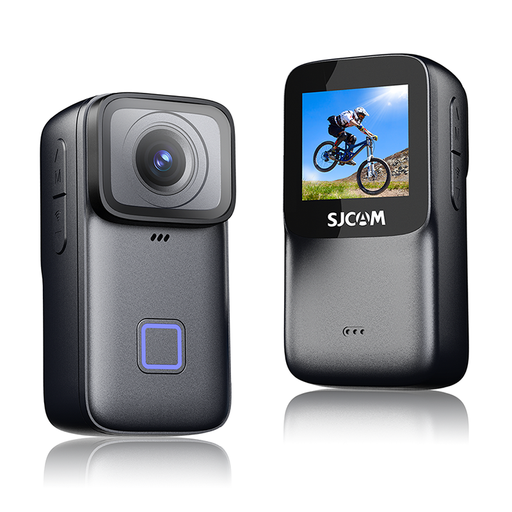
Who is it for? For those looking for an effective "out-of-the-box" solution without breaking the bank. Its pocket-sized format and native waterproofing make it the perfect companion for holidays, family outings, or your first sports vlogs.
It sidesteps the waterproofing trap by being directly usable up to 5 metres underwater without a case. Its 6-axis gyroscopic stabilisation is a solid and effective solution for this price range, far from the low-end EIS systems that degrade the image.
Value for money: 4K/30fps, 6-axis stabilisation, and native waterproofing in a pocket-friendly format. The bonus? It comes with a 64GB memory card.
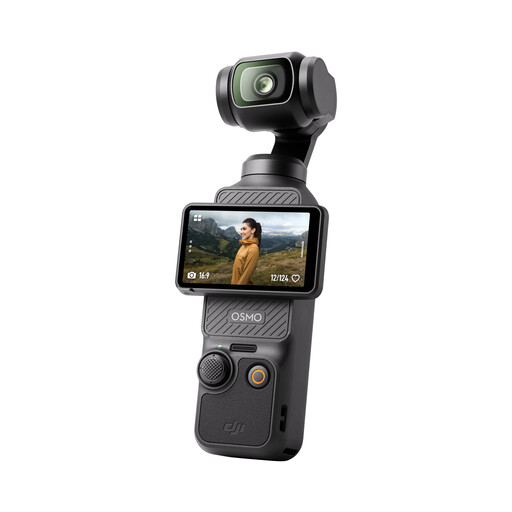
Who is it for? The ultimate tool for creators who demand professional-grade image quality and stability, but in a pocket-sized format. Ideal for travel vlogs, interviews, or YouTube productions where smoothness is non-negotiable.
It demolishes the stabilisation problem thanks to its 3-axis mechanical gimbal. Its large 1-inch CMOS sensor ensures stunning image quality, even in low light, and proves that sensor size trumps the race for more "K"s.
The winning combination: mechanical stabilisation and a large sensor. A pairing that delivers 4K/120fps videos with exceptional smoothness and clarity. The rotating screen and subject tracking (ActiveTrack) are game-changers for filming yourself.
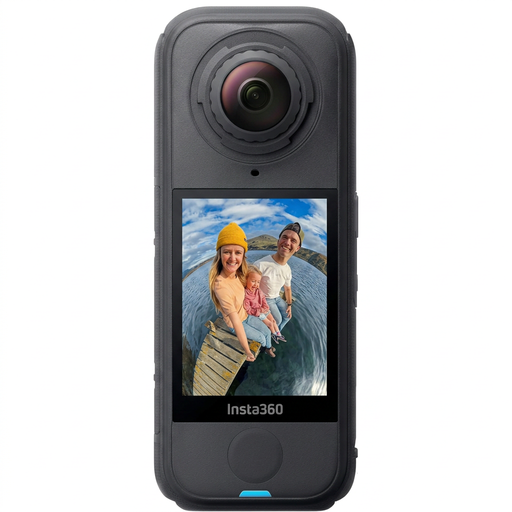
Who is it for? For those who want to capture everything without worrying about framing. That's the magic of 360°: shoot first, pick your angle later. An excellent **GoPro alternative** for skiing, mountain biking, or motorcycling, where it's impossible to frame perfectly in the heat of the moment.
It eliminates the headache of framing by filming everything around you. Its FlowState stabilisation is renowned for its incredible effectiveness, and the "invisible selfie stick" effect creates drone-like shots. Here, 8K makes sense: it's necessary to be able to reframe within the 360° image while maintaining excellent quality.
Absolute creative freedom. The "shoot first, frame later" approach is a life-changer for action scenes. FlowState stabilisation and 360° Horizon Lock ensure perfectly stable videos, no matter the situation.
If you primarily shoot with your smartphone, a dedicated stabiliser can literally transform the quality of your videos. Discover our selection of hand-picked models.
An action camera is an all-in-one, rugged, and often waterproof device designed to be mounted anywhere and withstand the toughest conditions. A smartphone stabiliser (or gimbal) is a motorised accessory that you attach your phone to. It uses your smartphone's camera but dramatically enhances its smoothness. The choice depends on your priorities: ruggedness and compactness for the action camera, or the versatility and ecosystem of your phone for the stabiliser.
Not essential, but highly recommended. Shooting in 4K gives you enormous flexibility in post-production: you can crop or zoom into the image without visible quality loss (if you export in 1080p), and achieve a sharper, more professional overall look. At a time when all our screens are 4K-compatible, it also ensures your memories will stand the test of time.
It's indicated in metres (e.g., 10m) or atmospheres (ATM), which corresponds to the static pressure the camera can withstand. A camera that is waterproof to 5 or 10 metres without a case is perfect for swimming, snorkelling, or surfing. For scuba diving, however, a dedicated waterproof housing is essential. It's designed to withstand much higher pressures (often 30m and more). The golden rule: always read the manufacturer's spec sheet carefully.