
Livraison le jour même ou le lendemain

Qualité garantie

Débloquez vos offres de bienvenue: Livraison GRATUITE | Jusqu'à -80 % | 30 jours d'essai gratuits à JoyPlus
Téléchargez l'application
For vloggers, athletes, and travellers alike, the action camera has become an essential tool for capturing the moment. But with so many options on the market, it can be hard to know where to start.
Our mission at Joybuy is to guide you with clear, objective advice—free from marketing jargon—so you can make the right choice. This guide breaks down the key criteria and introduces you to the models that truly matter.
Before diving into our top picks, let's review the key factors in finding the perfect camera for your needs.
Today, 4K has become the standard for most models. However, resolution isn't everything. The frame rate (fps) is just as crucial: capturing at 60 or 120 fps ensures smooth, spectacular slow-motion shots. The sensor size is another key factor: the larger it is, the more light it captures. The result? Better image quality, especially as light levels drop.
A sports camera must be stable and durable. Image stabilisation is crucial for eliminating shakes and achieving perfectly smooth videos. There are two main types:
Also, check the durability ratings. A waterproof camera that doesn't require an extra case offers great freedom, while a shockproof camera will give you peace of mind during your most intense activities.
Your primary use will determine the best format for you. For a vlogging camera, a front-facing or flip screen is almost essential for framing yourself easily. For a travel camera, compactness, weight, and battery life are key criteria. Also, consider the ecosystem of accessories (mounts, poles, microphones) that will expand your camera's capabilities.
Here is a selection of three models that cater to different needs, from the demanding content creator to the casual adventurer.

Why It Stands Out
The DJI Osmo Pocket 3 stands out with its unique concept: a pocket-sized camera equipped with a true 3-axis mechanical gimbal. Its large 1-inch CMOS sensor ensures high-quality images, while its 2-inch rotating touchscreen makes it incredibly practical. It's a true pocket-sized studio, perfect for creating polished content.
Pros
Who Is It For? This is the top pick for vloggers, content creators, and travellers who prioritise cinematic quality and image smoothness over extreme durability. It's the perfect tool for capturing life's moments, interviews, or travel shots with a professional finish.
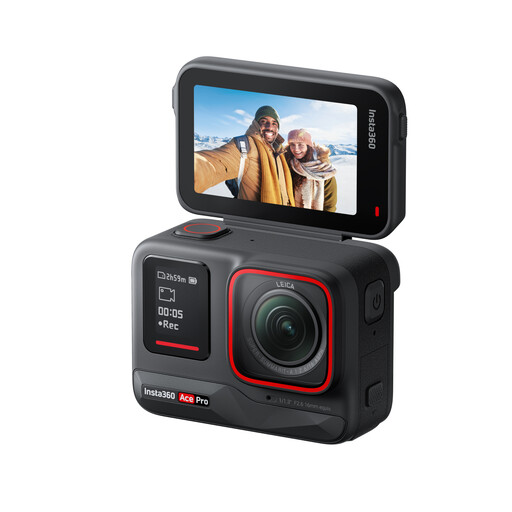
Why It Stands Out
The Insta360 Ace Pro combines Insta360's expertise in smart features with Leica's optical engineering. The result is a versatile action camera that sets a new standard for image quality. Its large sensor, flip screen, and AI-powered features make it a serious contender in the high-end market.
Pros
Who Is It For? The Ace Pro is aimed at tech enthusiasts and adventurers who refuse to compromise on image quality. It's both a formidable sports camera and a highly practical vlogging camera thanks to its flip screen, making it extremely versatile.
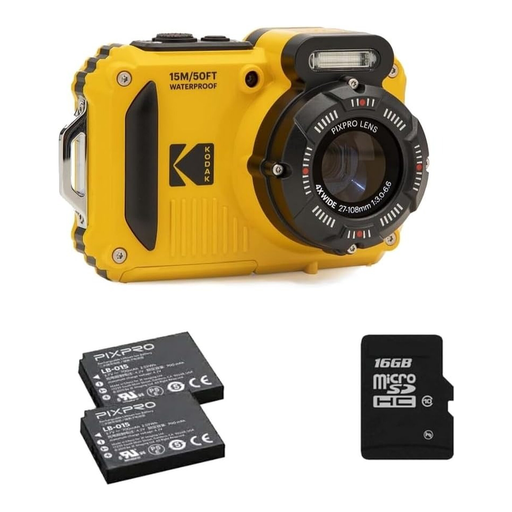
Why It Stands Out
The Kodak WPZ2 focuses on simplicity and durability. It doesn't try to compete with the advanced features of the other models, but instead concentrates on the essentials: being a shockproof and waterproof camera that's easy for the whole family to use.
Pros
Who Is It For? This model is perfect for families, holidaymakers, or anyone looking for a simple, rugged device to capture memories without fussing over settings. It's the ideal travel camera for beach destinations or outdoor trips.
Our selection covers various use cases, but the photo and video market is vast. If you want to explore other avenues, such as hybrid or interchangeable-lens models that offer more creative flexibility, feel free to browse our full category of digital cameras with lenses.
While modern smartphones shoot in excellent quality, an action camera stands out for its durability (waterproofing, shock resistance), its wide-angle lens that captures a broader field of view, its multiple mounting options, and its stabilisation optimised for extreme movement.
A 4K camera has become a standard that offers several advantages: a more detailed image, greater flexibility for cropping in post-production without losing quality, and it helps future-proof your videos. For a sports camera, where the action is fast-paced, high resolution ensures you don't miss any details.
Most recent action cameras include highly effective electronic stabilisation, which is sufficient for 90% of uses. However, for a perfectly cinematic look without any jitters, a mechanical video stabiliser (gimbal)—like the one in the DJI Pocket 3—remains unbeatable. It all depends on the level of polish you're aiming for.