
Livraison le jour même ou le lendemain

Qualité garantie

Débloquez vos offres de bienvenue: Livraison GRATUITE | Jusqu'à -80 % | 30 jours d'essai gratuits à JoyPlus
Téléchargez l'application
Whether you're a mountain biking enthusiast, a passionate diver, or a travel vlogger, the action camera is the ideal companion for capturing your adventures. The problem? The market is saturated with models featuring indecipherable spec sheets and often misleading marketing promises. My role here at Joybuy is to cut through the noise for you. This guide gets straight to the point: giving you the keys to make the right choice, without drowning you in technical jargon.
Navigating the jungle of action cameras can quickly become a headache. Too many buyers end up disappointed with their purchase, trapped by overhyped features or well-hidden flaws. Here are the three most common mistakes.
1. The Mirage of Budget "4K" Many entry-level models proudly display the "4K" logo, but the reality is far less impressive. This is often fake 4K, achieved either through interpolation (software upscaling that degrades the image) or by filming at a pitifully low frame rate (15 frames per second), making the video choppy and simply unusable. A true 4K action camera worthy of the name must offer, at the very least, 4K capture at 30 frames per second (fps).
2. Image Stabilisation That's Missing in Action Nothing is worse than a video that makes you seasick! Yet, that's the risk with poor stabilisation. Most cameras promise "stabilisation," but the results vary wildly. Basic electronic image stabilisation (EIS) on an entry-level model will be completely inadequate for a motorcycle camera or high-impact sports. Without an advanced gyroscopic system (usually 6-axis), say goodbye to smooth, professional-looking videos.
3. Accessories: The Bill That Keeps Growing The sticker price is attractive, but what's actually in the box? A waterproof camera will often need a case to become a diving camera, and an onboard camera requires specific mounts. Buying batteries, mounts, and a memory card separately can quickly double the cost. A complete bundle almost always proves to be more economical.
To make the right choice, forget the fluff and focus on the few key points that determine the quality and versatility of your future camera.
Resolution defines the level of detail in the image, while the frame rate (the number of frames per second, or fps) ensures its smoothness.
A good camera with a stabiliser is simply essential. 6-axis gyroscopic stabilisation technology has become the gold standard. It compensates for movements on all planes (horizontal, vertical, rotation) to ensure rock-solid stability, even right in the heart of the action while skiing, mountain biking, or running.
A crucial point: your camera's endurance. Some models are natively waterproof down to 10 metres, perfect for rain or snorkelling. For scuba diving, a diving camera with a dedicated case (30 or 40 metres) is a must. Battery life is just as critical: a battery lasting less than 90 minutes in 4K can quickly ruin a long outing.
To help you see things more clearly, we've selected models that meet specific needs while checking all the right boxes we've discussed.
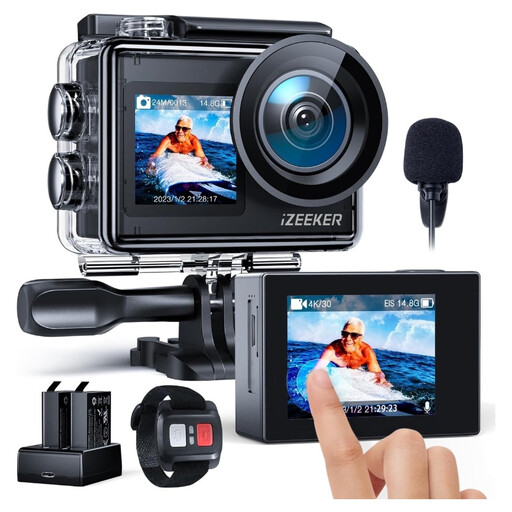
Why it's a great choice: Perfect for beginners or occasional use. It delivers the essentials (true 4K, waterproofing with a case) at a rock-bottom price. An excellent, budget-friendly entry point into this world without breaking the bank.
This model provides true 4K at 30 fps capture, without interpolation. It also comes with an ultra-complete accessory kit (including the 40m case), protecting you from unpleasant surprises and hidden costs.
Its unbeatable value for money. The included accessory pack makes it ready for a multitude of activities (biking, helmets, snorkelling...) right out of the box.
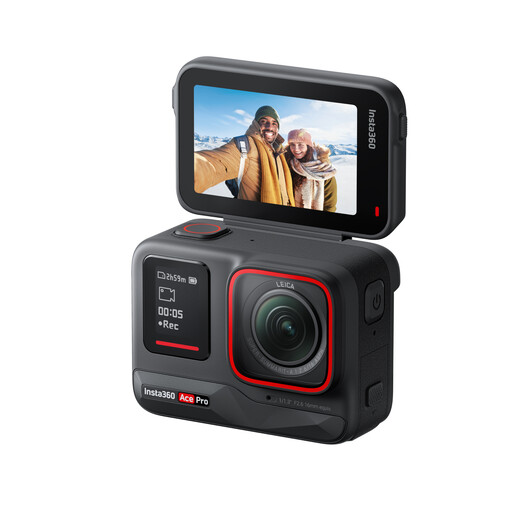
Why it's a great choice: For vloggers and image purists who refuse to compromise. Its large sensor, Leica co-engineered lens, and flip-up screen make it the ultimate vlogging tool.
It goes far beyond the standard, recording up to 4K at 120 fps with incredibly effective FlowState stabilisation. The quality of its 1/1.3-inch sensor and Leica lens puts it in a different league from models that rely solely on marketing.
Stunning image quality, especially in low light. Its 2.4-inch flip-up screen is a real game-changer for filming yourself and perfecting your framing.
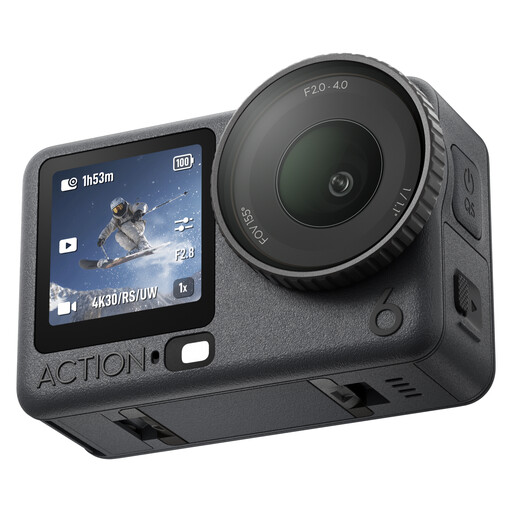
Why it's a great choice: Built for extreme conditions and long-form shoots. Its ruggedness, record-breaking battery life, and native waterproofing make it the ideal companion for bikers, skiers, and divers.
It's waterproof down to 20 metres without any case, eliminating the need for a fragile, bulky accessory. Its RockSteady 3.0+ stabilisation is designed to handle the most intense shocks and vibrations, light-years ahead of basic systems.
Extra-long battery life of up to 4 hours. It's resistant to extreme cold and includes 50GB of internal storage so you're never caught off guard.
Discover our full selection of action cameras that meet our quality charter and current safety standards.
What is the battery life of an action camera, and do I need a spare battery? Battery life ranges from 70 to 240 minutes of continuous recording, depending on the model and your settings (4K is very demanding). For an outing longer than two hours (hiking, skiing, motorcycling), a second battery is almost essential. Also, be aware that cold weather drastically reduces battery life.
Is a microSD card included with the camera? Usually not. The microSD card must be purchased separately. Some bundles might include one, but it's rare. To film in 4K, it's crucial to choose a high-performance card (marked U3 / V30 at a minimum) to ensure smooth, bug-free recording.
Can you use an action camera as a dashcam in a car? Yes, many models have a "car mode" (or loop recording) that starts recording when the car starts and overwrites the oldest files when the card is full. However, a dedicated dashcam is still a better choice: it's designed to withstand the high heat of a windscreen and be powered continuously.