
Livraison le jour même ou le lendemain

Qualité garantie

Débloquez vos offres de bienvenue: Livraison GRATUITE | Jusqu'à -80 % | 30 jours d'essai gratuits à JoyPlus
Téléchargez l'application
Whether you're shredding down a ski slope, surfing the perfect wave, or documenting a motorcycle road trip, the action camera is the essential companion for capturing the intensity of the moment. But with an overwhelming number of options on the market, it's easy to get lost among the different resolutions, features, and formats.
To help you make sense of it all, this guide breaks down the key criteria to consider and presents our selection of the best models for 2026. Our goal: to help you find the perfect sports camera for your needs and budget.
Before you dive in, let's review the technical specifications that will make all the difference in the field.
A 4K action camera is the standard today, ensuring sharp and detailed footage. But the frame rate (expressed in frames per second, or fps) is an equally crucial factor.
For a motorcycle camera or any high-shake activity, good stabilisation isn't an option—it's a necessity. Today's electronic image stabilisation (EIS) technologies work wonders, delivering impressively smooth videos without the need to carry an external gimbal.
Another essential feature is waterproofing. Most recent models are designed as waterproof cameras without a case down to a certain depth (usually 10 metres), which is perfect for handling rain or impromptu dives. For deep-water diving, however, a dedicated housing remains essential.
The traditional "point-and-shoot" format remains a reliable choice for its ease of use. However, the 360 camera is increasingly establishing itself as a formidable alternative. By filming in all directions simultaneously, it gives you complete freedom in post-production: you choose the camera angle after the action. This option multiplies the creative possibilities, especially for sports where the action is happening all around you.
Let's get to the specifics with three standout models, each tailored to a distinct user profile.
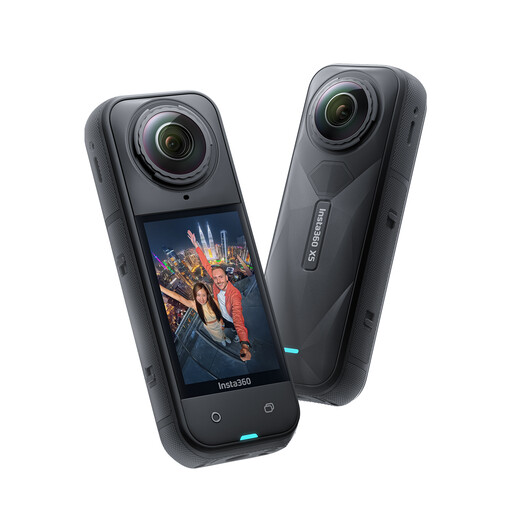
Why it stands out: The Insta360 X5 makes a huge impact by making 8K 360° accessible. Its key advantage? It completely frees you from the constraints of framing. The mantra is: "Shoot first, frame later." Its famous "Invisible Selfie Stick" effect, which creates simply stunning third-person shots, is another winning feature.
Key Features:
Who is it for? For content creators, travellers, and athletes seeking maximum flexibility and unique perspectives. It's the dream tool for those who love to experiment in post-production and create videos that stand out from the crowd.
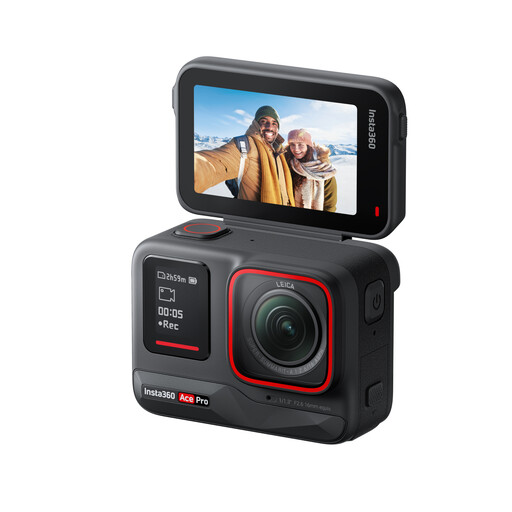
Why it stands out: Born from a collaboration with Leica, the Ace Pro makes image quality its top priority. Its large 1/1.3-inch sensor and Leica SUMMARIT lens allow it to capture more light, ensuring sharper, more colourful videos, day or night. The icing on the cake is its flip screen, a real game-changer for vlogging.
Key Features:
Who is it for? For vloggers and image purists. If you're looking for a robust vlogging camera that performs well even when the light fades, this is a top-tier candidate.
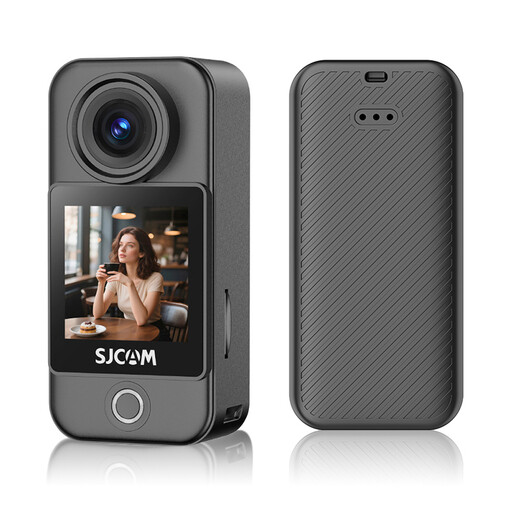
Why it stands out: The SJCAM C400 focuses on compactness and an aggressive price point. Weighing just 54 grams in a pocket-sized form factor, it fits anywhere. It's an excellent GoPro alternative for tighter budgets or for those looking for an ultra-discreet secondary camera.
Key Features:
Who is it for? For beginners, those on a tight budget, or anyone who wants a featherlight secondary camera for cycling, hiking, or discreetly capturing unique angles.
Our selection is by no means exhaustive. If you're looking for a model specifically designed for diving or one with very particular features, the market is full of other gems.
? Discover our complete selection of waterproof cameras to find the right model for you.
Even though modern smartphones often shoot with stunning quality, an action camera retains key advantages: unmatched durability (against shocks, water, dust), an ultra-wide field of view (wide-angle or fisheye) perfect for sports, far superior stabilisation for extreme movements, and a comprehensive ecosystem of accessories to mount it absolutely anywhere (helmet, handlebars, surfboard...).
To avoid bottlenecking your 4K camera, the choice of microSD card is crucial. Opt for cards with U3 (UHS Speed Class 3) and/or V30 (Video Speed Class 30) certifications. This guarantees a write speed sufficient to handle the high bitrate of 4K video, without the risk of recording interruptions or corrupted files. Also, remember to check the maximum storage capacity supported by your camera.
After every trip to the sea or pool, rinsing the camera with fresh, clean water is a non-negotiable step. Salt and chlorine are the sworn enemies of the materials and seals. Afterwards, dry it meticulously with a soft cloth. Before closing it up, always check that the waterproof seals and connector covers are pristine (free of any grains of sand or dust) to ensure perfect protection on your next adventure.