
Livraison le jour même ou le lendemain

Qualité garantie

Débloquez vos offres de bienvenue: Livraison GRATUITE | Jusqu'à -80 % | 30 jours d'essai gratuits à JoyPlus
Téléchargez l'application
The action camera market is a jungle of promises?: 4K, waterproofing, stabilisation… It's easy to get lost in spec sheets and end up with a device that doesn't fit your needs at all. Our mission is to help you see clearly. To make the right choice, you first need to know the common pitfalls to avoid.
sports camera.To avoid unpleasant surprises, focus on these key points. They are your guarantee of quality and versatility in your future action camera.
Resolution defines the level of detail in your image. While 4K (3840 x 2160 pixels) has become the standard, smoothness depends on the frame rate (fps).
4K camera video.Stabilisation is arguably the most important feature for a sports camera. It compensates for shakes and vibrations to produce perfectly stable video. Most recent models feature Electronic Image Stabilisation (EIS), often paired with a gyroscope. Proprietary technologies like FlowState (from Insta360) or RockSteady (from DJI Osmo) deliver stunning results, making it seem as if the camera is floating on a gimbal.
It all depends on your activities.
underwater camera intended for deep-sea diving (typically 30 to 60 metres), a protective housing is essential. Entry-level models often require it even for a simple swim. Always check if this accessory is included or sold separately.There's a camera for every use case. Here are our recommendations, tailored to different needs.
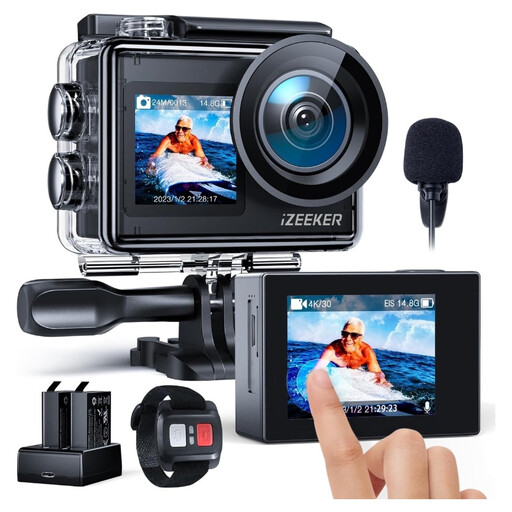
Why it's a smart pick : Ideal for getting started with action cameras without breaking the bank. It packs all the essentials to capture family outings, holidays, or occasional sports sessions.
It offers true 4K at 30 fps, avoiding the choppy video trap. Its waterproofing is clearly defined, requiring the included case to reach depths of 40 metres with no unpleasant surprises.
Its excellent value for money, with a comprehensive accessory pack included to mount it anywhere (helmet, bike, harness) right out of the box.
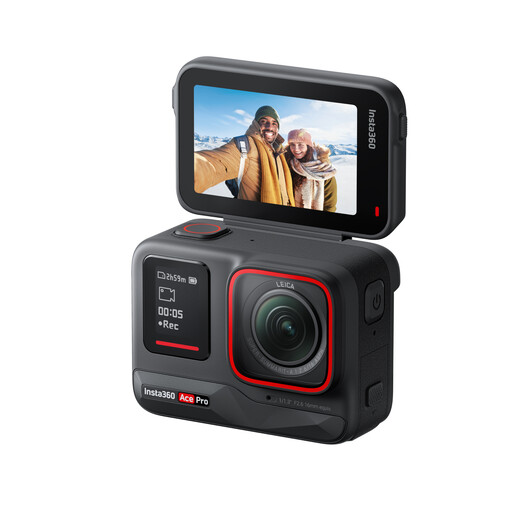
Why it stands out : Built for vloggers, athletes, and creators seeking impeccable image quality, day or night. Its large sensor and Leica lens make it a true production tool, perfect as a `vlogging camera`.
It goes beyond the standard with a large 1/1.3-inch sensor and a Leica lens, ensuring excellent low-light performance. Its FlowState stabilisation is a market leader, and its native waterproofing to 10 metres makes it incredibly practical.
Stunning image quality, especially in low light, thanks to the sensor/lens combination. Its flip-up front screen is a game-changer for vlogging.
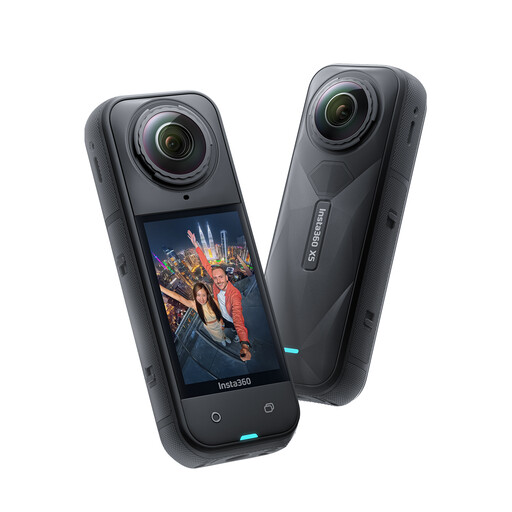
Why it's unique : Perfect for those who want to capture everything without worrying about framing. A `360 camera` records everything around it, giving you complete freedom to choose the best angles in post-production.
It eliminates the framing problem by filming everything around it in 8K. FlowState stabilisation is applied in 360°, ensuring perfect smoothness. The "Invisible Selfie Stick" effect creates drone-like perspectives.
The infinite reframing freedom (the famous "shoot first, frame later" principle) and incredible creative possibilities, especially for sports like motorcycling or skiing.
For more spontaneous and fun memories, don't underestimate the charm of analogue. A disposable camera like the AgfaPhoto LeBox 400, which is water-resistant, is perfect for a day at the beach, while an instant camera like the Kodak ERA MS100 will liven up your parties by providing tangible, immediate keepsakes.
We have curated a full range of products that meet our standards for quality and innovation.
Battery life varies greatly depending on the model and settings (resolution, stabilisation, etc.). In 4K, you can expect an average of 60 to 90 minutes of continuous recording. Models like the Insta360 Ace Pro or the SJCAM C300 offer improved batteries or power grips that can extend this duration. Our advice?: always pack one or two spare batteries for long sessions.
For viewing on a smartphone or sharing on social media, a 1080p or 2.7K resolution is often sufficient and helps save battery life and storage space. However, 4K provides a much sharper image on a large screen (TV, monitor) and gives you more flexibility to crop or zoom into the video without losing quality. It's a future-proof standard and an investment in the quality of your memories.
4K recording is very demanding, so a fast and reliable microSD card is essential. Aim for at least a U3 (UHS Speed Class 3) or V30 (Video Speed Class 30) rated card. This certification guarantees a write speed sufficient to handle the 4K video stream without crashing. In terms of capacity, a 128 GB card is a good starting point.