
Livraison le jour même ou le lendemain

Qualité garantie

Débloquez vos offres de bienvenue: Livraison GRATUITE | Jusqu'à -80 % | 30 jours d'essai gratuits à JoyPlus
Téléchargez l'application
On the slopes, underwater, or on a road trip, the action camera is the perfect companion for capturing your adventures. The problem? The market is saturated with models making tempting promises and using often misleading technical jargon. To prevent your investment from turning into a disappointment, here are the pitfalls to avoid before you buy.
To make the right choice, focus on the features that truly matter for your camera's performance and lifespan.
Electronic Image Stabilisation (EIS) has become standard. This technology uses algorithms to slightly crop the image in real time to compensate for shakes. More advanced systems, like FlowState or RockSteady, deliver near-cinematic smoothness, even during intense activities like mountain biking or running. Good stabilisation is what separates an amateur video from a professional, visually pleasing result. It's a crucial point for any onboard camera.
The 4K label isn't enough. Image quality primarily depends on the sensor size. A larger sensor (e.g., 1/1.3-inch vs. 1/2.3-inch) captures more light. This translates to sharper images, better colour rendering, and significantly better performance in low-light conditions. For a vlogging camera or for shooting at sunset, a large sensor makes all the difference.
Check if the waterproofing is native (without a housing) or if it requires an accessory. A camera that is natively waterproof down to 10 or 15 metres is much more practical for swimming or snorkelling. For deep diving, a dedicated housing remains essential. Also, consider the overall durability: a shock-resistant and dust-proof design is a guarantee of longevity for use in the field.
Because every user is unique, we have selected models that meet specific needs while avoiding the classic pitfalls.
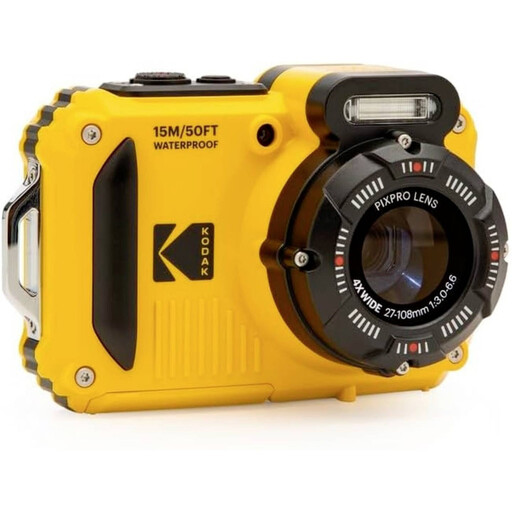
Why this model? Ideal for family holidays, the beach, or light hikes. This camera is all about simplicity and durability. It's designed for hassle-free use without worrying about settings or breaking it.
It doesn't promise superfluous 4K, but rather real-world durability. Its native waterproofing down to 15m and 2m shock resistance are its true strengths, preventing the disappointment of a fragile device or one that requires a housing.
Simple and effective design. Perfect for capturing memories during water or outdoor activities without any fuss.
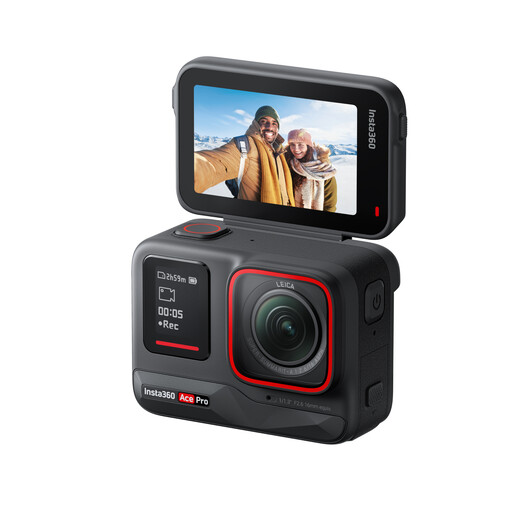
Why this model? For those who want no compromises on image quality. Ideal for vlogging, extreme sports, and creative projects thanks to its large sensor, Leica lens, and flip screen.
It counters the "fake 4K" trap with a large 1/1.3-inch sensor and a quality lens. The FlowState stabilisation is a benchmark, guaranteeing smooth, usable videos, even in 4K at 120 fps.
Superior image quality, especially in low light. The 2.4-inch flip touchscreen is a major asset for framing shots.
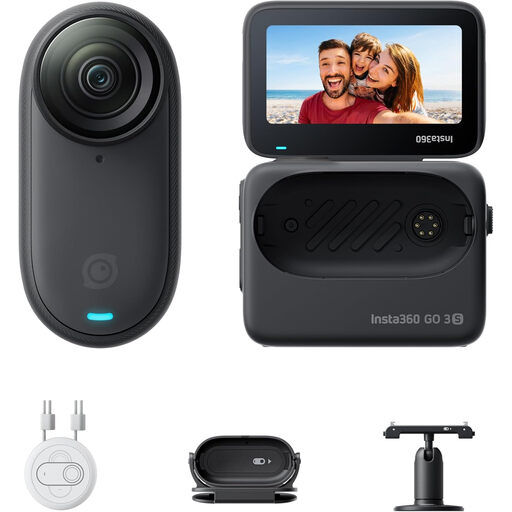
Why this model? Discretion and portability are the keywords here. This 39g mini camera attaches anywhere for unique hands-free shots, perfect for travel vlogs or daily activities.
Despite its tiny size, it packs true 4K resolution and FlowState stabilisation. Its modular system with the Action Pod bypasses the usual pitfalls of ultra-compact cameras, such as poor battery life or limited ergonomics.
Versatility and creativity thanks to its size and magnetic accessories. The Action Pod adds a flip screen and extends the battery life.
Our full selection of tested and approved models awaits. We have verified that they meet our quality criteria and safety standards.
Battery life varies enormously from one model to another, ranging from 60 minutes to over 3 hours. It heavily depends on the settings: filming in 4K at 60 frames per second uses much more power than filming in 1080p. Cold weather also significantly reduces battery performance. For extended sessions, opt for a model with a removable battery so you can carry spares, or a model known for its long battery life.
It all depends on your use case. For quick sharing on social media, 1080p resolution is often sufficient and produces smaller files. 4K, on the other hand, offers several advantages: superior image quality on large screens (TVs, monitors) and the ability to crop or zoom in on the image in post-production without a noticeable loss of quality. Today, 4K has become an accessible standard, but you should always check the quality of the sensor that comes with it.
This is a crucial step to ensure the longevity of your equipment. After each use in salt or chlorinated water, you must rinse your waterproof camera (and its housing, if applicable) with fresh, clean water. Make sure all ports and compartments are securely closed before rinsing. Then, dry it completely with a soft cloth before opening the battery or memory card compartment. This simple action prevents corrosion and salt build-up that can damage the seals and buttons.