
Livraison le jour même ou le lendemain

Qualité garantie

Débloquez vos offres de bienvenue: Livraison GRATUITE | Jusqu'à -80 % | 30 jours d'essai gratuits à JoyPlus
Téléchargez l'application
Buying acrylic painting supplies can quickly become expensive if you choose based only on the number of colours, claims of versatility or the appearance of the set. A large set isn’t necessarily right for painting on canvas, while a marker described as suitable for a wide range of surfaces may need special preparation before you use it on glass, fabric or plastic.
Before you fill your basket, keep an eye out for these three pitfalls:
Acrylic paint is popular for its quick drying time and the fact that it can be thinned with water while still wet. However, its texture can vary considerably: fluid paint spreads easily, while a thicker consistency is better suited to impasto, palette knife work and visible brushstrokes.
If you’re painting on canvas, check:
A set of six 75 ml tubes may suit larger works or frequent colour mixing. By contrast, 12 ml tubes are easier to carry around and help avoid wasting paint while you practise mixing colours.
Choose acrylic paint brushes to suit the marks you want to make. A narrow, flat brush is good for precise blocks of colour and outlines. A very wide brush is ideal for covering a canvas quickly, applying a background or creating a strong texture.
Hog-bristle brushes are stiff and leave more of their mark in thick paint. They’re suitable for backgrounds, priming and textural effects, but are less suited to fine detail. After use, clean them promptly with water, then reshape the bristles before putting them away.
Acrylic markers and acrylic paint pens are handy for customising items, adult colouring and drawing on small surfaces. Compare:
On a non-porous surface, clean and degrease the area first. Test the marker somewhere discreet, as adhesion and finish can vary depending on the material’s surface. Also check the packaging for guidance on age suitability, ventilation and contact with the eyes.
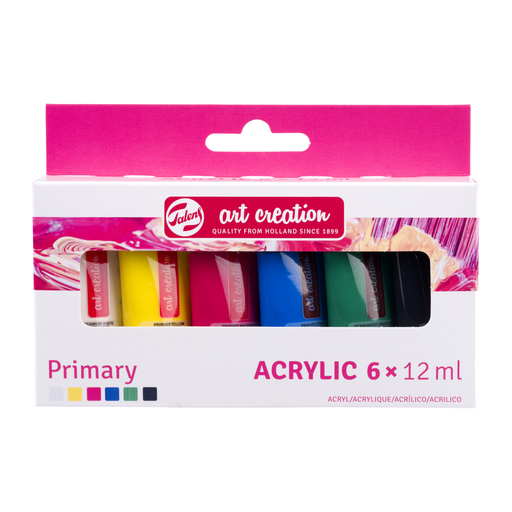
Why it suits this kind of artist : Its palette of six basic colours lets you learn how to mix them without buying a whole range of tubes straight away. The 12 ml size is handy for exercises, small canvases and taking on the go.
It helps you avoid paying for an extensive palette before you’ve mastered colour mixing, and cuts down on unused leftover paint.
Six 12 ml tubes, thick paint, water-thinnable formula and a stated satin finish once dry.
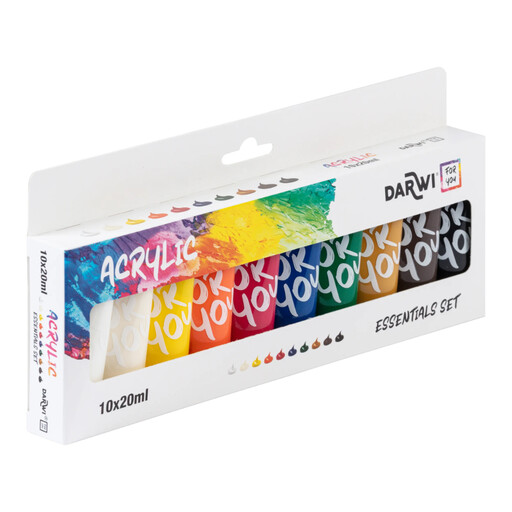
Why it suits this kind of artist : This set is for artists who want a wider palette in an easy-to-carry format, whether for studies, mixed-media techniques or painting sessions on canvas.
The contents and volume are clearly listed: ten 20 ml tubes, rather than a bulky assortment of hard-to-identify shades.
Creamy texture, satin finish, mixable colours and suitable for use with a brush or palette knife.
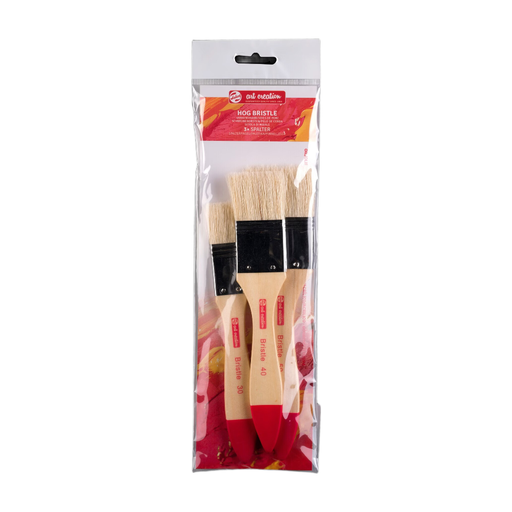
Why it suits this kind of artist : These three flat brushes, in sizes 30, 40 and 50, are suitable for large canvases, backgrounds and thick applications. They’ll make a useful addition to an artist’s well-stocked collection of supplies.
The sizes are specified, so you can choose the right tool for a large canvas rather than a small brush that could slow you down and leave uneven marks.
Durable hog bristles, three widths and the ability to create textured brushstrokes with thick acrylic paint.
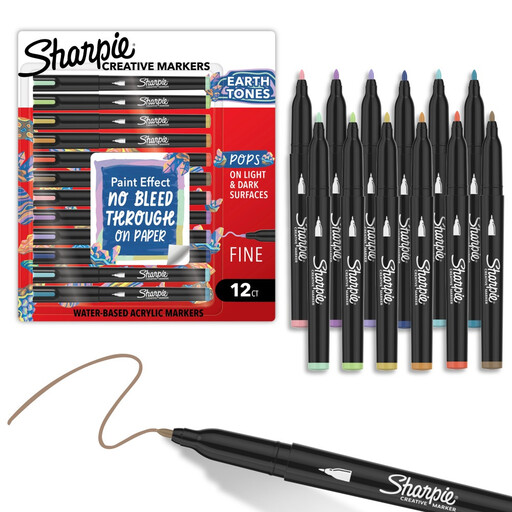
Why it suits this kind of artist : The fine tips are ideal for detailed colouring, lettering, designs on stone and touch-ups on canvas or wood.
This specialised format means you won’t end up using a broad-tip marker to draw fine lines or fill in narrow areas.
Twelve assorted colours, water-based ink, stated opaque finish and the ability to layer colours without them immediately blending together.
We’ve put together a comprehensive selection, updated in real time, of products that meet these strict selection criteria and comply with European safety regulations.
To keep your art supplies in good condition:
For linocut printing ink, choose an ink specially designed for roller printing. Standard acrylic paint may not have the viscosity or transfer properties you need. Talens Art Creation Linoleum paint, in a 250 ml water-based formula, can be used on a linoleum plate and cleaned off with water while still wet. Find it on the dedicated product page.
A basic kit is usually enough: a few colours that mix well, two or three brushes in different shapes, a palette, a container of water, a suitable surface and a cloth. A set of six primary colours lets you learn how to mix them without buying lots of separate supplies.
How long it keeps depends on how well the container is sealed, the temperature and how often it’s used. A tightly sealed tube stored in a cool, dry place can remain usable for a long time, but check the texture before applying it. Don’t use paint that has thickened, become lumpy or developed an unusual smell.
No. Many models are designed for use on several surfaces, but adhesion varies depending on the surface’s porosity, dust and finish. For fabric, plastic, glass or a surface that’s handled regularly, check the manufacturer’s guidance and test the pen first.