
Livraison le jour même ou le lendemain

Qualité garantie

Débloquez vos offres de bienvenue: Livraison GRATUITE | Jusqu'à -80 % | 30 jours d'essai gratuits à JoyPlus
Téléchargez l'application
By Joybuy, your product expert
Versatile, vibrant, and quick-drying, acrylic paint is a favourite for many reasons. Whether you're a beginner or a seasoned painter, finding the right acrylic paint set can be overwhelming given the vast selection available. The number of colours, tube volume, pigment quality... there are many criteria to consider. Follow our guide to find the set that perfectly matches your creative ambitions.
Before diving into our selection, let's review the essential points that will guide your choice.
The ideal number of colours depends primarily on your practice. To start, a beginner's acrylic paint kit with primary colours (red, yellow, blue), plus white and black, forms the perfect foundation. It's ideal for practising colour theory and creating your own mixes. More comprehensive sets with 12, 24, or more colours offer out-of-the-box convenience: a wide variety of ready-to-use shades, perfect for specific projects.
The volume of the acrylic paint tubes is also a criterion not to be overlooked. Tubes of 12 or 20 ml are perfect for experimentation, small-format works, or artists on the go. Tubes of 75 ml or more are more cost-effective in the long run and are suitable for working on larger surfaces, such as acrylic painting on canvas.
The quality of an acrylic paint depends on its pigment concentration and the type of binder (an acrylic resin). A paint rich in pigments will offer more intense colours and better covering power.
The finish, once the paint is dry, can vary:
Leading brands like Clairefontaine formulate paints that guarantee a pleasant consistency and excellent colour permanence over time.
One of the great advantages of acrylic is its ability to adhere to many surfaces: canvas, paper, cardboard, wood, plaster, and more. Simply check that the set that catches your eye is suitable for the surfaces you intend to paint on. Most acrylic paints are miscible with each other and can be diluted with water to achieve transparent effects, similar to watercolour.
Here are our top picks, selected for their excellent balance of quality, versatility, and price.
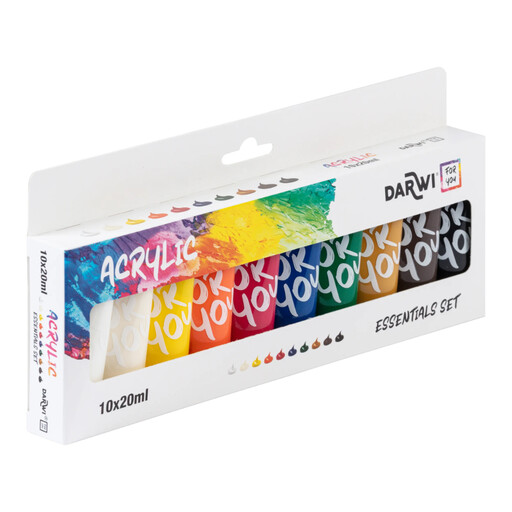
Why it stands out: This set is an excellent starting point. It offers a palette of ten fundamental colours in a compact format that is easy to transport and store. Its pure acrylic resin formulation resists yellowing over time.
Pros:
Who is it for? This set is ideal for beginners wanting to get started with acrylics, students, or artists on the go looking for a quality travel kit.
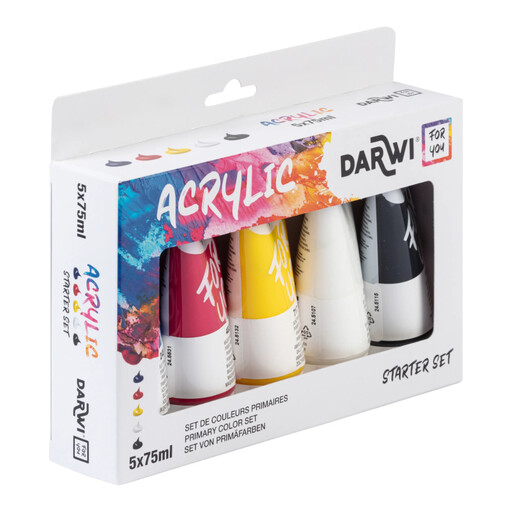
Why it stands out: This set focuses on the essentials with five primary colours in large-format tubes. It was designed for artists who love to create their own shades and need a larger quantity of paint for their works.
Pros:
Who is it for? Recommended for art students and painters who prefer mixing colours and work on medium to large-sized canvases.
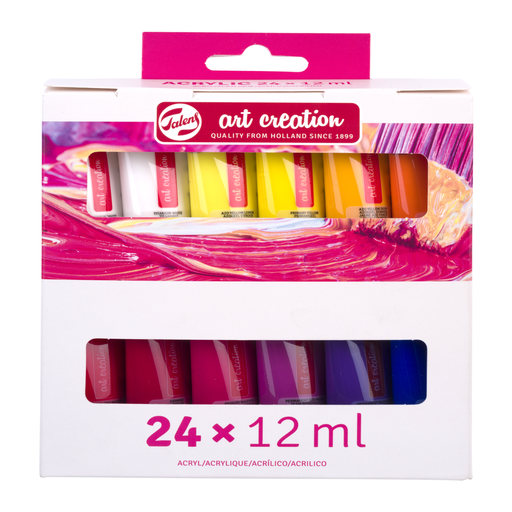
Why it stands out: With its 24 colours, this acrylic paint set from Royal Talens offers a very extensive, ready-to-use palette. It allows you to explore a wide variety of subjects without having to perform complex mixing.
Pros:
Who is it for? This set is for artists who want a large selection of colours at their fingertips, whether for detailed works, illustrations, or craft projects.
Creativity doesn't stop at the tip of your brush. If your artistic projects take you outdoors under the sun, remember to protect yourself in style. Discover our selection of men's UV protection t-shirts.
The main difference lies in the binder and the drying time. Acrylic paint uses an acrylic resin and dries very quickly (from a few minutes to an hour), while oil paint uses an oil (linseed, poppy) and can take several days, or even weeks, to dry. Acrylics clean up with water, whereas oils require specific solvents.
Yes, since most acrylic paints are water-based, it is entirely possible to mix them, even if they come from different brands. Be aware, however, that the consistency, pigmentation, and finish (matte, satin, gloss) can vary from one brand to another. We recommend doing a small test patch before you start to ensure the result is consistent and meets your expectations.
To preserve your paint, always cap the tubes tightly after each use to prevent air from drying it out. Store your tubes away from direct sunlight and extreme temperatures (freezing or high heat), in a cool, dry place. Storing them horizontally can also help maintain the paint's consistency.