
Livraison le jour même ou le lendemain

Qualité garantie

Débloquez vos offres de bienvenue: Livraison GRATUITE | Jusqu'à -80 % | 30 jours d'essai gratuits à JoyPlus
Téléchargez l'application
Acrylic paint is popular with beginners and experienced artists alike thanks to its versatility, water-based cleaning and generally fast drying time. But with countless palettes, promises of “ultra-intense” colours and markers advertised as suitable for every surface, choosing a simple kit can quickly become a headache.
Before placing your order, keep three pitfalls in mind:
Classic acrylic paint combines pigments with an acrylic resin-based binder. Its texture may be creamy, thick or, conversely, fairly fluid. A dense paste is well suited to impasto techniques and visible brushstrokes, while a more fluid paint is better for flat areas, details and dilution.
When choosing acrylic paint for artists, check in particular:
Marketing claims are no substitute for a precise technical specification. When a brand claims good resistance to yellowing, light or water, treat this as a feature stated by the manufacturer and check the conditions under which it applies.
Acrylic paint tubes of 12 or 20 ml are practical for beginners, travelling or creating small artworks. The 75 ml formats are better suited to backgrounds, regular practice and decorative projects.
A well-designed acrylic colour palette will generally include:
Primary palettes are particularly useful for learning how to mix colours. By contrast, a themed palette, such as one made up of Caribbean tones, may be more suitable for a specific decorative collection.
Acrylic paint can be applied to canvas, paper, card, wood, plaster and certain types of stone, provided the surface is clean and suitable. On glass, plastic or ceramic, adhesion and durability may depend on specific preparation and the application of a suitable varnish.
Fast-drying acrylic paint allows you to build up layers more quickly, but it also reduces the time available for creating blends. Work in small areas and lightly dampen your palette without over-wetting the paint.
Paint advertised as water-resistant generally becomes more stable once dry. However, this does not guarantee lasting resistance to immersion, rubbing or the weather. For an item intended to remain outdoors, check its compatibility with the surface and plan suitable protection.
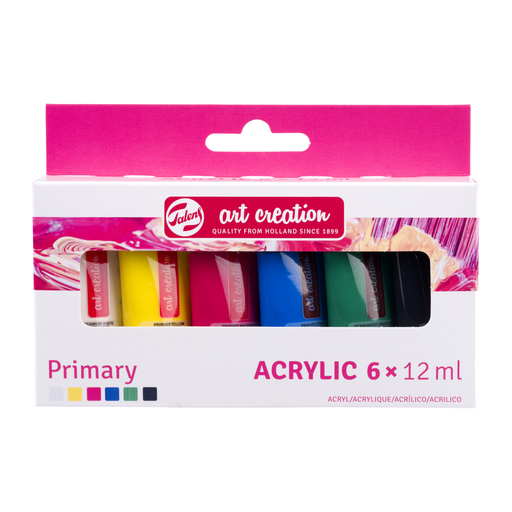
Why this choice suits this profile : Its six 12 ml tubes provide a compact palette, ideal for learning to mix colours and creating your first projects.
It focuses on basic colours rather than a multitude of rarely used shades, with a volume suited to your first exercises.
Acrylic resin-based paint, water dilution, advertised fast drying and a silky gloss finish once dry.
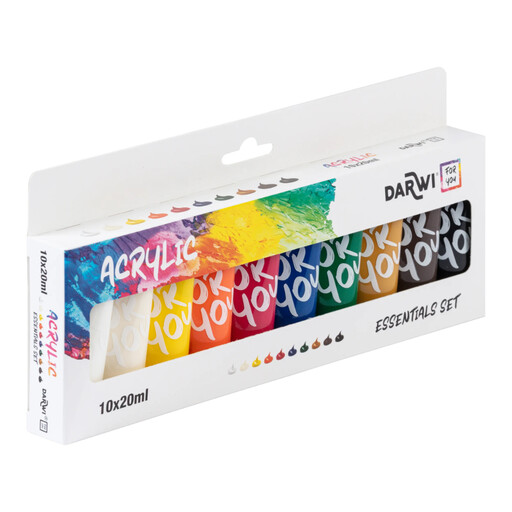
Why this choice suits this profile : The ten 20 ml tubes offer a broader palette in an easy-to-carry format, suitable for studies, colour mixing and creations on paper or canvas.
The mid-sized format reduces the risk of running out of paint quickly, while remaining more portable than larger packs.
Ten 20 ml colours, creamy texture, satin finish and suitable for application with a brush or painting knife.
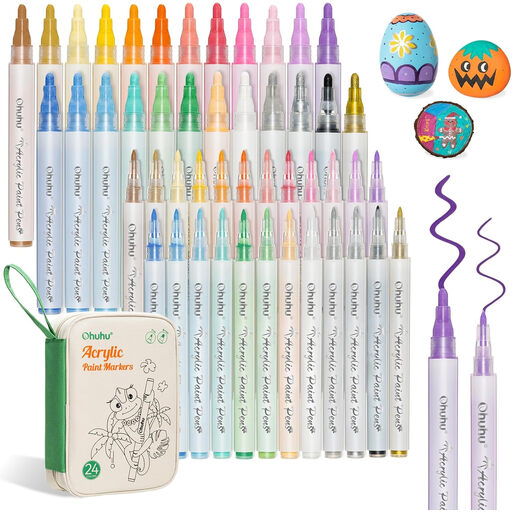
Why this choice suits this profile : This set of acrylic markers is suitable for decorative projects on wood, stone, glass, ceramic, plastic, fabric, paper or canvas.
The two nib types prevent you from covering a large surface with a fine marker or attempting detailed work with a marker that is too broad.
24 fine 0.7 mm nibs and 24 reversible round or chisel nibs, with water-based ink and a storage case.
We have brought together a complete, real-time updated selection of products that meet these exacting selection criteria and European safety standards.
To get started, prepare a non-porous palette, a pot of water and two or three suitable brushes. Flat brushes are effective for covering backgrounds, while round brushes allow you to work on details. Clean your tools with water while the paint is still wet.
Carefully reseal tubes and markers after every use. With acrylic pens, shake the marker barrel, press the nib several times to bring the ink down, then store them flat if the instructions recommend it. Before painting an item that will be handled or kept outdoors, always test the paint on an inconspicuous area.
If the product is intended for a child, check the recommended age, warnings and safety instructions shown on the packaging. Artists’ paint should not be applied to skin or nails unless it has been specifically designed for that purpose.
A set of six to twelve colours is generally enough to learn about colour mixing, flat areas and layering. Choose tubes that are easy to dispense, a consistent texture and a specification sheet stating which surfaces are compatible. An acrylic paint kit for beginners including paper and brushes can also be useful for getting started without buying each accessory separately.
No. Canvas, paper, card and slightly absorbent wood are generally easy to prepare. Glass, plastic, ceramic and fabric may require thorough cleaning, a primer or protection after drying. Always consult the manufacturer’s recommendations and check the paint’s durability before starting on an entire piece.
It depends on how well they are sealed, the storage conditions and how often they are used. Keep the tubes in a cool, dry place away from sunlight, then wipe the threads before replacing the cap. Paint that has become lumpy, heavily separated or difficult to mix will be less pleasant to use.