
Livraison le jour même ou le lendemain

Qualité garantie

Débloquez vos offres de bienvenue: Livraison GRATUITE | Jusqu'à -80 % | 30 jours d'essai gratuits à JoyPlus
Téléchargez l'application
Acrylic markers and colouring pens are not interchangeable. Drawing on paper, adult colouring, lettering, decorating pebbles, personalising wood or creating designs on glass: each use has its own requirements. Yet packaging often focuses mainly on the number of colours, without clearly explaining what the pens can actually do.
Before you buy acrylic paint pens or art markers, it is worth keeping three common pitfalls in mind.
For paper, bullet journalling and colouring, water-based ink can be perfectly suitable, particularly with drawing and colouring pens such as the STABILO Pen 68 pens. Their ink is described as odourless, washable and suitable for paper.
For wood, glass, stone, metal or ceramics, it is better to choose markers for glass, wood, metal and ceramics with pigmented acrylic ink. Product descriptions may mention opaque coverage, water resistance or good lightfastness. This does not necessarily guarantee permanent decoration on every surface: clean the surface, test the product in an inconspicuous area and check the usage instructions.
Do not automatically use art markers on surfaces intended for contact with food, on skin or on children's items. Always check the manufacturer's warnings.
The right choice depends above all on the effect you want to create:
Watercolour pens and brush tips often use transparent or easily blendable ink. They are therefore useful for creating gradients, but are generally less opaque than an acrylic marker designed for dark surfaces.
A set of 48 pieces does not necessarily contain 48 different shades. The Ohuhu 48 PCS Acrylic Paint Pens, for example, contains 24 colours in duplicate: 24 fine-tip markers measuring 0.7 mm and 24 markers with reversible nibs, featuring a round tip measuring 1.8 to 2 mm and a chisel tip measuring 4 mm. This is a practical choice if you want to keep the same palette while varying the line width.
To make your markers last as long as possible:
The products below meet different requirements. Before ordering, compare the nib, type of ink, number of colours and compatible surfaces.
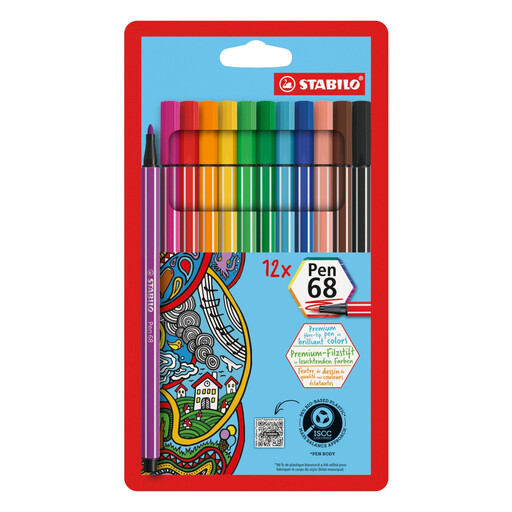
Why this choice suits this profile : An affordable set for getting started with drawing, colouring, creative notes and journalling on paper.
The 1 mm bullet tip is versatile enough for beginners, so you do not need to buy several formats straight away.
Odourless, water-based ink, 12 assorted colours and a drying-resistant technology advertised to last for up to 24 hours without the cap.
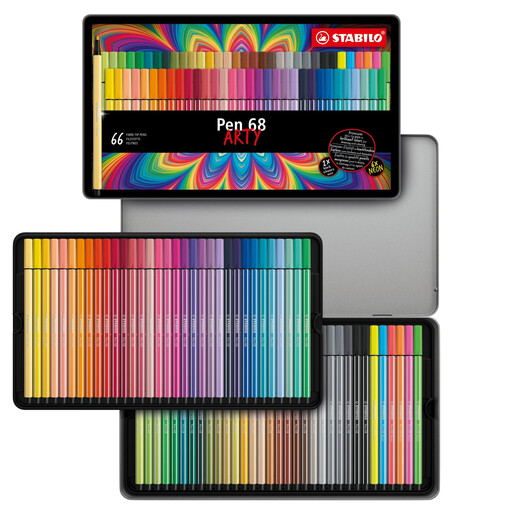
Why this choice suits this profile : A generous palette for illustration, mandalas, adult colouring and regular projects that require a wide range of shades.
The set clearly states the number of shades and includes a practical metal box to prevent losses and keep the pens neatly organised.
65 colours advertised across the range, 1 mm M tip, water-based ink, and barrel and cap made from 96% bio-based plastic according to ISCC Plus certification.
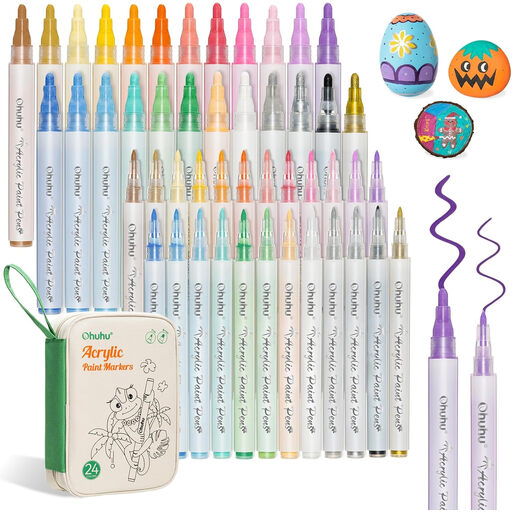
Why this choice suits this profile : A set designed to take you from precision work to solid blocks of colour on paper, wood, glass, stone, fabric, plastic or ceramics.
Both nib formats use the same 24 colours, so there is no need to rebuild your palette every time you change technique.
Highly pigmented, water-based acrylic ink, 24 fine 0.7 mm nibs and 24 reversible round or chisel nibs.
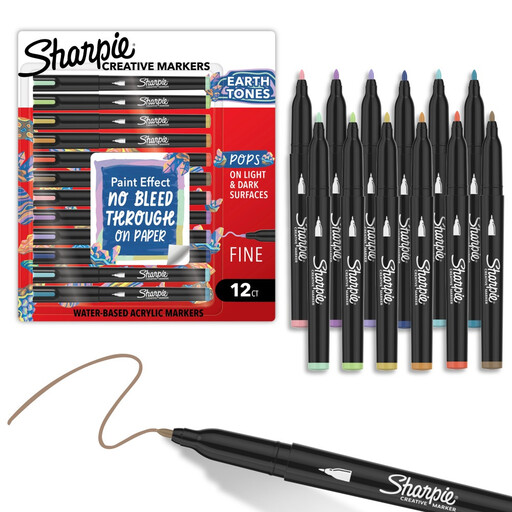
Why this choice suits this profile : Illustrators, DIY enthusiasts and personalisation fans can make the most of a fine tip for patterns, outlines and small inscriptions.
The product description specifies the compatible surfaces and recommends testing the marker first on delicate materials, helping you avoid unwanted surprises.
Water-based acrylic ink, fine tip, 12 assorted shades and advertised use on metal, wood, ceramics, glass, stone and canvas.
We have selected a complete, real-time updated list of products that meet these demanding selection criteria and European safety regulations.
Some models are designed for these surfaces, but adhesion depends on how the surface is prepared and finished. Clean and dry the surface thoroughly, test the product in an inconspicuous area and follow the drying instructions. If the item needs to be washed regularly, additional protection may be required; however, this is not always supplied with the marker.
It depends on how often it is used, the pressure applied to the nib, storage conditions and how carefully the cap is replaced. Acrylic inks should generally be capped immediately after use. For water-based pens, horizontal storage and careful closure help maintain a consistent ink flow.
Choose fine-tip pens for outlines, details and precise writing. Brush-tip pens are better suited to lettering, gradients and strokes whose thickness varies with pressure. For versatile use, a set combining several nib types, such as certain acrylic paint pens with interchangeable tips, can help you avoid buying multiple sets.