
Livraison le jour même ou le lendemain

Qualité garantie

Débloquez vos offres de bienvenue: Livraison GRATUITE | Jusqu'à -80 % | 30 jours d'essai gratuits à JoyPlus
Téléchargez l'application
Customising a pair of trainers, decorating pebbles found on the beach, adding a final touch to a canvas… the acrylic marker is the ultimate creative tool. The problem is, the market is flooded with promises that aren't always kept, and a poor choice can quickly turn a moment of joy into a real headache. As a product expert for Joybuy, my mission is to guide you through this jungle to find the perfect marker for your projects and, most importantly, help you avoid the most common pitfalls.
Before you start, keep an eye out for these three classic disappointments that await DIY craft enthusiasts?:
To avoid these setbacks, you just need to focus on the few technical features that truly make a difference.
By mastering these few points, you'll be sure to choose an acrylic paint pen that is perfectly suited to your project.
The tip is the soul of the marker. It defines your style, from filling large areas to the most minute details.
A good multi-surface paint pen must provide excellent coverage. It's all about pigment concentration: quality ink should be opaque in a single pass, even on the darkest of surfaces.
Always check the list of recommended surfaces provided by the manufacturer. A high-performance marker must adhere durably to a wide variety of materials:
For a marker for stone or a pen for glass, high pigmentation and strong adhesion are non-negotiable criteria.
Most modern acrylic markers are water-based. The advantages: they are virtually odourless and can be cleaned up with just water before they dry. Once dry, the ink becomes water- and light-resistant, ensuring the longevity of your creations. A word of caution, however: for objects intended for outdoor use or repeated washing (like a mug), applying a finishing varnish is still essential for foolproof protection.
Rather than an endless list, we've selected three options that excel in their respective fields, for three distinct creative profiles.
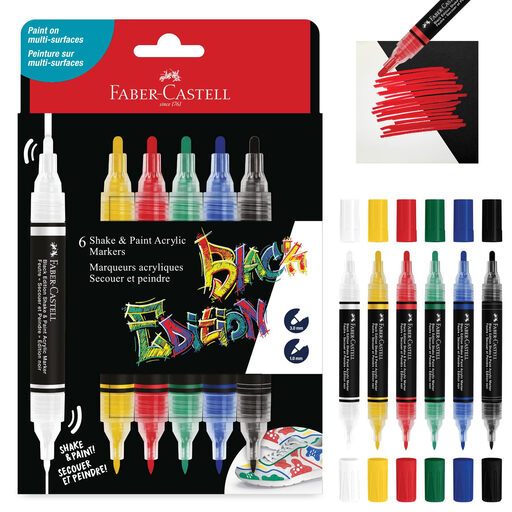
The verdict: Perfect for the all-rounder DIY enthusiast. This kit lets you switch from customising a metal object to decorating wood without changing tools. The secret? A clever dual tip and a truly multi-surface ink.
The "Shake & Paint" system ensures pigments are evenly mixed for flawless opacity. The dual tip (3 and 1 mm) is robust and designed to handle different textures, which prevents premature wear.
The dual tip is a true Swiss Army knife, allowing you to juggle between block colours and fine details. The ink is highly water-resistant once dry, ensuring your creations last.
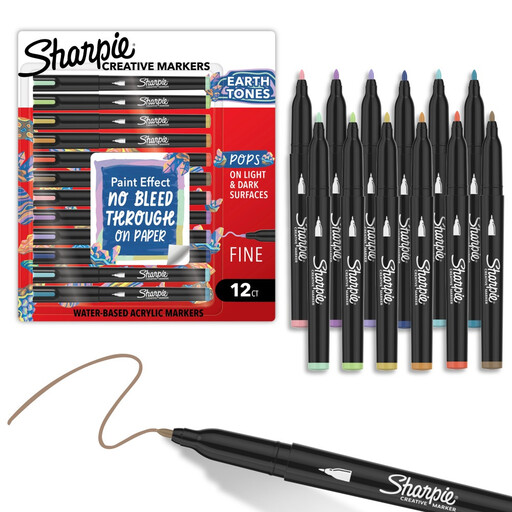
The verdict: The go-to for illustrators, fans of intricate colouring, and anyone with an eye for detail. This kit is built for line work and surgical precision.
The fine tip is calibrated for a clean, consistent line, minimising the risk of fraying. The ink is designed not to bleed or show through paper, an essential detail for sketchbooks.
It allows you to layer colours without them blending, which is perfect for creating depth and texture. Bonus: the marker is ready to use, with no need to shake it.
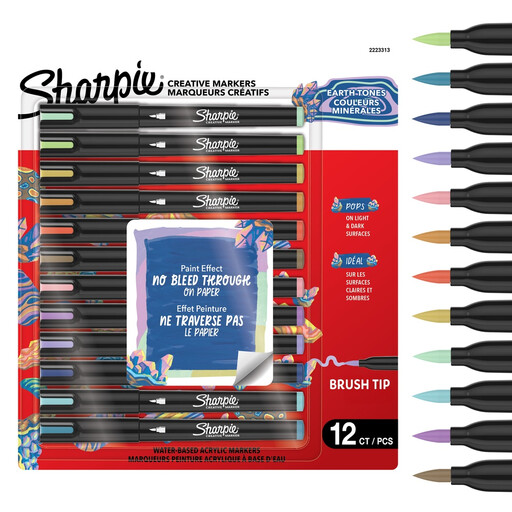
The verdict: For artists seeking an expressive, almost painterly finish. The brush tip frees up your movement and allows you to vary line thickness, getting close to the feel of traditional painting without the hassle.
The ink, which is highly opaque, lays down rich colour on the first pass, eliminating the risk of a transparent finish. The brush tip is both flexible and durable, offering good control without wearing out prematurely.
The brush tip is perfect for creating both thick and thin strokes, whether for calligraphy or dynamic fills. You get the look of paint with the simplicity and cleanliness of a marker.
We've put together a complete selection of markers that meet our quality criteria and current standards.
Most pump-action models need to be primed. It's simple: shake the marker vigorously (with the cap on) to mix the pigments well. Then, on a piece of scrap paper, gently press the tip down several times until the ink fully soaks it. Your marker is ready to use!
That's their greatest strength: they're ultra-versatile! They adhere to almost anything: paper, cardboard, wood, canvas, fabric, stone, pebbles, plastic, metal, glass, ceramic… Pro tip: for very smooth, non-porous surfaces (glass, glazed ceramic), a very light sanding or a primer undercoat can improve adhesion.
Even though acrylic ink is quite water-resistant once dry, its durability can be enhanced on objects that are frequently handled or exposed to the elements. For ceramic or glass, baking in a low-temperature oven (be sure to follow the manufacturer's instructions!) is the best solution. For other surfaces (wood, stone, plastic), one or two coats of spray varnish (matte, satin, or gloss) will be enough to protect your creation for the long term.