
Livraison le jour même ou le lendemain

Qualité garantie

Débloquez vos offres de bienvenue: Livraison GRATUITE | Jusqu'à -80 % | 30 jours d'essai gratuits à JoyPlus
Téléchargez l'application
Acrylic markers have everything creatives could want: their opaque finish, vibrant colours and versatility make them perfect for decorating a wide range of surfaces. But a poor choice can quickly backfire – a tip that’s too broad, ink that can’t be corrected, or a set that doesn’t include the shades you need.
Before you buy a set of acrylic paint pens, take the time to think about what you’ll be using them for, the surface you want to decorate, and the kind of finish you’re after. Here are the key factors to consider, so you can avoid disappointment and find the markers that best suit your projects.
Not all paint markers are designed to create a lasting decoration. A water-resistant acrylic ink is better suited to wood, stone or metal. On the other hand, a water-based, erasable ink is more appropriate for decorating a window or shopfront.
For temporary decorations, washable paint markers for glass are the most practical choice. The Maped Marker’Peps Window, for example, uses a water-based ink that wipes off with a damp cloth. Permanent acrylic markers, by contrast, usually require careful surface preparation and a specific cleaning method.
A set of 24 or 36 shades isn’t necessarily better than a smaller selection. For lettering, mystery colouring or outlining, the precision of the tip often matters more than the number of colours available. When personalising objects, check that the set actually contains the shades you’ll need: white, black, primary colours or warm tones.
Six colours can be enough to create strong contrasts and graphic patterns. A 12-shade set will be more comfortable for adult colouring, layered gradients or more nuanced decorative compositions.
A pen that works brilliantly on paper can behave very differently on glass, ceramic or plastic. In every case, the surface must be clean, dry and free from dust or grease. On a non-porous surface, always test in an inconspicuous spot before you start.
Manufacturers usually list the compatible surfaces. Bear in mind, though, that a surface being listed as compatible doesn’t guarantee it will hold up well in every condition.
The choice of tip directly affects how comfortable the marker is to use and the final result:
The Faber-Castell Black Edition Shake & Paint Acrylic Marker, for instance, features a dual round tip of 3 mm and 1 mm, making it handy for alternating between solid blocks of colour and fine details.
On dark paper, stained wood or stone, a low-coverage ink may need several coats. Go for a formula described as opaque or highly pigmented. The result will also depend on the texture and colour of the surface.
Some ranges allow you to layer shades to create depth effects, without the colours blending immediately. Let each layer dry before applying the next to minimise smudging and streaks.
Acrylic pens don’t all work or store the same way. Some need to be shaken and then primed by pressing the tip several times on a scrap sheet. Others are ready to use straight out of the pack.
A few simple habits will help extend their lifespan:
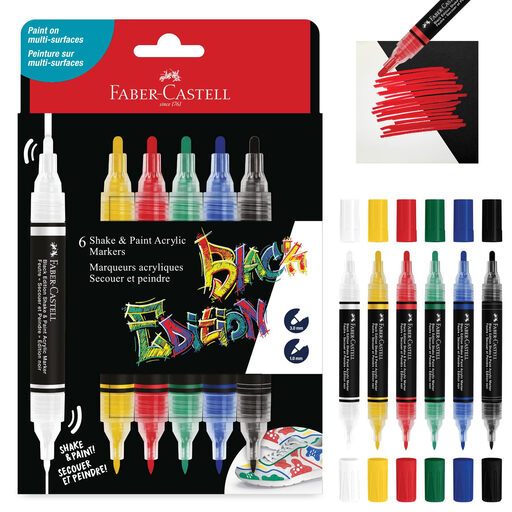
Why this choice suits this profile: With its six colours, this set lets you create your first projects on paper, wood, stone, glass, metal, plastic or fabric, without having to buy lots of different products.
Its dual tip of 3 mm and 1 mm means you don’t need to buy a broad pen and a fine-tip marker separately.
An opaque, highly pigmented acrylic ink, plus six classic shades suitable for drawing, writing and creative hobbies.
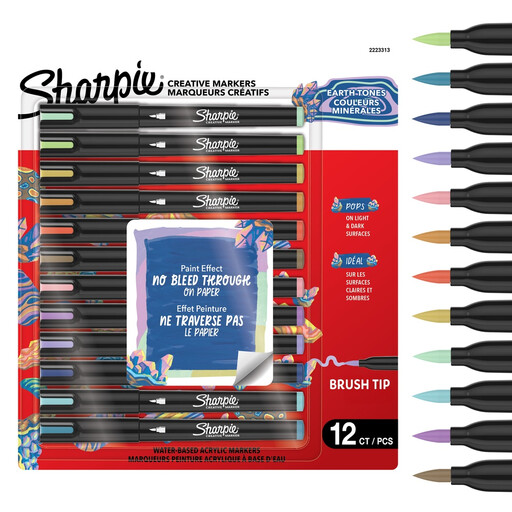
Why this choice suits this profile: Fans of lettering, illustration and expressive colouring can vary the stroke width by adjusting the pressure they apply.
The brush tip works equally well for writing and filling, rather than limiting the set to a single stroke width.
Twelve warm tones, a water-based acrylic ink, and the ability to layer colours once each coat is dry.
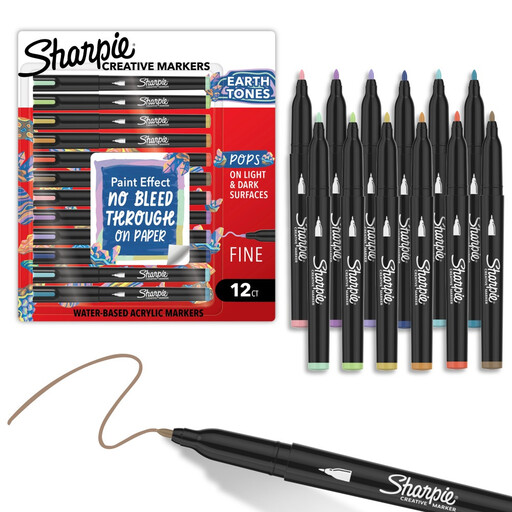
Why this choice suits this profile: Fans of mystery colouring, detailed drawing and meticulous personalisation will appreciate the control that a fine tip offers.
The fine tip reduces the risk of going over the edges in small areas – a common problem with broad-tip markers.
Twelve assorted colours, a water-based ink, and application said to be suitable for metal, wood, glass, ceramic, stone and canvas.
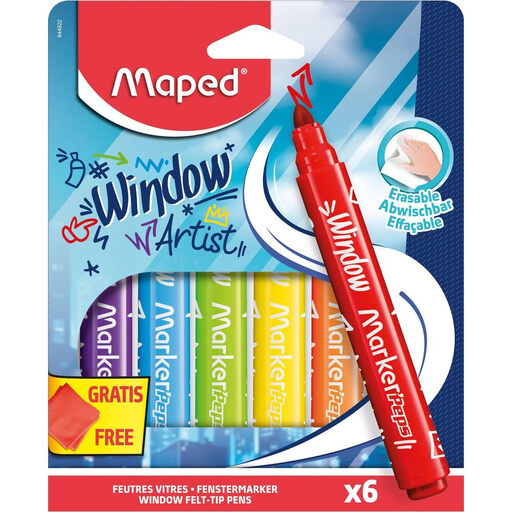
Why this choice suits this profile: This kit is ideal for decorating windows, mirrors, glass doors and shopfronts, especially when messages or designs need to be changed regularly.
Its water-based, erasable ink stops a seasonal decoration from becoming a permanent mark. A 20 × 20 cm microfibre cloth is included.
Six colours, a 5 mm tip for large motifs, and a chunky barrel that provides a comfortable grip.
We’ve put together a comprehensive, real-time list of products that meet these demanding selection criteria and European safety regulations.
Place a protective sheet underneath your work, especially if the paper is thin. Apply even pressure and let each layer dry before moving on. For adult colouring, fine tips help prevent going over the lines, while a brush tip makes it easier to fill areas and vary stroke thickness.
Clean the surface with a suitable product, then dry it thoroughly. Test in an inconspicuous spot before drawing on the final area. For temporary decoration, choose a washable ink. Permanent markers should not be used on surfaces that come into contact with food, unless the manufacturer explicitly says otherwise.
These surfaces can be uneven or rough. A sturdy tip and an opaque ink make application easier, though you may need several coats. Protect your work surface – acrylic ink can stain fabrics and some surfaces.
Yes, as long as you choose a fine tip or a brush tip depending on the size of the areas you’re colouring. A fine tip makes it easier to work on details and outlines, while a brush tip lets you vary the stroke width. Always test the ink on a similar page before you start.
It depends on how often you use them, the storage conditions and how well you replace the cap. Store them horizontally if the manufacturer recommends it, and recap them immediately after use. A dry tip or uneven ink flow can indicate poor storage or a marker that’s nearly empty.
It depends on the formulation. Washable paint markers for glass that are water-based can usually be wiped off with a damp cloth, like those designed for windows. A water-resistant acrylic ink may leave a lasting mark – check the manufacturer’s instructions and do a test first.