
Livraison le jour même ou le lendemain

Qualité garantie

Débloquez vos offres de bienvenue: Livraison GRATUITE | Jusqu'à -80 % | 30 jours d'essai gratuits à JoyPlus
Téléchargez l'application
Acrylic markers have plenty to offer: they provide great coverage, work on a wide range of surfaces, and are just as good for decorating a pebble as they are for personalising a notebook, glass or wood. But not all acrylic paint pens are created equal when it comes to different uses. The wrong tip, ink that’s too transparent, or a misunderstood claim about durability can quickly turn a creative project into a disappointing purchase.
Before you fill your basket, here are the most common mistakes and the key criteria to consider when choosing multi-surface paint markers that are genuinely suited to your projects.
The term “multi-surface” generally means the ink can be applied to several materials. It doesn’t, however, guarantee the same result on paper, glass, fabric or plastic.
Smooth, non-porous surfaces often need to be cleaned first. On glass and metal, greasy marks can prevent the ink from adhering properly. On fabric, washing and rubbing can also damage the design. Always test on an inconspicuous area, especially if you’re decorating a decorative or valuable item.
Waterproof acrylic markers, or those described as water-resistant, can be fine for decorations that are only occasionally exposed to moisture. However, this feature doesn’t mean they’ll hold up indefinitely against UV rays, weather, rubbing or washing.
If you’re decorating a garden stone, a pot or an item placed on a balcony, check the manufacturer’s recommendations and consider applying a protective coating after drying. Water-resistant ink doesn’t automatically make an object food-safe.
A fine tip is ideal for outlines and lettering, but it quickly becomes laborious when you need to fill a large area. Conversely, a broad tip lacks precision for lettering, small motifs or details on a stone.
Dual-tip acrylic markers are handy for switching from block colour to finishing touches without needing multiple tools. Brush-tip models let you naturally vary the line thickness, while round tips offer a more consistent application.
For writing on a dark surface, choose an opaque acrylic ink that’s rich in pigment. White, metallic shades and neon colours are particularly effective for creating contrast on dark wood, coloured ceramic or black card.
A well-covering ink also makes touch-ups and colour layering easier. However, let each layer dry before applying the next to avoid smudging and bleeding.
Here’s a simple guide:
A reversible or dual tip often means you can get by with fewer pens in your craft kit.
Pump-action markers, like the “Shake & Paint” models, need to be shaken with the cap on, then primed on a scrap sheet of paper. This step mixes the pigments and helps regulate the ink flow.
After use, close each cap securely and store the pens flat if the manufacturer recommends it. Inks can stain fabrics and some surfaces. Use them in a well-ventilated room, don’t apply them to your skin, and keep them out of reach of children under 3 years old due to small removable parts.
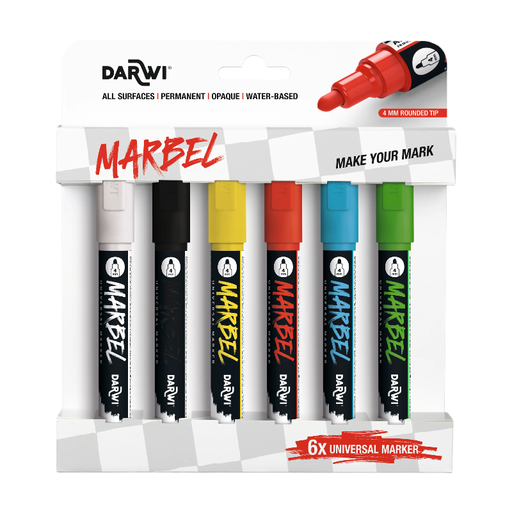
Why this choice suits this profile: This set of six primary colours offers a simple starting point for discovering acrylic pens and trying out different personalisation projects.
The 4 mm round tip means you don’t need to buy several different pens for general lines and small areas of colour. The claimed compatibility with various surfaces should still be checked for your specific material.
A matt, opaque, water-based acrylic ink according to the product sheet. The set includes white, black and four coloured shades.
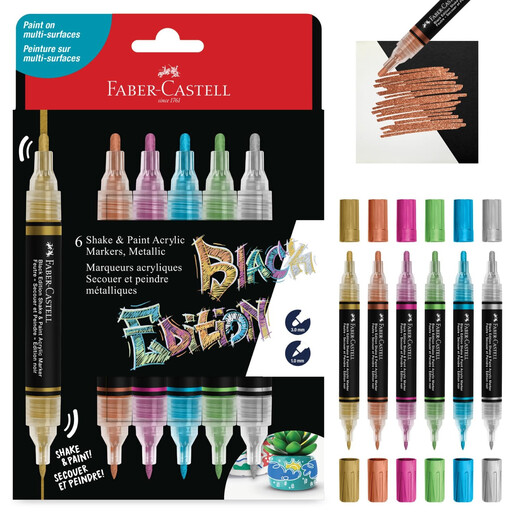
Why this choice suits this profile: Artists who enjoy working with contrasts, decorative objects and dark surfaces get six metallic shades here.
The dual tip (3 mm and 1 mm) reduces the compromise between filling and detail work. The ink is claimed to be opaque, water-resistant and compatible with multiple surfaces.
Six metallic shades, an ink level indicator and a pump system to prime the flow.
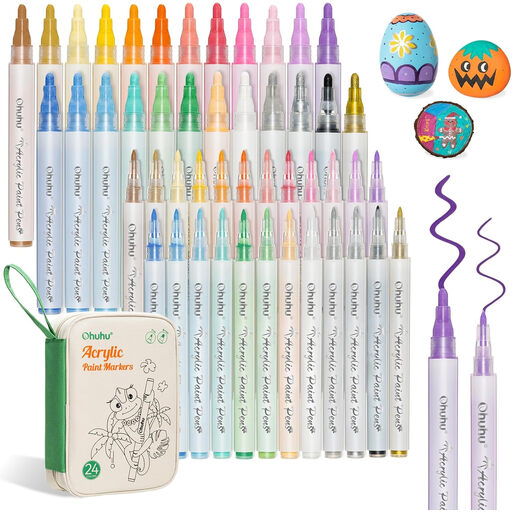
Why this choice suits this profile: This set is aimed at creators who move from painting on stone to wood, fabric, ceramic, glass, plastic or paper, with a particularly extensive palette.
The two tip sizes mean you don’t have to buy fine and broad pens separately. The reversible nibs let you switch from a round tip to a chisel tip.
24 assorted colours in a fine 0.7 mm tip and 24 markers with a round or chisel tip. The water-based ink is claimed to be water-resistant and lightfast.
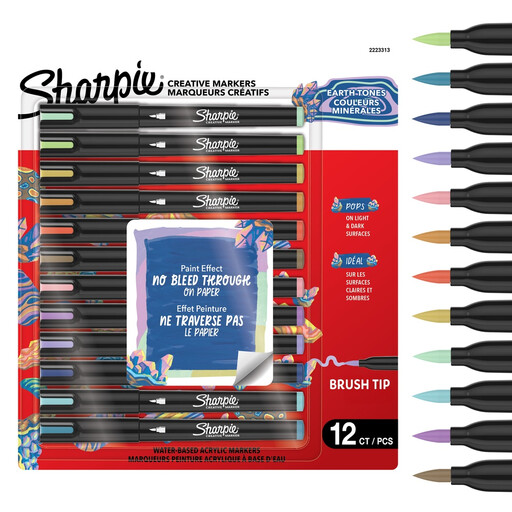
Why this choice suits this profile: The flexible tip is ideal for varied line widths, colouring in motifs and decorative lettering on paper or various creative surfaces.
No shaking needed, which simplifies preparation. The brush tip lets you vary the width by adjusting pressure, without having to buy multiple sizes.
12 warm tones, a water-based acrylic ink and a finish claimed to be opaque and smudge-resistant. The manufacturer recommends storing them flat.
We’ve put together a comprehensive list, updated in real time, of products that meet these demanding selection criteria and European safety standards.
Clean and dry the surface thoroughly, then test on a small area. Apply thin layers and let them dry between coats. For a decoration exposed to moisture, check the manufacturer’s instructions regarding water resistance and any protective finish you might need to apply.
A 0.7 to 1 mm tip is suitable for outlines, small lettering and precise motifs. For moving from details to filling with the same pen, dual-tip acrylic markers with 1 mm and 3 mm tips are more versatile.
Its lifespan depends on how often you use it, the surface and storage conditions. Close the caps immediately, avoid high temperatures and store the pens according to the manufacturer’s recommendations – often flat. A nib that starts to dry out can sometimes be cleaned or re-primed, but a completely hardened tip may not regain its original flow.