
Livraison le jour même ou le lendemain

Qualité garantie

Débloquez vos offres de bienvenue: Livraison GRATUITE | Jusqu'à -80 % | 30 jours d'essai gratuits à JoyPlus
Téléchargez l'application
The acrylic marker has become a must-have for artists, crafters, and hobbyists. Its promise is alluring: all the richness of acrylic paint with the simplicity of a marker. Yet, in a saturated market, it's easy to get lost, make the wrong choice, and end up with a disappointing product and wasted money.
As the Head of Product Recommendations at Joybuy, my role is to help you navigate this landscape. Let's cut through the marketing jargon and focus on what truly matters. We'll review the most common pitfalls and, more importantly, how to avoid them to find the perfect paint pen for your projects.
To make the right choice, a few technical points need close examination. They are the guarantee of your acrylic marker's performance and durability.
The tip defines what you can create. Choosing the wrong one means limiting your creative potential.
The ink is the heart of your marker. Its properties determine the final look and longevity of your creations.
The great advantage of acrylic markers is their versatility. Just check that the model you're eyeing is indeed a multi-surface paint marker suited to your creative ambitions. The most common surfaces include:
Every creator has different needs. Here are a few recommended options, chosen to meet specific user profiles and to avoid the pitfalls mentioned earlier.
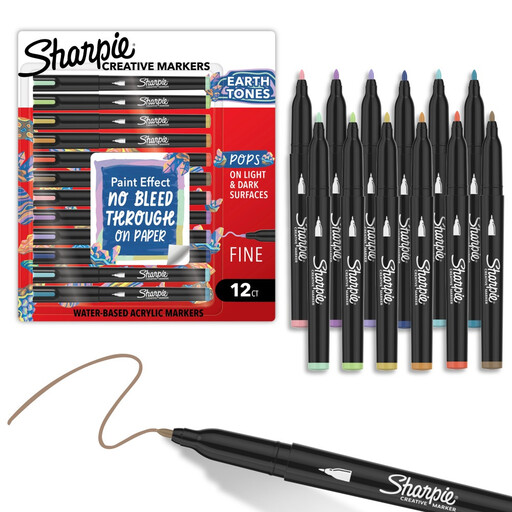
Why we chose it: For those who want to get started without the hassle. This set offers a basic colour palette and is ready to use right away, ideal for drawing, colouring, or first-time customisations on paper, wood, or ceramic.
Its "ready-to-use" formula works without shaking or priming the marker. No more risk of an inconsistent flow! The experience is much simpler and more direct.
Fine tip for details; paint-like ink is visible on both light and dark surfaces; colours layer perfectly once dry, without bleeding.
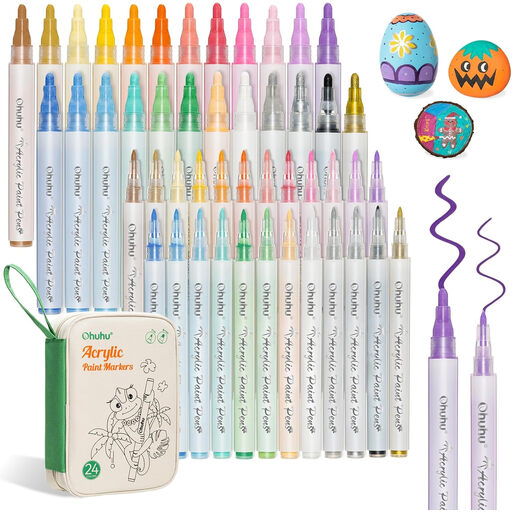
Why we chose it: For artists and crafters who juggle various project types. This comprehensive set offers an all-in-one solution to go from the finest details to the broadest colour fills without switching product lines.
This set tackles the problem of fragile and non-versatile tips head-on. With 24 fine-tip markers and 24 reversible-tip markers (bullet/chisel), you always have the right tool at hand.
An ultra-comprehensive acrylic marker set; 24 colours available in two tip types; high-pigment ink that is water- and light-resistant.
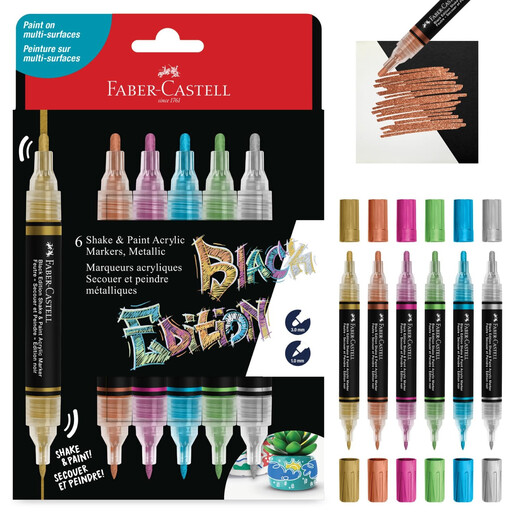
Why we chose it: For those looking to add a dramatic flair to their creations. Ideal for customising objects, card making, or projects on dark surfaces where metallic colours can truly shine.
It meets the challenge of opacity, which is often disappointing with this type of product. The ink, ultra-pigmented and opaque, is specially formulated for a vibrant and perfectly covering metallic finish, even on a black background. The "Shake & Paint" system ensures a controlled ink flow.
Versatile medium tip (2.5 mm); highly opaque and water-resistant metallic ink; excellent adhesion on multiple surfaces (glass, metal, plastic).
Discover our complete selection of products that meet our demanding selection criteria and current standards.
Most acrylic markers (unless otherwise specified, like for some Sharpie models) require priming. Shake the marker vigorously (with the cap on!) to mix the pigments well. Then, on a piece of scrap paper, gently press the tip down several times until the ink evenly soaks it. As for maintenance, the golden rule is to always close the cap tightly and store your markers horizontally. This prevents pigments from settling on one side and keeps the tip from drying out prematurely.
Once dry, acrylic ink is resistant to water and light handling. However, for bulletproof permanence on smooth, non-porous surfaces like glass or ceramic (for a mug or dish, for example), an extra step is often recommended. You generally need to heat-set the paint in a home oven. Follow the manufacturer's instructions carefully, as the temperature and baking time vary from one brand to another. Without this baking step, aggressive scrubbing or a run through the dishwasher could ruin your creation.
The acrylic markers we're discussing here are mostly water-based. They are popular for their low odour, vibrant colours, and ease of cleanup (with water, before drying). They are perfect for fine arts and crafts on a wide variety of surfaces. Oil-based markers, sometimes called "oil-based paint markers," have a stronger smell and require solvents for cleanup. Their main advantage? Superior durability and weather resistance, which generally reserves them for industrial use, outdoor applications, or on surfaces subjected to heavy wear and tear.