
Livraison le jour même ou le lendemain

Qualité garantie

Débloquez vos offres de bienvenue: Livraison GRATUITE | Jusqu'à -80 % | 30 jours d'essai gratuits à JoyPlus
Téléchargez l'application
Choosing a planner might seem straightforward, until certain flaws start to grate after a few weeks. A cramped layout, a flimsy cover or a poorly thought-out number of pages can quickly turn an organisational tool into a cumbersome accessory.
To find a school planner that suits the habits of life in France, it’s best to look beyond the cover. Size, binding, page layout, paper quality and durability are the criteria that will really make a difference day to day.
A small planner fits easily into a bag, but its limited writing space can soon make note-taking tricky. Students who need to jot down lesson times, homework and various reminders will often require a clearer layout than a simple calendar box.
At the other end of the scale, a large weekly planner can become genuinely awkward to carry on public transport. The right compromise depends mainly on how much information you need to write down each day.
A daily planner generally offers more room for appointments, tasks and detailed notes. A weekly planner, on the other hand, lets you see your workload and upcoming deadlines at a glance.
It’s also important to distinguish between a dated planner and an undated 18-month planner. The first is designed for a specific academic or calendar period. The second can be started at any time, which avoids wasting pages if your schedule changes partway through the year.
A hard cover protects the pages better inside a bag, while a soft or semi-rigid cover keeps the whole thing lighter. A spiral binding makes it easy to lay flat, but can snag in a narrow pocket. A sewn or glued binding offers a different feel and is often more compact.
Terms like “premium” or “durable” aren’t enough to judge a model. Instead, check the type of cover, the number of pages and whether it has an elastic closure, a bookmark or an inner pocket.
A5 size, which measures approximately 14.8 × 21 cm, is a reliable choice for a student planner, a notebook or a meeting pad. It strikes a good balance between reading comfort and portability.
A size close to 15 × 21 cm will suit those who want a page that’s spacious enough without sacrificing a planner that’s easy to carry. For diagrams, tables or lengthy lecture notes, an A4 squared notebook will be more comfortable, though it will be bulkier.
For school use, also check that the weeks cover your entire working period and that the planner has enough pages for free notes.
Paper weight isn’t everything when it comes to writing comfort, but it’s still a useful indicator. The notebooks featured here use 70 g/m² or 100 g/m² paper, depending on the model. Thicker paper can reduce the risk of ink bleeding through, though it doesn’t guarantee perfect opacity.
Also look at the number of sheets and pages. An A5 spiral notebook with 60 sheets won’t meet the same need as an 80-sheet model or a planner with over 300 pages.
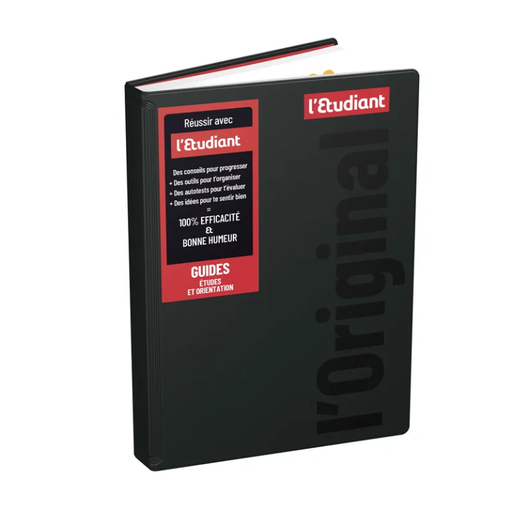
Why this choice suits this profile: its 15 × 21 cm size and one-day-per-page layout are ideal for sixth-formers and university students who want to adopt a structured approach from the start.
The daily layout stops you cramming several appointments into a tiny weekly box. The spiral binding also lets you open it completely flat.
352 pages, black semi-rigid cover, 15 × 21 cm size and simple ruling.
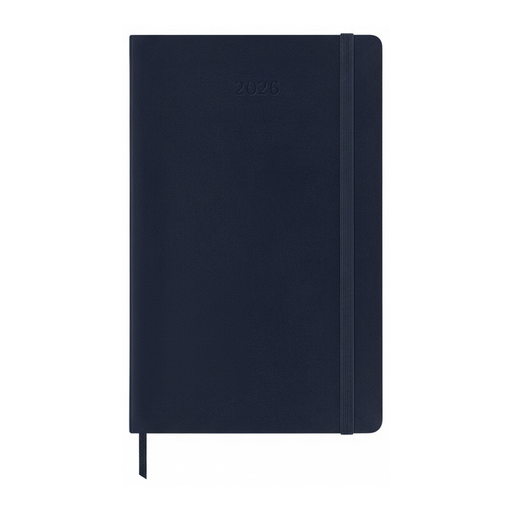
Why this choice suits this profile: this model combines one page per day with sections for ideas, goals and travel, plus handy storage spaces for personal or professional use.
A whole page is dedicated to each day, so you never run out of space. The elastic closure and inner pocket keep the planner closed and well organised.
70 g/m² acid-free ivory paper, blue soft cover, bookmark, elastic closure and lays flat.
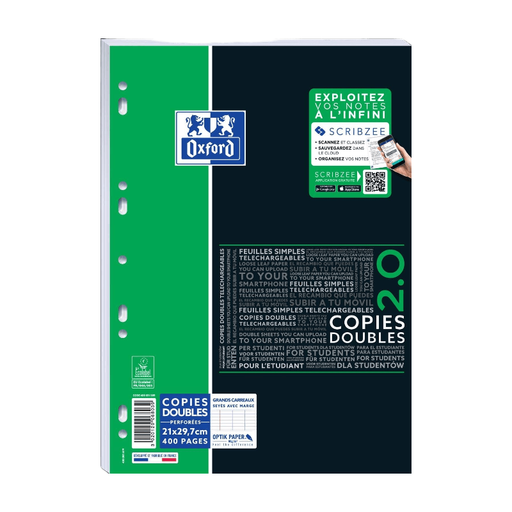
Why this choice suits this profile: teachers, students and professionals who take a lot of notes get an A4 squared support here, which complements a standard planner.
It stops you overloading a planner’s pages with lessons, calculations or diagrams. The perforated sheets can then be filed in a European-hole-punch binder.
400 A4 sheets, 5 mm grid, universal 9-hole perforation and announced compatibility with the SCRIBZEE app.
We’ve put together a complete selection, updated in real time, of products that meet these demanding criteria and European safety standards.
To keep your pages in good condition, avoid leaving the planner in a damp bag or in direct sunlight. A slim pouch will reduce rubbing against keys and other metal objects. If you use an A5 spiral notebook, check regularly that the binding isn’t becoming misshapen when it’s very full.
An undated model can be started at any time, but make sure you write in the dates consistently from the first pages. With a dated planner, save the note pages for recurring information so you don’t overcrowd the daily boxes.
A5 size, or a model close to 15 × 21 cm, is generally suitable for lessons, appointments and to-do lists. It remains readable while being easy to carry. For long notes, it’s better to have a separate A4 notebook.
A daily planner offers more space for each date and suits busy days. A weekly planner gives a quicker overview, which is handy for spreading homework, meetings and deadlines across several days.
It can avoid wasting pages when your purchase or start date doesn’t coincide with the beginning of an academic year. On the downside, you have to write in the dates and weeks yourself, which takes a bit of preparation.