
Livraison le jour même ou le lendemain

Qualité garantie

Débloquez vos offres de bienvenue: Livraison GRATUITE | Jusqu'à -80 % | 30 jours d'essai gratuits à JoyPlus
Téléchargez l'application
The controller dying mid-game, your child's favourite toy suddenly going silent, the remote refusing to cooperate… We've all felt that frustration: a dead battery at the worst possible moment! Faced with an aisle saturated with promises of "long-lasting" and "maximum power," how do you separate fact from fiction?
As experts in high-tech and everyday products, our mission is to help you see things more clearly. This guide gets straight to the point: identifying the pitfalls to avoid and helping you choose the perfect batteries for your needs, whether for everyday devices or the most power-hungry ones.
Before you fill your cart, watch out for these common mistakes. They can be costly, and not just in terms of money: your devices might pay the price, too.
To make the right choice, you need to understand a few key concepts that define a battery's performance and reliability.
Most household batteries, like the well-known LR6 battery (the technical name for AA), are 1.5V alkaline batteries. They offer an excellent performance-to-price ratio for a wide range of devices, from remote controls to toys. Lithium batteries, on the other hand, are built for more demanding uses: they handle extreme temperatures better and deliver a more stable voltage, making them ideal for high-drain devices like digital cameras or security systems.
This is arguably the most important criterion. A low-drain device (remote control, clock) draws a small amount of current over a very long period. Conversely, a high-drain device (game controller, camera flash, motorised toy) demands significant power spikes. This is where specific lines, like Duracell Optimum AA batteries, come into play. Their formula is designed to better respond to these instantaneous power demands, resulting in improved responsiveness or extended runtime in these types of devices.
A reliable battery simply must not leak. The presence of built-in protection technologies is a guarantee of safety for your valuable devices. Finally, as environmental awareness grows, recyclable packaging is becoming a key purchasing criterion in its own right. Some brands go even further by offering 100% cardboard packaging with zero plastic.
To illustrate which type of battery suits which use case, here are our recommendations for three typical profiles.
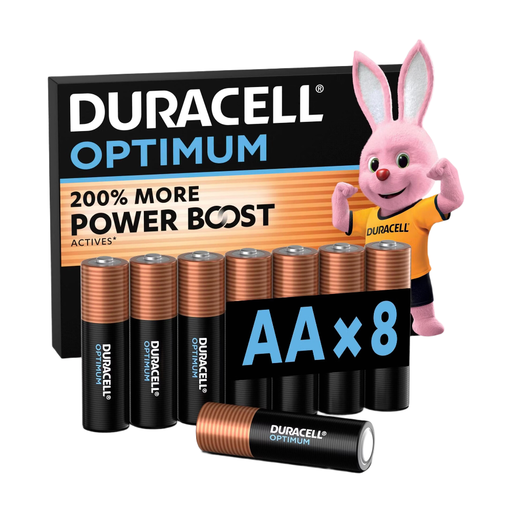
Why this choice? This profile includes families with children, gamers, and amateur photographers. Their devices (motorised toys, game controllers, electric toothbrushes) are truly power-hungry and require batteries capable of delivering consistent power.
It avoids the "universal" battery pitfall by being specifically formulated for high-drain devices. According to Duracell, its technology offers a dual benefit: either extended lifespan or superior power compared to their standard alkaline batteries.
Targeted Performance: Optimised for high-drain devices. Shelf Life: 12 years. Packaging: 100% recyclable and plastic-free.
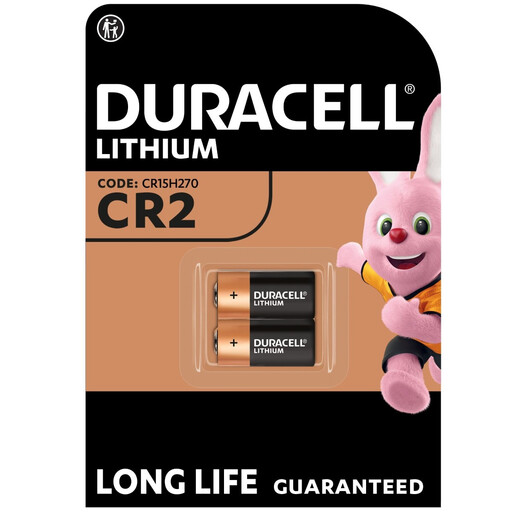
Why this choice? This user demands absolute reliability for their critical devices: motion detectors, smart locks, medical thermometers... For them, endurance and leak-proof protection are non-negotiable.
It eliminates the risk of leaks thanks to an advanced design, featuring a high-purity nylon top closure that protects sensitive electronic components. Its lithium chemistry, which is more stable than alkaline, provides an additional layer of security.
Maximum Reliability: Designed for security devices. Shelf Life: 10 years. Technology: Lithium, for stable performance even in extreme temperatures (hot or cold).
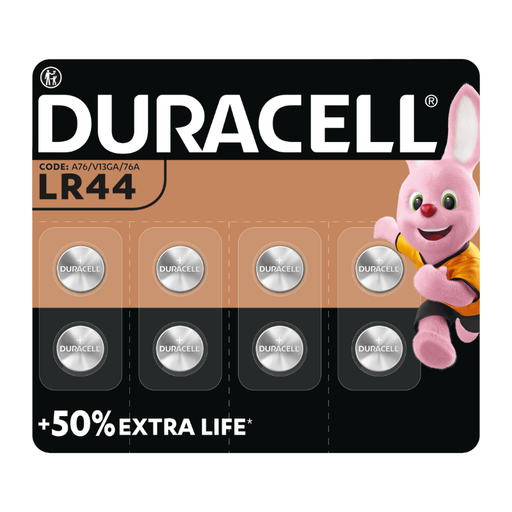
Why this choice? This profile is just about everyone. It's about powering everyday essentials: calculators, thermometers, watches, or small flashlights. The priority is a reliable, affordable, and always-ready button cell battery.
It avoids the pitfall of poor storage. With a 5-year storage guarantee, you can buy a pack with peace of mind, knowing the spare batteries will be ready when needed. The leak-proof protection is also there to safeguard your small devices.
Versatility: Compatible with a multitude of small devices (LR44/A76). Reliable Storage: 5-year guaranteed shelf life. Value Pack: An 8-pack to be prepared for any eventuality.
Explore our full selection of products that meet our strict selection criteria and current safety standards.
Duracell Optimum batteries are indeed alkaline, but their chemical formula has been optimised compared to the brand's standard batteries. According to Duracell, this technology allows them to intelligently adapt to the device's needs. In a very high-drain device (a motorised toy, for example), they can deliver more power for better performance. In a moderate-drain device (a game controller), they can offer longer runtime.
Technically, yes. If the device requires an AA size, any AA battery will work. But as we've discussed, the performance will be radically different. Using an entry-level battery in a digital camera will result in a very slow-to-recharge flash and a ridiculously short life of just a few dozen shots. For an optimal user experience, it is therefore crucial to choose batteries designed for high-drain devices.
To preserve their charge for as long as possible, store your batteries in a cool, dry place at room temperature. Avoid extreme temperatures (never in a car in direct sunlight or in the freezer!). Keep them in their original packaging to prevent them from touching each other, which could cause a short circuit and premature discharge.