
Livraison le jour même ou le lendemain

Qualité garantie

Débloquez vos offres de bienvenue: Livraison GRATUITE | Jusqu'à -80 % | 30 jours d'essai gratuits à JoyPlus
Téléchargez l'application
Printing a photo, peeling off the protective backing, and sticking it into an album or onto a wall sounds simple enough. Yet choosing the right A6 self-adhesive photo paper can quickly lead to disappointment if the material is not suited to your printer or the intended surface. To avoid unpleasant surprises, photography enthusiasts, families, and scrapbooking fans should pay close attention to the format, adhesive type, and finish of the printable surface.
The A6 photo format generally corresponds to 10 × 15 cm, or 4 × 6 inches. However, some products are marketed as A6 even though their actual dimensions—or printable area—differ slightly. The result can be unexpected margins, cropped images, or incorrect positioning in the paper tray.
Before ordering, check the dimensions provided by the manufacturer and select the matching format in your printing software.
Repositionable photo paper is easier to move than a permanent label. That does not mean it will adhere properly to every material. Dust, porous surfaces, wallpaper, fresh paint, and humidity can significantly reduce its grip.
The products featured here are not intended for use on skin, electronic devices, or delicate surfaces. Test the product in an inconspicuous area before starting a wall-decoration project.
The final appearance depends both on the ambient light and on how the print will be used. Glossy photo paper generally enhances colours and contrast, but it can also reflect windows or light fixtures. A matte finish helps minimise glare and works particularly well for albums, cards, and creations viewed at close range.
Texture also matters. A canvas- or fabric-like surface may soften the finest details while adding a more creative touch to a photo collage.
A 10 × 15 cm adhesive photo sheet must be compatible with an inkjet printer. Consult your printer’s manual to check the supported paper weight, loading direction, and recommended tray. Some models require thick or textured media to be loaded one sheet at a time.
In the print settings, select “glossy photo paper”, “matte photo paper”, or the equivalent option matching the sheet’s finish. Higher print quality uses more ink, but it allows richly detailed images to reach their full potential.
Expressed in g/m², paper weight provides an indication of thickness, but it does not tell the whole story about a sheet’s durability. Lightweight paper is easy to cut, while a heavier material is better suited to cards or decorative projects.
Product listings nevertheless deserve careful attention. For example, the specifications may mention 120 g/m² while a different weight appears in the title. If the information conflicts, check the detailed product page before placing your order.
Residue-free self-adhesive photo paper is convenient when you want to move a collage or rearrange a display. However, it should not be mistaken for a permanent fixing solution. Avoid touching the adhesive side and allow the ink to dry completely before removing the protective backing.
To keep unused sheets in good condition, store them flat in a dry place, away from sunlight and moisture.
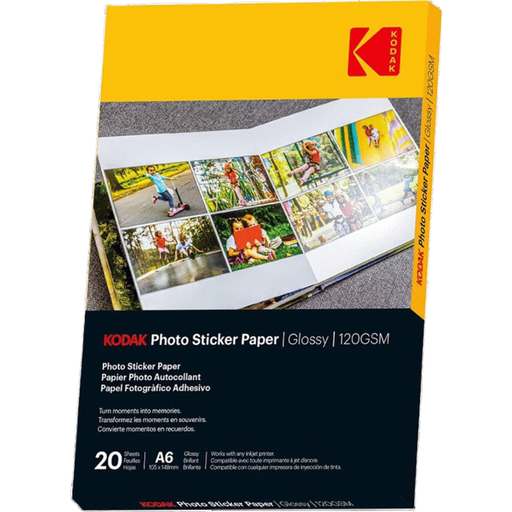
Why this choice suits this profile : this 20-sheet pack is enough to get started with your first collages, decorate notebooks, or create small family projects at home.
The listing specifies the A6 format, compatibility with inkjet printers, and a paper weight of 120 g/m². Select the “glossy photo paper” setting and allow the ink to dry before sticking the print.
20 sheets measuring 10 × 15 cm, with a glossy surface advertised as compatible with inkjet printers.
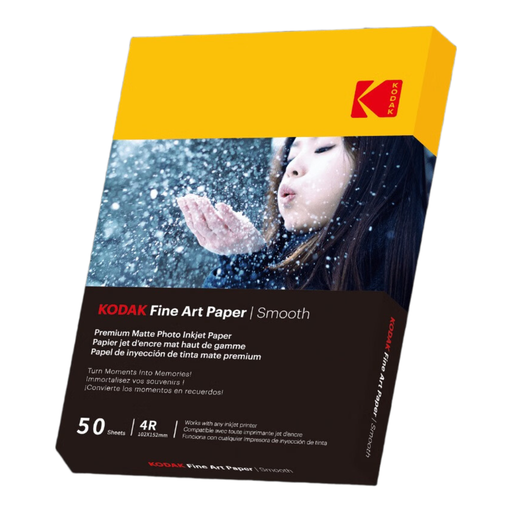
Why this choice suits this profile : this paper is ideal for photos intended for albums, invitations, and creative projects where avoiding glare is a priority.
This is matte photo paper, not self-adhesive : use photo corners or separate adhesive for albums and scrapbooking projects.
A6 format, 50 sheets advertised, and compatibility designed for use with an inkjet printer.
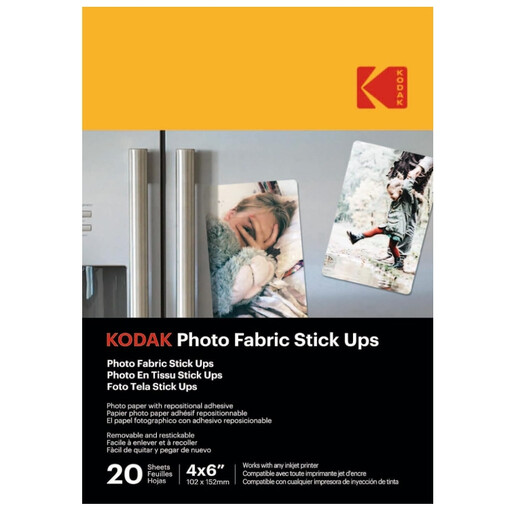
Why this choice suits this profile : its repositionable adhesive backing makes it easy to create collages, assemble albums, and arrange decorations you may want to move later.
Repositionable does not mean suitable for every surface : the material must be clean and smooth. Avoid wallpaper, fresh paint, and delicate surfaces.
20 A6 sheets, a flexible fabric base advertised as tear-resistant, and residue-free repositionable adhesive according to the product listing.
We have brought together an up-to-date selection of photo media and products suited to a wide range of printing and decorating projects.
A 10 × 15 cm photo album can complement these products. Models with two slots per page make it possible to organise your memories without permanently sticking every photo in place. For a scrapbooking project, also prepare suitable scissors, a ruler, and a cutting mat.
It is designed for inkjet printers, but compatibility depends on the tray used, the supported paper weight, and the device settings. Consult your printer’s manual and run a test before printing an entire pack.
Repositionable adhesive is designed to make moving the sheet easier and may be marketed as residue-free. The result nevertheless depends on how long it remains in place, as well as on dust, temperature, and the surface itself. Test it beforehand, especially on a painted wall.
The total cost includes the paper, ink, and any test prints. A highly colourful photo or one printed at high quality uses more ink. To minimise waste, prepare the layout on a computer and check the framing with a standard sheet of paper before using the self-adhesive media.