
Livraison le jour même ou le lendemain

Qualité garantie

Débloquez vos offres de bienvenue: Livraison GRATUITE | Jusqu'à -80 % | 30 jours d'essai gratuits à JoyPlus
Téléchargez l'application
An A6 notebook slips easily into a bag, a coat pocket or a laptop case. But not all compact models are created equal. Paper that is too thin can let ink show through, a soft cover is likely to warp quickly, and a product described as a “diary” may well have no planning layout at all.
Before you place an order, it is worth checking the features that really matter, rather than being swayed by colour or marketing promises. Here are the criteria to look at when choosing an A6 notebook that works for notes, lists, journaling or quick sketches.
A product advertised with 80 sheets usually has 160 pages, printed on both sides. This difference has a direct impact on how much you can write. When both figures are given, always check them.
A lined notebook with 80 sheets can last several weeks of note-taking. By contrast, a small pocket notebook with 40 sheets is better suited to occasional lists and ideas you want to keep to hand for a while.
Some covers sold as “leather” are actually made from faux leather, polyurethane or another synthetic material. That is not necessarily a problem, as long as you know what you are buying. A PU cover can offer a neat finish and be easy to clean, without having the same characteristics as genuine leather.
For commutes on public transport or use in the office, a rigid PU cover limits creasing and protects the pages better. However, it should still be kept away from excessive moisture.
The paper weight alone is not enough to predict writing quality, but it is a good starting point. 100 gsm paper will generally be thicker and more pleasant to write on than standard very thin paper. It will work better with gel pens, fine-tipped markers and coloured annotations. However, show-through also depends on the type of ink and the pressure you apply to the page.
For watercolours and washes, a standard lined notebook is not designed to absorb large amounts of water. If you draw regularly, take a look at our selection of sketchbooks instead.
The A6 format measures approximately 10.5 × 14.8 cm. It offers enough space for a to-do list, a journal entry or a few project ideas, while remaining easy to carry.
However, do check the total thickness if you plan to store it in a small pocket. A rigid cover, 160 pages and several built-in accessories can turn a compact notebook into quite a bulky item compared with a very slim pad.
A rigid cover protects the corners better and makes it more comfortable to write when you do not have a table to hand. An elastic closure also stops the notebook from opening in your bag. However, it does not provide protection against water or heavy knocks.
A bookmark is handy if you switch between lists or use the notebook as a personal journal. As for the pen holder, it saves you from having to hunt for a pencil at the bottom of your bag, especially when you are on the move.
Lined pages are suitable for note-taking, meeting minutes, lists and everyday writing. For drawing, a blank page offers more freedom. If you are looking for an undated diary, examine the interior structure carefully: some notebooks are simply blank or lined and have no boxes for days and months.
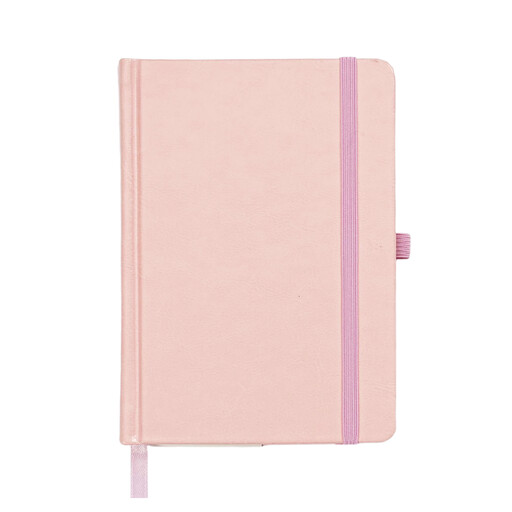
Why this choice suits this profile: This model brings together everything you need to get started: a compact size, lined pages and built-in accessories for jotting down tasks, ideas or a few personal thoughts.
The listing states 80 sheets, i.e. 160 pages, along with 100 gsm offset paper. So you can estimate its capacity before buying, without relying on a vague description.
Rigid PU cover, 100 gsm cream-coloured lined paper, ribbon bookmark, elastic closure and pen holder.
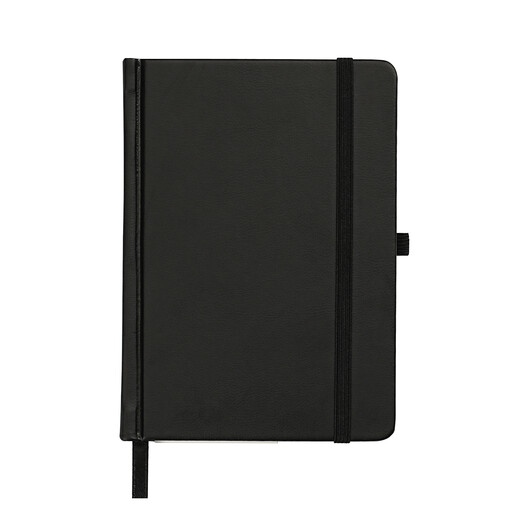
Why this choice suits this profile: Its sleek black finish fits just as well in a professional setting as it does in a laptop bag or a carefully organised journaling kit.
The material is clearly stated as PU, not genuine leather. The listing also specifies the recommended care: a slightly damp cloth, with no harsh products.
10.5 × 14.8 cm size, 160 pages, elastic closure and pen holder to keep everything neatly organised.
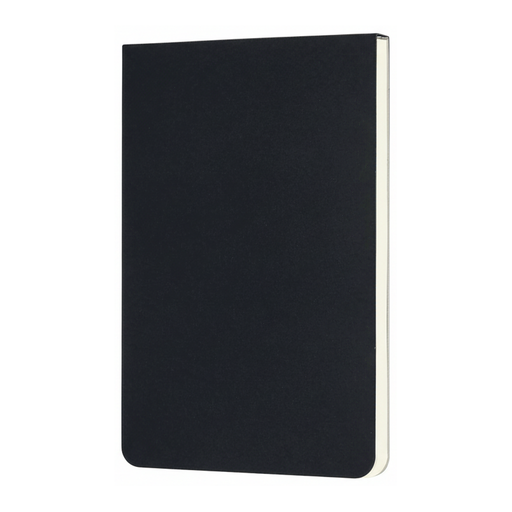
Why this choice suits this profile: Artists and users who go beyond quick notes will appreciate the larger surface and lay-flat binding, ideal for working across two pages at once.
This is not an A6 notebook: its dimensions and sketch-pad format should be taken into account before ordering. That way, you avoid choosing a surface that is too small for your sketches.
120 gsm acid-free ivory paper, expandable inner pocket and 180-degree lay-flat opening.
We have put together a comprehensive, regularly updated selection of products that meet these exacting criteria, while complying with European safety regulations.
Yes, as long as you are jotting down short items: lists, appointments, ideas, memos or personal reflections. For very long lectures or detailed meeting minutes, an A5 format will give you more space on each page.
A lined A6 notebook usually leaves the pages completely free. An undated diary, on the other hand, has structured spaces for days, weeks or months. So check the layout before you buy: some products use the term “planner” to describe a simple notebook with no pre-printed calendar.
It depends on how often you use it, the storage conditions and the tension on the elastic. A rigid cover, storing it in a dry place and closing it without forcing will all help to preserve the notebook. However, the number of pages available is still the main factor that determines when you will need to replace it.