
Livraison le jour même ou le lendemain

Qualité garantie

Débloquez vos offres de bienvenue: Livraison GRATUITE | Jusqu'à -80 % | 30 jours d'essai gratuits à JoyPlus
Téléchargez l'application
An A6 notebook slips easily into a bag, briefcase or jacket pocket. But a small format doesn’t always mean comfortable use. Paper that’s too thin, a cover that warps, an unreliable closure or no pen holder – just one detail can turn an appealing purchase into something that ends up at the back of a drawer.
Whether you’re a student, a busy professional, a creative type or a journaling enthusiast, here are the criteria to consider before choosing a compact notebook.
Product listings sometimes state “80 sheets” or “160 pages”. These two pieces of information don’t mean the same thing. A notebook advertised with 80 sheets typically offers 160 usable sides. So check what’s actually stated to compare models on an equal basis.
A leather-effect cover may feel nice in the hand, but it’s worth knowing exactly what material is used. Faux leather, often called PU, offers a soft surface and a neat finish, without being genuine leather. It should be protected from moisture and cleaned with a soft, slightly damp cloth, without harsh products.
A hard cover protects the pages better inside a bag, but it also takes up more space. If you’re looking for a pocket notebook with a hard cover, check its dimensions and weight before ordering.
A notebook without a closure can open inside your bag and damage its pages. Without a bookmark, you also waste time finding your notes. An elastic band, a ribbon bookmark and a pen holder prove particularly handy in daily use.
The A6 format measures approximately 10.5 × 14.8 cm. It’s ideal for quick lists, ideas, occasional appointments and a compact version of a diary. However, it offers less space than an A5 for tables, sketches or detailed planning.
For tracking goals over several months, an undated 18-month A5 planner or an undated weekly planner would be more suitable. So it all depends on your priority: mobility with the A6, or organisation space with the A5.
A lined A6 notebook works well for lecture notes, meeting minutes, lists and short texts. For drawing, sketching or keeping a bullet journal, blank or dotted pages are often more appropriate.
The paper weight gives an initial indication, but it isn’t enough to predict how the paper will behave with every pen. The model featured here uses off-white offset paper of 100 g/m², with lines and 160 pages stated, i.e. 80 sheets. This setup suits ballpoint pens, pencils and light felt-tips. With very liquid ink, however, it’s best to test it on one page before using it regularly.
The elastic keeps the notebook closed during transport. The ribbon lets you quickly find a page without dog-earing the sheets. As for the pen holder, it saves you hunting for a separate pen, especially on public transport or in meetings.
To keep a faux leather notebook in good condition, store it away from water, heat and sharp objects. A soft cloth is enough for everyday cleaning. Small parts, such as the elastic or ribbon, should be kept out of reach of children under 3 years old.
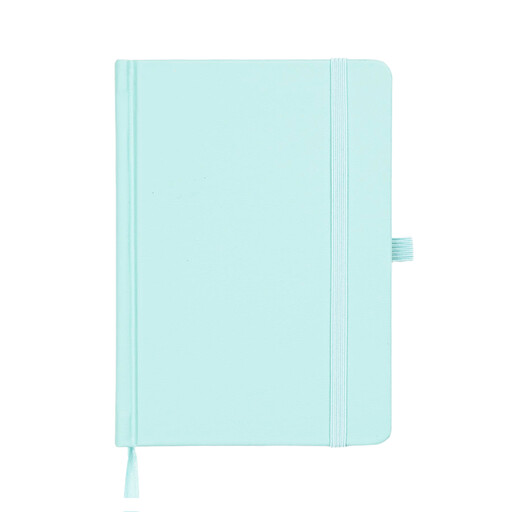
Why this choice suits this profile: its compact size and lined pages make it easy to start with lists, lecture notes or ideas to jot down every day.
The listing specifies the number of sheets, paper weight and included accessories, allowing for a concrete comparison.
A6 format, 100 g/m² offset paper, PU cover, elastic closure, ribbon bookmark and pen holder.
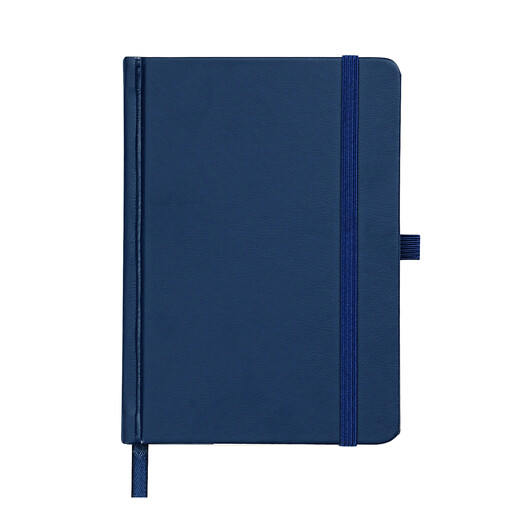
Why this choice suits this profile: its PU cover and deep navy colour give it a smart, understated look, suitable for the office, meetings or as a thoughtful gift.
The practical features are built into the cover, with no separate accessories that might get left behind.
Neat appearance, 160 lined pages, elastic closure, integrated bookmark and pen holder.
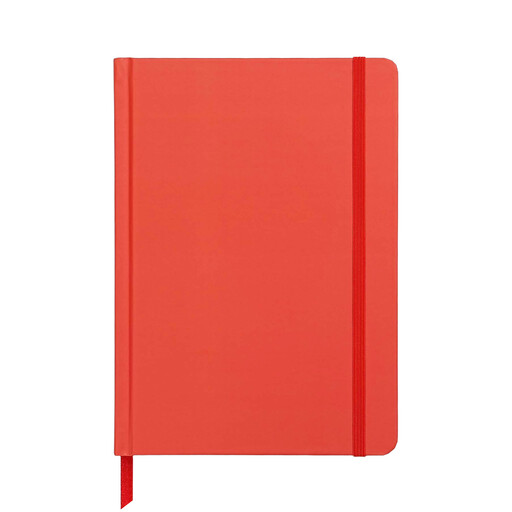
Why this choice suits this profile: for regular planning, the A5 offers more space than an A6 notebook, with undated monthly and weekly views.
The format and organisation pages are clearly stated, which avoids confusing a simple notebook with a structured planner.
224 pages, 100 g/m² offset paper, hard cover, undated monthly and weekly pages.
We’ve put together a comprehensive, real-time updated selection of products that meet these exacting criteria and European safety standards.
Yes, but you’ll need to create the dates, columns and lists yourself. For structured organisation, an undated weekly planner offers a layout that’s more immediately usable.
It depends on the number of pages used, how often you write and the conditions it’s carried in. A hard cover, elastic closure and storage away from moisture can help preserve the notebook, without guaranteeing a specific lifespan.
Ballpoint pens, pencils and fine-tipped felt-tips generally work well on lined pages. With wetter ink, test it on a page at the back of the notebook to check for show-through or bleed.