
Livraison le jour même ou le lendemain

Qualité garantie

Débloquez vos offres de bienvenue: Livraison GRATUITE | Jusqu'à -80 % | 30 jours d'essai gratuits à JoyPlus
Téléchargez l'application
The A6 notebook is the indispensable companion for professionals, students, and creatives alike. Small enough to slip into a pocket, yet large enough to jot down ideas on the fly, it offers the perfect balance between portability and writing comfort. The problem? The market is flooded with models of wildly inconsistent quality. Make the wrong choice, and you're guaranteed disappointment: pages that buckle, a binding that falls apart, or a cover that wears out in record time.
Our editorial team's mission is to help you cut through the clutter. This guide breaks down the essential criteria for choosing a pocket notebook that will last, helping you avoid the most common pitfalls.
Before we get into the technical specs, let's review the issues that can turn a purchase into a real disappointment:
To make the right choice, it all comes down to a few technical specifications that make all the difference in quality and durability.
Expressed in grams per square meter (gsm), paper weight defines the paper's thickness and density. It's the number one criterion for saying goodbye to ink that bleeds or feathers.
The cover plays a dual role: protecting your pages and expressing your style.
These details might seem minor, but in day-to-day use, they truly make a difference.
Here are three models that caught our eye, each catering to a specific need.
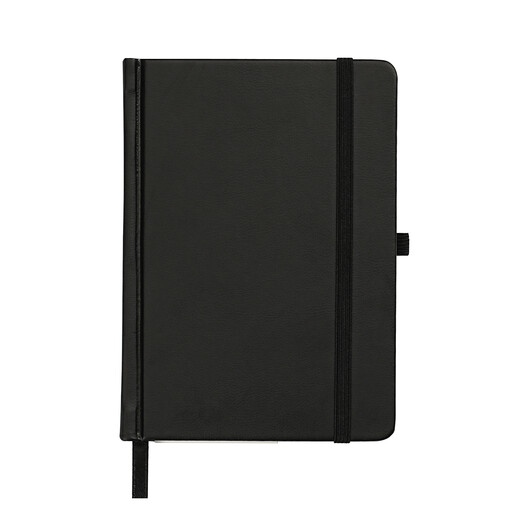
Why we chose it: Its minimalist design and hardcover PU finish make it the perfect companion for the office or on the go. It's built to withstand the rigors of daily commutes without breaking a sweat.
Its 100 gsm paper resists most inks without bleed-through, while its hardcover and stitched binding ensure rock-solid durability.
It has it all: a notebook with an elastic closure, a ribbon bookmark, and a pen loop. A remarkably practical all-in-one.

Why we chose it: Perfect for juggling different uses: a lined A6 notebook for class notes, a personal journal, or even an undated planner. Its wide range of colours means there's an option for everyone.
Its solid construction (hardcover, stitched binding) is a guarantee of durability, even when tossed around daily. It's nothing like entry-level notebooks whose pages come loose.
Excellent value for money. It includes features usually found on much pricier models.
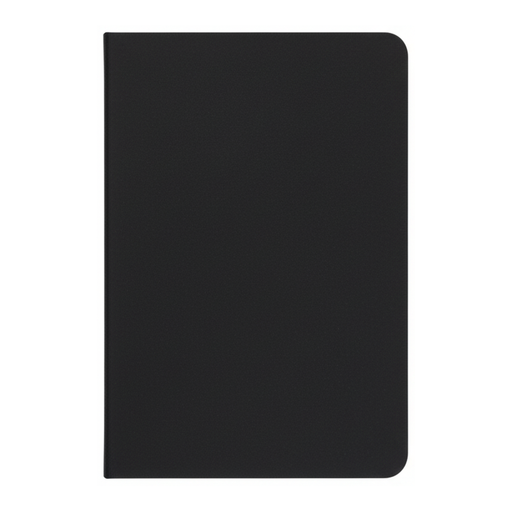
Why we chose it: For those who see their notebook as a blank canvas. Its thick paper is designed for drawing, sketching, and the most demanding inks, without compromising on quality.
Its ivory-coloured, acid-free 120 gsm paper is a true guarantee against bleed-through—an artist's worst nightmare on a standard notebook.
The quality of its paper allows for all kinds of creative expression, from writing to sketching. It opens perfectly flat (180°), which is a real comfort for working across a two-page spread.
We have curated a complete selection of notebooks that meet our quality standards.
For daily use with a ballpoint or rollerball pen, 90 gsm paper is a good compromise. If you're a fan of fountain pens, fine-liners, or you simply hate ghosting, aim for 100 gsm or 120 gsm instead. The writing experience will be optimal.
Absolutely. A lined A6 notebook is the perfect foundation for creating a custom undated planner, in the style of a bullet journal. This format gives you complete freedom to organize your weeks and months as you see fit, without the constraints of a pre-set layout. It's the most flexible and creative solution.
For a hardcover made of PU, a soft, slightly damp cloth is all you need. Avoid harsh chemical cleaners. For cardboard covers, it's best to keep them away from moisture. Also, remember to use the elastic closure: it helps maintain the notebook's shape and protects the page corners inside your bag.