
Livraison le jour même ou le lendemain

Qualité garantie

Débloquez vos offres de bienvenue: Livraison GRATUITE | Jusqu'à -80 % | 30 jours d'essai gratuits à JoyPlus
Téléchargez l'application
A good notebook is a trusted companion. Silent, yet indispensable. Whether you're jotting down a fleeting idea, planning a packed schedule, or keeping a personal diary, the right tool can make all the difference. The problem? The market is saturated with models that look the same on the surface but often hide deal-breaking flaws. Before you buy, it's crucial to know how to avoid the common pitfalls that turn a promising purchase into a sheer disappointment.
The two most common mistakes? Overlooking paper quality and underestimating the importance of the cover. If the paper is too thin, ink bleeds through, making the other side of the page unusable. A flimsy cover will warp, offer no protection, and ultimately ruin your notes after a few weeks at the bottom of a bag. Another often-ignored point: the handy little features whose absence is sorely missed in daily use.
To avoid these disappointments, it's best to focus on a few key technical specifications. These are the details that determine the durability and user experience of your future small notebook.
The term “hardcover” can be misleading. Simple thick cardboard will bend or get damaged at the first sign of moisture. For on-the-go use, a PU leather (polyurethane) cover offers far better resistance to wear and spills, all while maintaining a professional look. This type of A6 hardcover notepad effectively protects your pages and stands up much better to the rigours of daily transport.
Paper weight, expressed in grams per square metre (g/m? or GSM), is the main indicator of its quality.
A well-designed notebook includes elements that make your life easier. A notebook with an elastic closure and a bookmark is standard today. The elastic band keeps the notebook securely closed and protects the pages, while the ribbon bookmark lets you find important information in a flash. A pen loop is also a significant plus, ensuring you always have something to write with on hand.
To help you decide, here are a few models that check all the boxes, each tailored to a specific need.
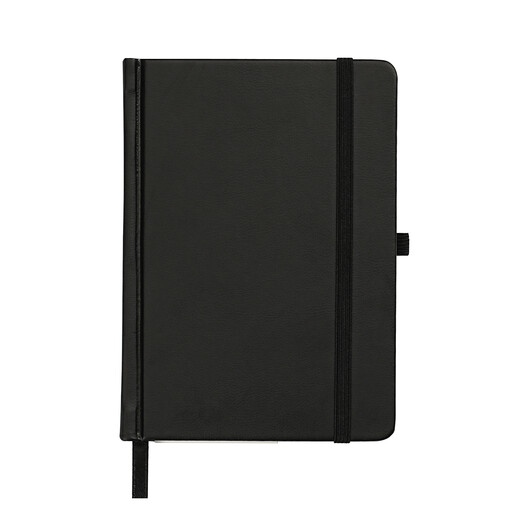
Why we chose it: Its understated design and jet black colour are perfect for a professional setting. Its durability and built-in features make it a reliable tool for meetings, travel, and daily note-taking.
The PU leather hardcover withstands daily wear and tear, while the 100 g/m? paper prevents bleed-through, even with a fountain pen.
It includes a pen loop, a bookmark, and an elastic closure. A complete solution that's ready to go out of the box.
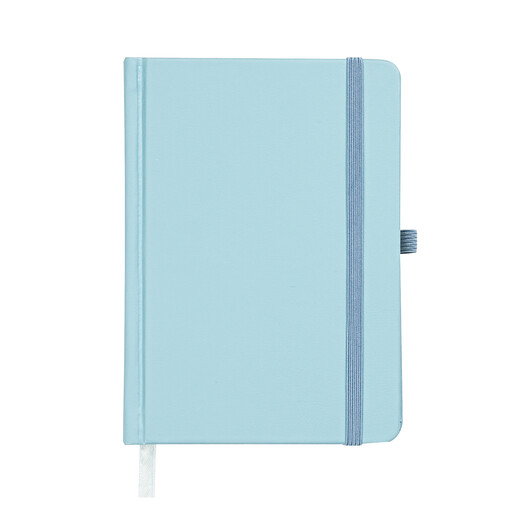
Why we chose it: Its compact A6 size is perfect for slipping into a backpack. Its bright colour makes it easy to spot in a cluttered bag. Its durable construction is built to withstand a full academic year without falling apart.
The elastic closure keeps loose papers and other documents securely in place, while the hardcover protects page corners from getting bent (the dreaded “dog-ears”).
It combines an affordable price with practical features, offering excellent value for money for intensive use.
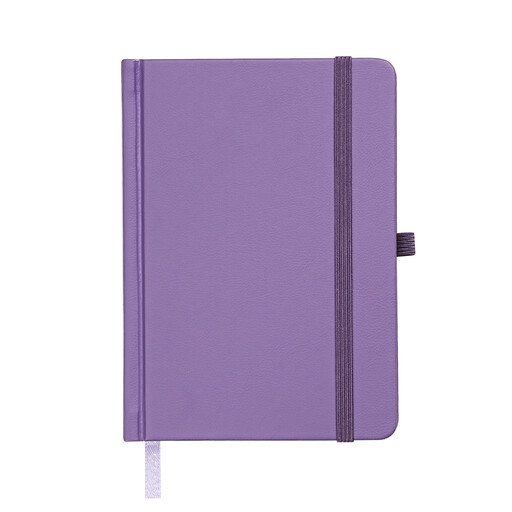
Why we chose it: The refined aesthetic and soft colour inspire creativity, whether for journaling or sketching. The high-quality paper is a choice canvas for unleashing your imagination with different media.
Its 100 g/m? offset paper is thick enough to handle fine-tip markers or fountain pen ink without “ghosting,” a deal-breaker for creatives.
The combination of a pleasant-to-the-touch cover and superior quality paper is a true invitation to a regular creative practice.
We have curated a complete, up-to-date selection of products that meet our strict selection criteria and current standards.
For everyday use with a ballpoint pen, 80 g/m? paper may be sufficient. However, for more versatility and to ensure ink doesn't bleed through, we recommend opting for 100 g/m?. It's a safe bet that works well with most pens, including fluid-ink fountain pens and fine-tip markers.
A PU leather cover is very easy to maintain. For stains or dirt, simply wipe it with a soft, slightly damp cloth. Avoid harsh chemicals or excessive moisture, and let it air dry. This simple care will preserve its appearance for a long time.
The A6 size (10.5 x 14.8 cm) is primarily valued for its portability. It's ideal for jotting down ideas on the fly, to-do lists, or key information while travelling or in meetings. For more detailed note-taking or mind-mapping, a larger format like A5 will likely be more comfortable. It all depends on your primary use case.