
Livraison le jour même ou le lendemain

Qualité garantie

Débloquez vos offres de bienvenue: Livraison GRATUITE | Jusqu'à -80 % | 30 jours d'essai gratuits à JoyPlus
Téléchargez l'application
An A6 hardback faux-leather notebook fits just as easily into a bag as a large pocket. You can use it to take notes in class, jot down ideas on the Tube, keep track of a work project or write a personal journal. Its compact format is practical for everyday use, but not all models are created equal. Before ordering, it is worth checking a few details that are often buried in product descriptions.
A6 measures approximately 10.5 × 14.8 cm. It is easy to carry, but naturally offers less space than an A5 notebook. This surface is ideal for lists, appointments and quick notes. However, it can feel cramped for detailed lessons, diagrams or lengthy reports.
So check the number of sheets, not just the number of pages advertised. A notebook with 80 sheets contains 160 pages, whereas a listing that mentions only “80 pages” refers to a different capacity.
A faux-leather cover is generally made from PU, or polyurethane, rather than animal leather. It may have a soft feel or a grained appearance, but it remains sensitive to moisture, friction and excessive heat. A reliable product description should specify the material used as well as the care instructions.
To keep a portable notebook in good condition, wipe it with a soft, slightly damp cloth when necessary, then allow it to air-dry. Avoid chemicals, large quantities of water and sharp objects, which could damage the finish.
A notebook with an elastic closure, a ribbon bookmark or a pen loop is designed for more than just looks. These small details can make everyday use much easier:
These components are still small detachable parts. They should be kept out of reach of children under 3 years of age because of the risks associated with swallowing small parts or becoming entangled.
For a lined notebook intended for writing, check the paper weight and shade. The Jubiluu model featured here uses 100 g/m² off-white offset paper across 80 sheets. This paper weight provides a useful point of comparison with thinner notebooks, particularly if you write with a fountain pen or felt-tip pen.
The ruling should also suit the way you plan to use the notebook:
There is no need to automatically choose a lined notebook if you mainly intend to draw. Conversely, a blank model will be less practical for organising notes on a regular basis.
A hardback cover offers better protection for the pages when the notebook shares a bag with keys, a tablet or books. It also provides a more stable surface for writing without a table. However, the cover’s thickness alone is not enough to judge the quality of the binding.
Some models open completely flat at 180 degrees. This is useful for anyone who writes across both pages of a spread. Sewn, glued and flexible bindings do not offer the same experience, so take the time to consult the technical details before buying.
An undated planner prevents pages from going unused when you do not open it every day. It is also suitable for lists, occasional projects and habit tracking, provided its layout suits you. A portable notebook with plain pages, meanwhile, gives you more freedom to alternate between text, sketches and annotations.
Compare the features you genuinely need with the extra bulk they add. A bookmark and elastic closure are often welcome. An internal pocket or a particular page layout may, however, carry more weight in your decision depending on how you plan to use the notebook.
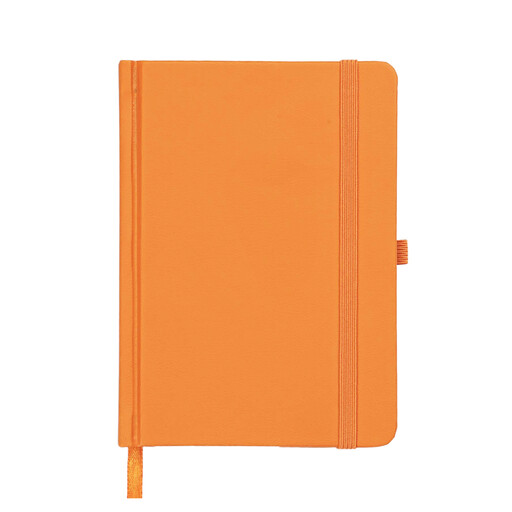
Why this choice suits this profile: Its A6 format and lined pages are ideal for taking your first notes, making lists and keeping a daily journal.
The product description clearly specifies the PU material, format, paper weight and capacity of 80 sheets, leaving none of these details unclear.
100 g/m² off-white offset paper, elastic closure, ribbon bookmark and pen loop.
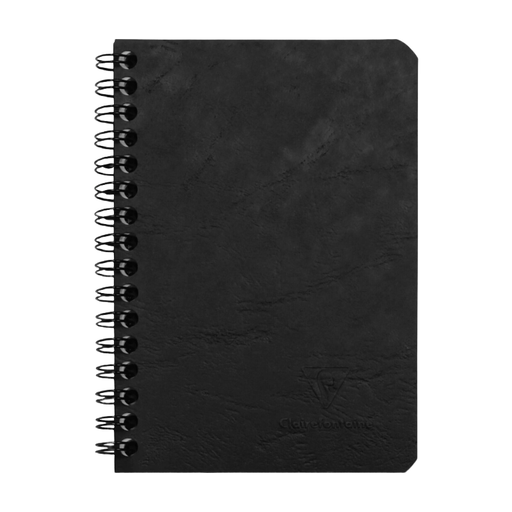
Why this choice suits this profile: Measuring 9 × 14 cm, this notebook is designed for people who value a neat presentation, a textured cover and comfortable opening.
The product description clearly states that it has a tinted board cover, lay-flat binding and 90 g/m² Velvety Vellum paper.
100 pages, 5 × 5 grid, lay-flat opening and manufacturing stated as France.
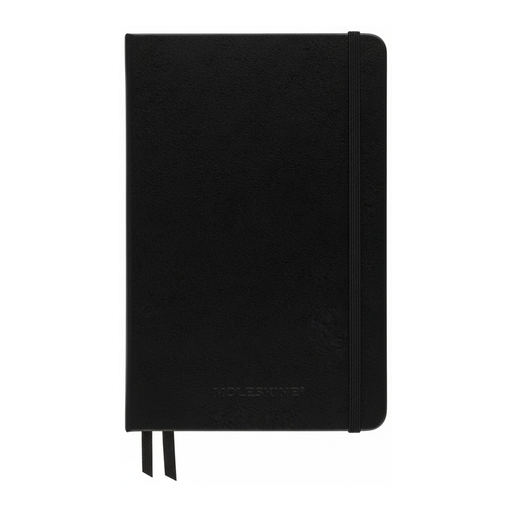
Why this choice suits this profile: Its pocket format, lined pages and integrated accessories are ideal for frequent note-taking, at work or on the go.
The specifications detail the hardback cover, 70 g/m² acid-free ivory paper, elastic closure and matching ribbon.
180-degree lay-flat opening, expandable inner pocket and FSC certification for the paper sources.
We have put together a complete, real-time selection of products that meet these demanding criteria, as well as European safety requirements.
Yes, if you write short entries or want a discreet format. For longer texts, check the page count and choose paper that suits your pen. An A6 personal journal is particularly practical when travelling, but its surface naturally limits the length of each entry.
A lined notebook gives you plenty of freedom for notes, ideas and lists. An undated planner provides more structure for tasks and appointments, but its layout may be less flexible. The right choice depends on the level of organisation and regularity you need.
Wipe it with a soft, dry or slightly damp cloth, without using harsh detergents. Avoid prolonged exposure to water, direct sunlight and heat sources. Store the notebook in a dry place, and do not force the cover or pages, so you can preserve the binding.