
Livraison le jour même ou le lendemain

Qualité garantie

Débloquez vos offres de bienvenue: Livraison GRATUITE | Jusqu'à -80 % | 30 jours d'essai gratuits à JoyPlus
Téléchargez l'application
Choosing an A5 or A6 notebook or diary isn't just about picking a pretty colour or an elegant cover. The format, paper, binding and built-in accessories all directly affect writing comfort and how long the product lasts. A student won't have the same needs as a professional who carries their diary every day, a frequent traveller, or someone who keeps a personal journal.
Here are the criteria to consider before buying, along with a selection of models suited to different uses.
A product listing might show a high number of pages, but sometimes this refers to the number of sides, not the number of sheets. To compare models properly, always check both details. For example, a notebook with 96 sheets has 192 pages, while a model with 80 sheets offers 160.
Also think about how you'll use it. A notebook for a few meetings won't need the same capacity as a personal journal or a daily diary used over several months.
A textured or faux leather cover may feel nice to the touch, but that alone doesn't guarantee good durability. Check whether it's a hard cover, a flexible material, or a cardboard construction. A hard cover protects the pages better inside a bag, while a soft A6 notebook will be lighter and easier to slip into a pocket.
An elastic closure is also handy for keeping the notebook shut and preventing pages from getting dog-eared. However, it doesn't replace storing it away from moisture and heat.
A dated weekly diary works well for regular organisation, but any weeks you don't use are generally wasted. For returning to study, a career change, or an irregular schedule, an undated 18-month diary lets you start whenever you like.
Marketing terms like "premium" should be measured against concrete details: paper weight, number of sheets, cover type, page layout and included accessories.
The A5 format, measuring roughly 14.8 × 21 cm, offers more space for lectures, meeting notes, detailed lists and planning. It's ideal for a work or study notebook, a diary that sits on a desk, or a journal where you want to write several lines each day.
The A6 format, measuring roughly 10.5 × 14.8 cm, slips more easily into a pocket or small bag. It's great for quick notes, creative ideas, shopping lists and on-the-go use. The trade-off is a smaller writing surface.
100 gsm paper is thicker than standard low-weight paper. It offers a pleasant surface for a ballpoint pen, rollerball or pencil, while generally limiting ink show-through on the reverse side. That doesn't mean every ink will work perfectly with it: very wet felt-tip pens and some fountain pen inks can bleed through more.
For a lined notebook, also check the shade of the pages. Cream or ivory paper gives a softer reading experience, while very white paper creates stronger contrast.
A bookmark paired with an elastic closure makes everyday use simpler. A built-in pen holder is especially handy when you're on the move: no more hunting for a pen at the bottom of your bag.
For a diary, look at the interior structure: monthly pages, weekly views, notes space and goal-setting pages. For a standard notebook, a lined layout remains the most versatile, whether for lectures, work, preliminary sketches or personal writing.
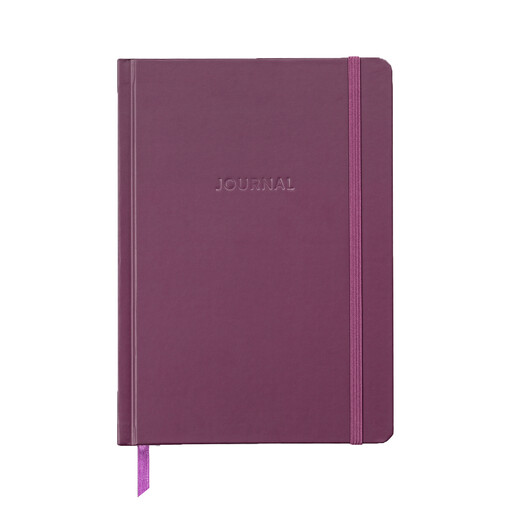
Why this choice suits this profile: Its A5 format works well for students and anyone looking for a versatile notebook for writing, taking notes and organising tasks without needing lots of extra accessories.
The listing clearly states it has 96 sheets of 100 gsm cream lined paper, a hard cover, a ribbon bookmark and an elastic closure.
100 gsm cream offset paper, hard cover and textured finishes, depending on the variant chosen.
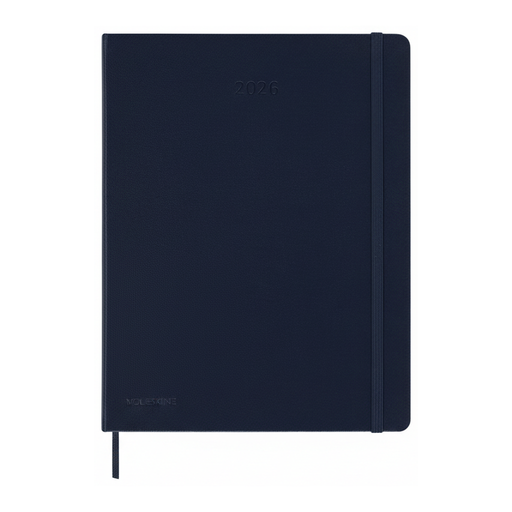
Why this choice suits this profile: Its annual structure is designed for professionals, creatives and travellers who want to combine a calendar, goals, ideas and notes in one place.
The weekly layout, notes pages and goal-setting sections let you see exactly what features are on offer.
Hard cover, 70 gsm ivory paper, elastic closure, ribbon bookmark, inner pocket and lay-flat binding.
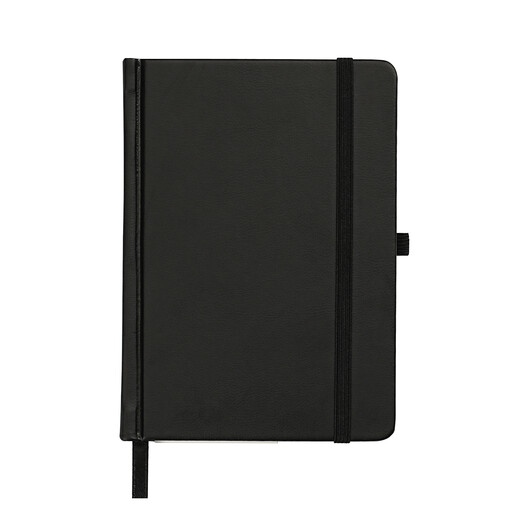
Why this choice suits this profile: This A6 notebook slips easily into a bag and is perfect for commutes, business trips, travel or spontaneous note-taking.
Its stated dimensions of roughly 10.5 × 14.8 cm and its accessories are clearly listed, making it easy to check before buying.
80 sheets of 100 gsm lined paper, faux leather cover, bookmark, elastic closure and built-in pen holder.
We've put together a complete, real-time updated selection of products that meet these exacting standards, while complying with European safety regulations.
Store your notebook in a dry place and avoid leaving it in a car that's exposed to extreme temperature changes. Clean the cover with a soft cloth, without using harsh products. For an undated diary, use colour coding or repositionable tabs to quickly find monthly and weekly pages.
Small accessories such as the ribbon, elastic and pen holder should be kept out of reach of children under 3 years old. These items are not toys and may pose a risk due to small parts.
The A5 format offers more space for lectures, meetings and detailed planning. The A6 format is easier to carry and better suited to short notes. The right choice really depends on where you write and how much information you want to keep.
100 gsm paper is a good benchmark for everyday writing and can help limit ink visibility on the reverse side. However, check the type of pen you use: felt-tips with a lot of ink can bleed through some papers.
Yes, if you want to start at any time or if your schedule is irregular. An undated model simply requires you to fill in the dates yourself, but it avoids wasting pages when certain periods go unused.