
Livraison le jour même ou le lendemain

Qualité garantie

Débloquez vos offres de bienvenue: Livraison GRATUITE | Jusqu'à -80 % | 30 jours d'essai gratuits à JoyPlus
Téléchargez l'application
An A5 notebook slips easily into a day of lectures, a meeting, a train journey or a journaling session. At roughly 14.8 × 21 cm, it strikes a good balance between writing comfort and portability. But a pretty cover or the promise of "premium" paper isn't enough to guarantee it will truly meet your needs.
Before choosing an A5 notebook, pay close attention to the ruling, paper quality, binding and genuinely useful accessories. Here are the criteria to run through to avoid nasty surprises and find the notebook that suits how you'll use it.
A product listing might say "192 pages" when the notebook actually contains 96 sheets printed on both sides. Other models only state the number of sheets. This difference changes the real capacity of the notebook and can skew price comparisons.
To compare models on a like-for-like basis, check:
A hardcover notebook protects your notes better in a bag, but it can be less flexible than a spiral-bound one. A stitched or glued binding can offer a more pleasant opening, whereas a spiral lets you flip pages easily and write flat.
The right choice depends on how often you'll use it and your writing style. For taking quick notes in a lecture hall, a spiral can be very practical. For a professional notebook you'll use over several months, a hard cover and sturdy binding are often more suitable.
A textured cover, gold detailing or a floral pattern can make a notebook appealing, especially as a gift. However, these details don't replace paper that works well with your pen. Also check for a notebook with an elastic closure, a notebook with a bookmark or a pen loop if you regularly carry your stationery around.
Expressed in g/m², the paper weight gives an indication of thickness, but it isn't enough to predict how it will behave with all types of pens. 100 g/m² paper is generally denser than 70 or 80 g/m² paper. It can be better suited to fountain pens, rollerballs or fine-liners, although the result also depends on the ink used.
For everyday notes, a lined notebook with cream or ivory paper can offer a softer contrast that's less tiring on the eyes. For diagrams, tables and graphs, small squares are often more functional. As for the traditional French school notebook, it usually comes with Seyès ruling, recognisable by its horizontal and vertical lines.
Look at how the notebook opens:
An elastic band keeps the notebook closed during transport. A ribbon bookmark lets you quickly find a page, while an inner pocket is handy for receipts, index cards or a few loose sheets.
The A5 size is great for lecture notes, meeting minutes, lists and journaling. However, it is bulkier than an A6 pocket notebook, which slips easily into a small bag or coat pocket. Conversely, larger sizes offer more space for drawing, creating mind maps or managing hefty files.
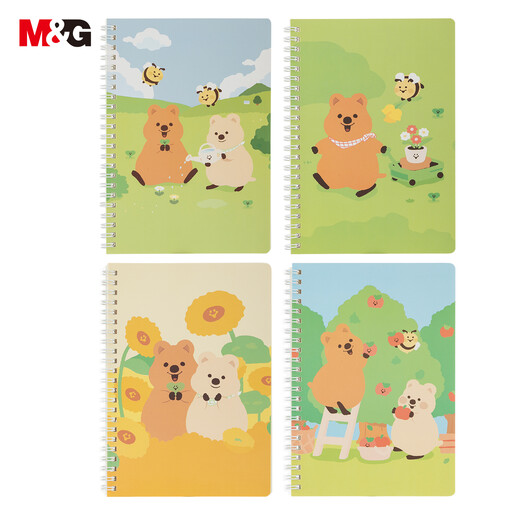
Why this choice suits this profile: This pack lets you split subjects, projects or personal uses without having to buy several notebooks separately.
The number of notebooks and the spiral binding are clearly stated, making it easy to compare with a single-unit model.
Four A5 notebooks, lined paper, 60 sheets per notebook and easy opening thanks to the spiral binding.
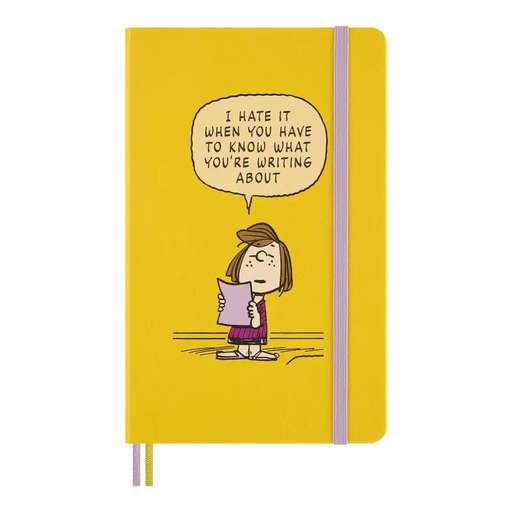
Why this choice suits this profile: Its Peanuts design, hard cover and practical details will appeal to those looking for a writing tool that's as decorative as it is functional.
The listing specifies the 100 g/m² ivory lined paper, two bookmarks, elastic closure and 180° flat opening.
Acid-free 100 g/m² ivory paper, hard cover, expandable inner pocket and stickers included.
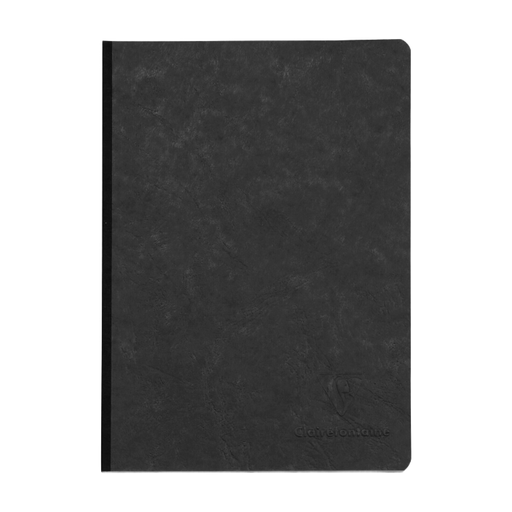
Why this choice suits this profile: With its 192 pages and small square grid, this notebook is suitable for professional notes, diagrams, travel and ongoing projects.
The specifications detail the A5 size, 90 g/m² Vélin Velouté paper and the binding, designed to allow flat use.
192 pages, 90 g/m² paper, 5 × 5 grid and French manufacture stated in the listing.
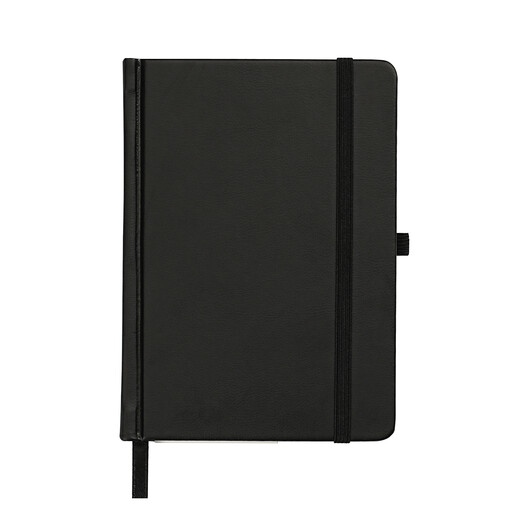
Why this choice suits this profile: This A6 pocket notebook goes everywhere with you for jotting down an idea, a list or a few lines in your journal every day.
The size, number of sheets and accessories are detailed, which avoids confusing a small portable notebook with an A5 one.
80 sheets of 100 g/m² lined paper, faux leather cover, elastic closure, bookmark and pen loop.
We've put together a comprehensive, real-time updated selection of products that meet these exacting criteria, while complying with European safety regulations.
Yes. The A5 size offers enough space for lectures, meetings and structured lists, while remaining easy to carry. For French school exercises, however, check for Seyès ruling. For professional meeting notes, lined or small square ruling is generally more versatile.
It all depends on how often you write, storage conditions and the binding. A hard cover withstands rubbing in a bag better, while a spiral needs protecting from twisting. Keep the notebook in a dry place and avoid pulling too hard on the elastic or bending the covers.
Paper of 90 to 100 g/m² generally offers a denser surface than school paper of 70 or 80 g/m². However, the result varies depending on the ink and nib. If you regularly write with a fountain pen, check the manufacturer's recommendations and choose a notebook where the paper weight is clearly stated.