
Livraison le jour même ou le lendemain

Qualité garantie

Débloquez vos offres de bienvenue: Livraison GRATUITE | Jusqu'à -80 % | 30 jours d'essai gratuits à JoyPlus
Téléchargez l'application
An A5 notebook typically measures 14.8 × 21 cm, half the size of an A4 sheet. This format offers plenty of writing space while remaining easy to slip into a bag. It suits students, professionals, teachers and journaling enthusiasts alike.
However, product descriptions can hide important differences. A notebook with an elegant cover won't necessarily have paper that works well with your pen. An undated planner may seem practical, but its layout might not match the way you organise yourself. So before you buy, it's worth taking a closer look at a few concrete criteria.
A product listing might say "96 pages" or "96 sheets". The difference is far from trivial: a sheet has two sides, whereas a page usually refers to a single printable or usable side. So a model with 60 sheets can offer 120 pages.
To compare an A5 notebook properly, always check both pieces of information when they're available.
A hard cover protects your notes better in a bag and is more suited to long-term use. However, it makes the notebook heavier and takes up more space. A soft cover can be more comfortable for jotting down notes on the go, but it offers less protection against creased pages.
Decorative finishes — fabric, texture, hot stamping or floral patterns — mainly affect appearance. They don't replace the need to check the paper weight, binding and capacity.
A spiral binding usually lets you open the notebook flat and turn pages easily. However, it can snag in a pocket or become misshapen if the notebook is heavily compressed.
An undated A5 planner, on the other hand, offers great flexibility, but you have to fill in the dates yourself. It suits people who start their organisation at any point in the year, rather than those who want a ready-to-use calendar.
The A5 format works well for office work, classes and daily journaling. For very quick notes or a notebook that needs to stay in your pocket at all times, a pocket-sized A6 notebook will be more compact. The trade-off is a smaller writing surface.
Before you choose, ask yourself where the notebook will be used:
Expressed in g/m², the paper weight indicates how heavy the paper is. It alone can't predict writing comfort, but it's a good starting point:
The result also depends on the ink and the pressure you apply to the nib. A commercial mention like "low ink bleed-through" should be taken as a stated product feature, not as a guarantee that works with every writing instrument.
For an office notebook, a hard cover and a ribbon bookmark make regular consultation easier. For a student notebook, several medium-capacity notebooks can help you separate subjects or projects.
A spiral binding works well for pages you consult and fill frequently. A stitched or glued binding offers a more classic look. For an A5 diary, an elastic closure helps keep the notebook shut in a bag, while a bookmark stops you losing your last entry.
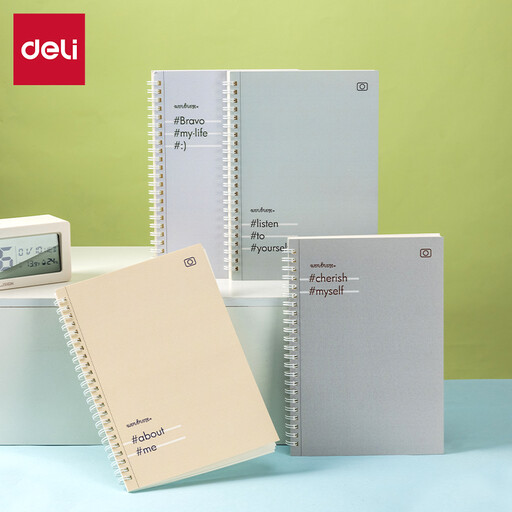
Why this choice suits this profile: The pack of four notebooks lets you split up your classes, lists, ideas and personal notes without having to buy several separate models.
The listing clearly states 60 sheets, i.e. 120 pages per notebook, along with an A5 format and spiral binding.
148 × 210 mm format, 70 g/m² paper and a pack of four units.
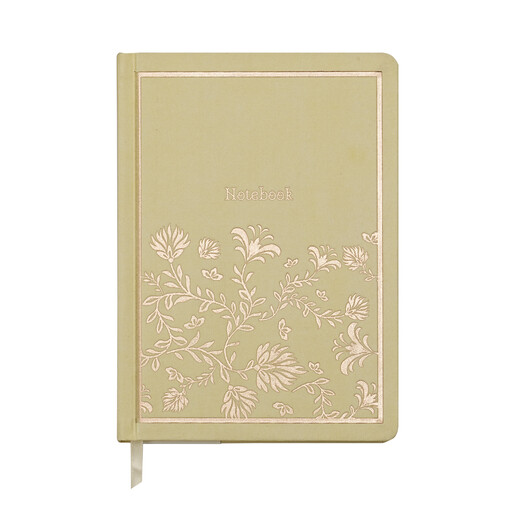
Why this choice suits this profile: Its decorative fabric cover appeals to those looking for a refined notebook for journaling, creative ideas or as a gift.
The description distinguishes the decorative finish, the A5 format and the 96-sheet content, allowing for a concrete comparison.
100 g/m² ivory lined paper, fabric hardcover and embossed or gold-foil finishes depending on the model.
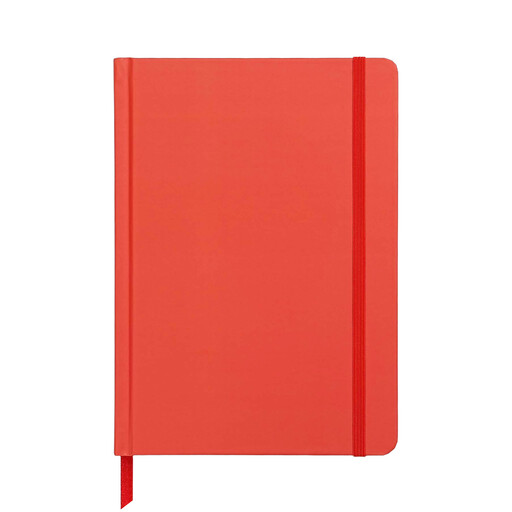
Why this choice suits this profile: This undated A5 planner is ideal for professional or personal organisation that you can start without waiting for a specific date.
The undated structure prevents wasted pages when the planner goes unused for several weeks.
224 pages, 100 g/m² paper, hardcover, undated monthly and weekly views, bookmark and elastic closure.
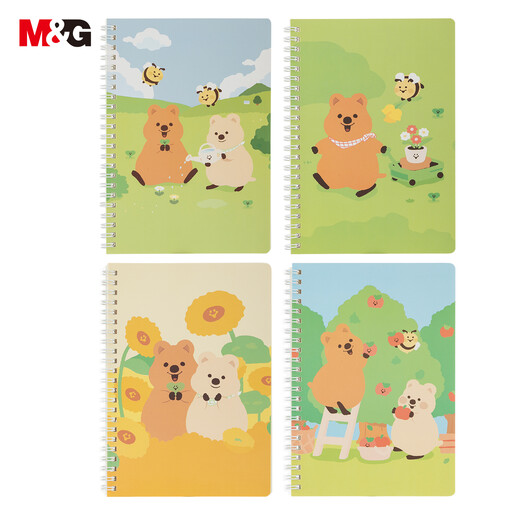
Why this choice suits this profile: Four A5 notebooks let you dedicate one to each subject, project or personal activity.
The spiral binding makes it easy to flip from one page to another and keeps the notebook open during classes or meetings.
A5 format, lined pages, 60 sheets per notebook and a set of four illustrated covers.
We've put together a comprehensive, real-time updated list of products that fully meet these strict selection criteria and European safety regulations.
The term "notebook" often refers to something for personal notes, journaling or daily carrying. An A5 exercise book is more associated with school or professional use. In practice, both can have exactly the same dimensions; it's mainly the binding, cover and layout that set them apart.
How long it lasts depends on the number of pages, how often you write and the conditions it's carried in. A hard cover, well-protected binding and storage away from moisture will help preserve the notebook for longer. For heavy daily use, compare the capacity and sturdiness of the binding rather than just looking at the price.
Paper of 90 to 100 g/m² generally feels more substantial than 70 g/m² paper. However, the choice depends on the pen, the ink and the pressure you apply while writing. If you use a felt-tip pen or fountain pen, check whether the description gives any information about ink bleed-through and, where possible, consult the detailed product information.