
Livraison le jour même ou le lendemain

Qualité garantie

Débloquez vos offres de bienvenue: Livraison GRATUITE | Jusqu'à -80 % | 30 jours d'essai gratuits à JoyPlus
Téléchargez l'application
A new notebook holds the promise of a blank slate for your ideas, projects, or memories. Yet, that initial excitement can quickly turn to disappointment. Who hasn't bought an attractively designed A5 notebook only to discover that ink bleeds through the pages, the cover gets damaged after a week in a bag, or the binding doesn't survive daily use?
These letdowns, far from being inevitable, are often the result of overlooked technical details or marketing promises that are too good to be true. To avoid getting caught out again, learn to sidestep the two most common pitfalls:
To ensure your next notebook is a reliable, long-term companion, three technical points deserve your full attention. These are the true hallmarks of quality, far beyond mere design.
Paper weight, expressed in grams per square metre (gsm), defines the paper's thickness and opacity. It's the number one criterion for a pleasant writing experience.
The cover protects your notes and sets the tone for your notebook.
The binding, meanwhile, is the notebook's skeleton. A smyth-sewn binding, where signatures (groups of pages) are stitched together with thread, allows for a perfectly lay-flat opening and ensures the pages will stay securely in place, even after years of use.
Far from being mere gimmicks, certain details can radically transform your experience. A notebook with an elastic band closure keeps pages protected and prevents any loose documents tucked inside from escaping. The ribbon bookmark helps you instantly find your last page, while a pen loop ensures you always have something to write with on hand.
There's no such thing as the perfect notebook; it all depends on how you plan to use it. To guide you, here is a selection for three typical user profiles, designed to meet specific needs without falling into the usual traps.
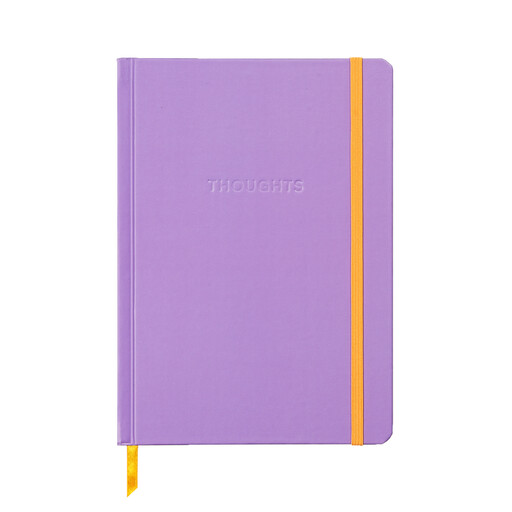
Why this choice: Its A5 size strikes an excellent balance between writing space and portability. The hardcover provides a stable surface for taking notes in meetings, even without a table, and its understated design fits perfectly into a professional setting.
Its 100g paper prevents bleeding and ghosting, ensuring clean, legible notes. The smyth-sewn binding and hardcover are designed to withstand heavy daily use and frequent transport.
It combines durability (hardcover), writing comfort (thick paper), and practical details (elastic band, bookmark) for flawless organisation.
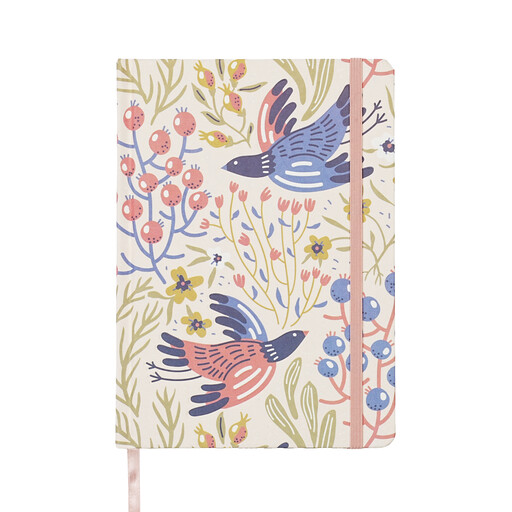
Why this choice: For those who see their notebook as a personal object and a source of inspiration. Its elegant fabric cover makes it a perfect choice for an A5 diary, a sketchbook, or an elegant gift idea for stationery lovers.
This designer journal doesn't sacrifice quality for the sake of aesthetics. Its 100g ivory paper provides a luxurious surface that enhances your writing, while the fabric cover is designed to be as beautiful as it is durable.
A refined aesthetic, with its quality finishes (gilding, embossing), combined with premium paper for an unparalleled writing and visual experience.
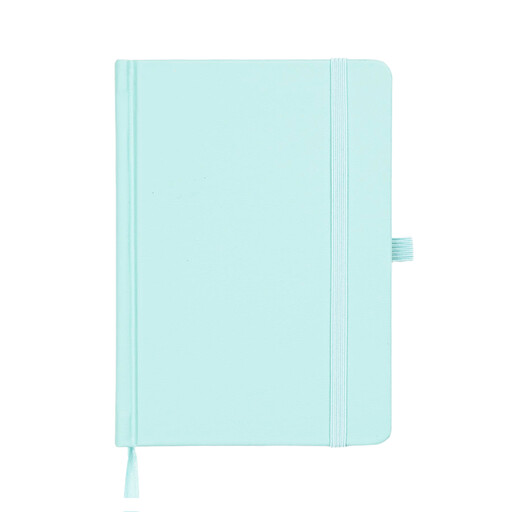
Why this choice: The compact A6 notebook format is designed for those who need to jot down ideas on the fly. It slips easily into a pocket or small bag, and its pen loop makes it ready to use in any situation.
The faux leather (PU) cover is not only elegant but also highly resistant to stains and daily wear and tear. Despite its small size, it features 100g paper: no compromise on writing comfort.
Maximum portability without sacrificing quality or essential features (pen loop, elastic band, bookmark).
Explore our full selection of notebooks, all rigorously selected for their quality and durability.
The choice depends on your writing tools. For mixed use (ballpoint, marker, fountain pen), 100 gsm paper is a safe bet to prevent ink from bleeding through. If you exclusively use a ballpoint pen or pencil, 80 or 90 gsm paper may be sufficient.
It's a size difference. The A5 notebook (14.8 x 21 cm) is the most versatile, offering ample writing space while remaining easily portable. The A6 notebook (10.5 x 14.8 cm) is a pocket-sized format, half the size, ideal for quick notes and for those who travel light.
For a faux leather (PU) cover, a soft, slightly damp cloth is usually enough to remove stains. Avoid harsh chemicals. For a fabric cover, use a dry, soft brush for dust. If a stain occurs, gently dab it with a barely damp cloth and let it air dry, away from any direct heat source.