
Livraison le jour même ou le lendemain

Qualité garantie

Débloquez vos offres de bienvenue: Livraison GRATUITE | Jusqu'à -80 % | 30 jours d'essai gratuits à JoyPlus
Téléchargez l'application
The A5 notebook is much more than a simple notepad: it's an everyday companion. Whether for class notes, meeting minutes, a personal diary, or a few sketches, its convenient size makes it a must-have. Yet, with the vast array of options available, it's easy to end up with a disappointing product. Paper that bleeds ink, a binding that falls apart, or a cover that gets damaged in days—the frustrations are many. This guide is here to help you avoid the pitfalls and choose the A5 notebook that will truly meet your needs.
Stationery marketing often highlights aesthetics over functionality. Here are the three most common flaws that can ruin the writing experience.
To avoid these traps, you just need to check a few simple technical specs. They make all the difference between a pretty object and a reliable tool.
Paper weight, measured in grams per square meter (gsm), indicates the paper's thickness and density. It's the number one criterion for a comfortable writing experience.
The type of binding affects the durability and usability of your A5 journal.
The choice depends on your use case. A hardcover notebook offers maximum protection for your pages and a stable writing surface, even without a desk. It's perfect for a journaling notebook or as a professional notebook. A softcover makes the notebook lighter and more flexible, but you need to ensure the material is high-quality for it to last.
To illustrate these criteria, here are a few recommended options, each suited to a specific user profile.
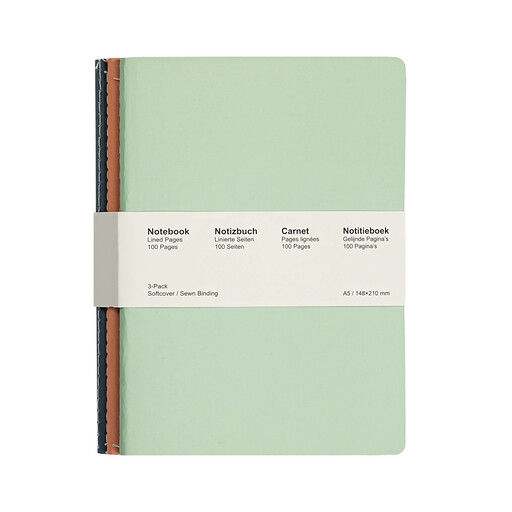
Ideal for students or anyone needing multiple notebooks for different subjects. This pack of notebooks is lightweight, easy to slip into a bag, and the sewn binding makes it practical for quick note-taking in class or on the move.
The sewn binding ensures a true lay-flat opening, unlike low-quality glued bindings. The 80gsm paper is a reliable standard that prevents bleed-through with common pens.
Sold in a pack of three for excellent value. Minimalist and lightweight design, perfect for organising by subject.

For those looking for a journaling notebook or an elegant notepad for the office. The hardcover protects the pages, while the thick paper and features (bookmark, elastic band) add a touch of premium functionality.
Its 100gsm paper is an effective barrier against bleed-through, even with liquid inks. The textured hardcover withstands daily wear and tear in a bag or briefcase.
Thick, cream-coloured paper for optimal writing comfort. Built-in features (bookmark and elastic closure) for better organisation.
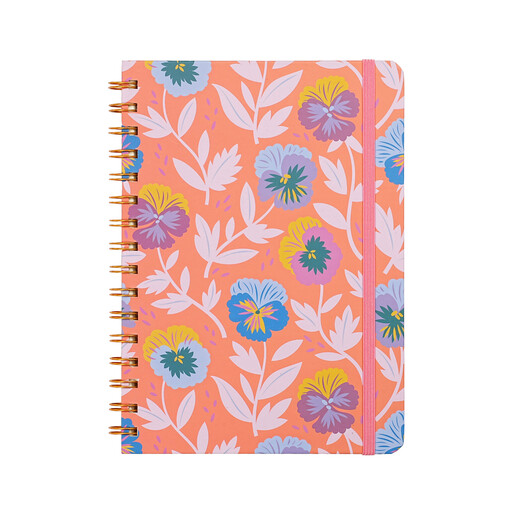
Perfect for creatives, bullet journal enthusiasts, or those who like to mix writing and drawing. The spiral-bound notebook can be folded back completely, offering a flat, stable surface anywhere, while its elegant design inspires creativity.
The sturdy twin-wire binding doesn't bend easily. The hardcover protects the spirals and pages from snags in a bag.
Maximum flexibility with a 360° opening. The 100gsm paper handles a variety of writing and drawing tools.
We have selected a full range of products that meet these quality criteria.
For daily use with a ballpoint pen, 80 gsm is sufficient. If you use a fountain pen, felt-tips, or are sensitive to ink show-through, opt for 100 gsm paper or higher. This will ensure that both sides of every page remain perfectly usable.
It depends on your use case. A spiral-bound notebook is very practical for writing without a stable surface, as it folds back on itself completely. A sewn notebook offers a more traditional two-page writing experience and is often seen as more elegant and durable in the long run, as there's no risk of pages coming loose.
To preserve your notebook's appearance, avoid contact with liquids and prolonged exposure to sunlight. To clean it, a simple soft, dry cloth is enough to remove dust. Store it in a dry place to prevent the paper or cover from warping.