
Livraison le jour même ou le lendemain

Qualité garantie

Débloquez vos offres de bienvenue: Livraison GRATUITE | Jusqu'à -80 % | 30 jours d'essai gratuits à JoyPlus
Téléchargez l'application
Whether you're organising your day, jotting down meeting notes, or unleashing your creativity, choosing a notebook is anything but trivial. The right lined A5 hardcover notebook quickly becomes a constant companion for months on end. The problem: the market is flooded with models that hide deal-breaking flaws beneath a beautiful cover. To make sure you don't make the wrong choice, here are the pitfalls to avoid.
The initial excitement of a new purchase can quickly turn to disappointment if the notebook doesn't live up to its promises. Here are the most common issues and our tips for avoiding them.
To choose wisely, focus on these key technical specifications. They are the guarantee of your future notebook's quality and durability.
Paper weight, expressed in grams per square metre (g/m? or GSM), determines the paper's thickness and opacity. For an A5 journal or notebook, 100 gsm paper is an excellent starting point. Unlike standard printer paper (often 80 gsm), it holds up much better to most inks (fountain pens, fine-liners), drastically reducing show-through. The writing experience is also much smoother, allowing for more fluid and pleasant handwriting.
The type of binding has a direct impact on the notebook's durability and usability.
Far from being mere gimmicks, these accessories are true everyday allies. A strong elastic closure protects your pages and holds any loose documents you might slip inside. One or more ribbon bookmarks allow you to find key information in a flash. On a 192-page notebook (96 sheets), these details quickly become essential.
Rather than an impersonal list, here are our notebook suggestions tailored to specific profiles, all selected based on the quality criteria we've just discussed.
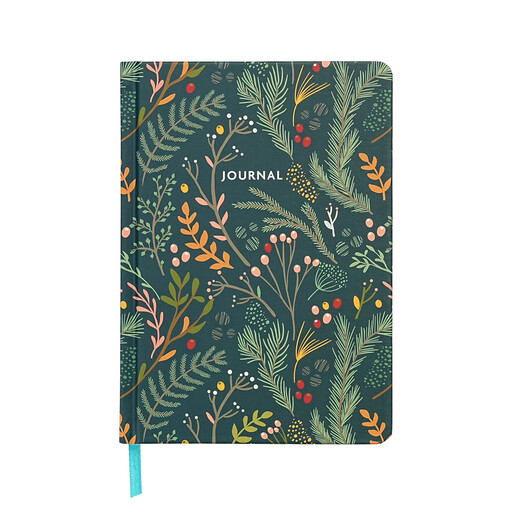
Why we chose it: This model checks all the boxes for intensive daily use: a durable hardcover, a minimalist and professional design, and all the essential features (thick paper, bookmark, elastic closure).
Its 100 gsm ivory paper prevents ink from showing through. The sewn binding and hardcover ensure excellent longevity, even when knocked around in a bag.
The perfect balance of durability, functionality, and an understated aesthetic that's equally at home in a lecture hall or a meeting room.
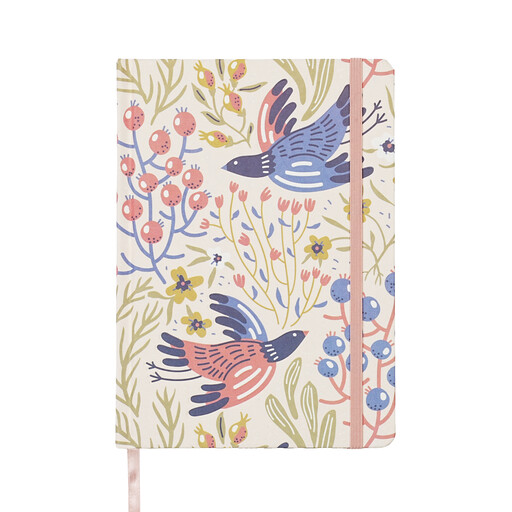
Why we chose it: For those who see their notebook as a true decorative object, this model stands out with its delicately patterned fabric cover. It's an excellent gift idea that combines beauty and utility.
Here, the elegant design doesn't sacrifice quality. The notebook features 100 gsm ivory paper and premium finishes (foil stamping, embossing) that reflect a particularly thoughtful design.
Its refined fabric cover offers a unique tactile and visual experience, transforming a simple notebook into a true piece of high-end stationery.
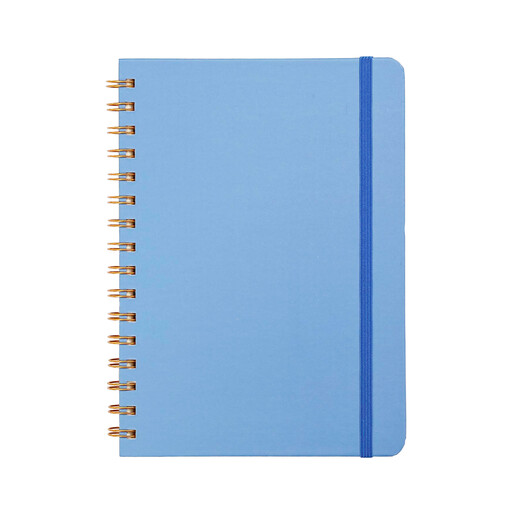
Why we chose it: The spiral binding is the killer feature for those who write a lot or need their notebook to lie perfectly flat. The hardcover protects the spiral and the pages from the rigours of transport.
It features a twin-wire metal binding, which is much sturdier than flimsy plastic spirals that can get bent out of shape. The pages turn smoothly without snagging or tearing.
The 360° opening provides a complete writing surface and optimal comfort, whether you're right- or left-handed.
Discover our full selection of notebooks that meet our quality criteria and current standards.
80 gsm paper is the standard for printer paper. It's fine for a ballpoint pen but will quickly show its limits with a fountain pen or a felt-tip, as the ink is likely to show through. 100 gsm paper, which is about 25% thicker and more opaque, creates a much better barrier. The result: your writing is sharper, the back of the page remains pristine, and the paper feels much more high-quality to the touch.
Not necessarily. It all depends on the quality of the spiral. A simple plastic or thin metal spiral can bend easily. In contrast, a twin-wire metal binding (known as "wire-o"), especially when protected by a hardcover, is extremely sturdy and built to last. It also offers the advantage of opening completely flat, which a sewn binding does not allow.
For most hardcovers (cardboard, textured), a simple wipe with a soft, dry cloth is enough to remove dust. For fabric covers, avoid liquids like the plague! In general, store your notebook away from moisture and direct sunlight to preserve the vibrancy of the colours and the integrity of the paper.