
Livraison le jour même ou le lendemain

Qualité garantie

Débloquez vos offres de bienvenue: Livraison GRATUITE | Jusqu'à -80 % | 30 jours d'essai gratuits à JoyPlus
Téléchargez l'application
The A5 format has become the go-to choice for a reason: it's large enough for your ideas but compact enough to slip into any bag. Yet, finding the right A5 notebook can often be a real challenge. An attractive cover can hide mediocre paper, and a binding that seems sturdy can prove impractical for daily use. To help you see through the marketing, we've broken down the most common pitfalls and the essential criteria to check before you make a purchase.
The excitement of a new purchase can quickly fall flat. Here are three deal-breakers that can turn a promising notebook into a source of daily frustration.
To avoid these disappointments, focus on three features that make all the difference between a gadget and a true writing tool: the paper, the binding, and the cover of your future A5 notebook.
The paper weight, expressed in grams per square meter (g/m?), is the first indicator to watch for.
Finally, the finish (smooth, textured, ivory, or white) also affects writing comfort and the overall look of your notes.
The way the pages are held together is critical for your notebook's durability and ease of use.
The choice between a softcover and a hardcover will depend on your intended use.
Rather than just a list of products, we've matched our recommendations to user profiles, ensuring that every selected notebook checks all the quality boxes we've just discussed.
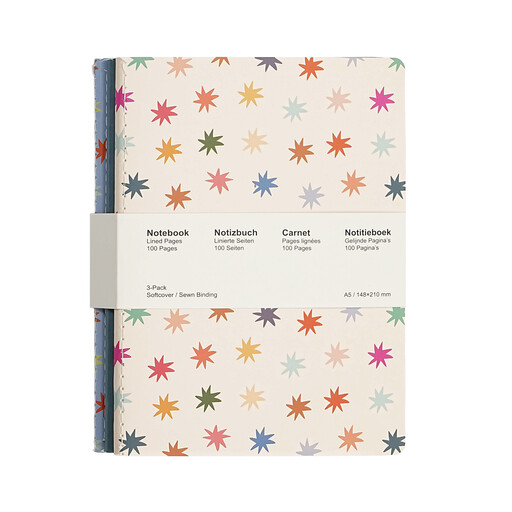
Why we chose it: Perfect for students or professionals juggling multiple projects. This set of three lightweight notebooks allows you to dedicate one to each subject without weighing down your bag.
Its stitched (saddle-stitched) binding ensures it opens reasonably flat, avoiding the unusable inner margin problem found in low-end notebooks.
Excellent value for a pack of three notebooks with varied designs, perfect for simple and visual organisation.
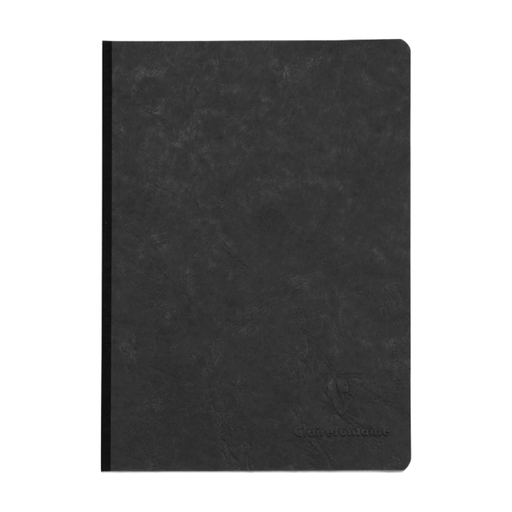
Why we chose it: For those who see writing as a pleasure. This notebook combines French craftsmanship with a minimalist, timeless aesthetic. It's perfect as a professional **notebook** or a **personal diary**.
Its 90 g/m? Clairefontaine paper is the gold standard for preventing ink bleed-through. The sewn binding with its cloth spine ensures rock-solid durability and a lay-flat opening that lasts.
The 90 g/m? Vélin Velouté paper provides an incomparably smooth writing experience. The French manufacturing is a guarantee of quality and consistency.
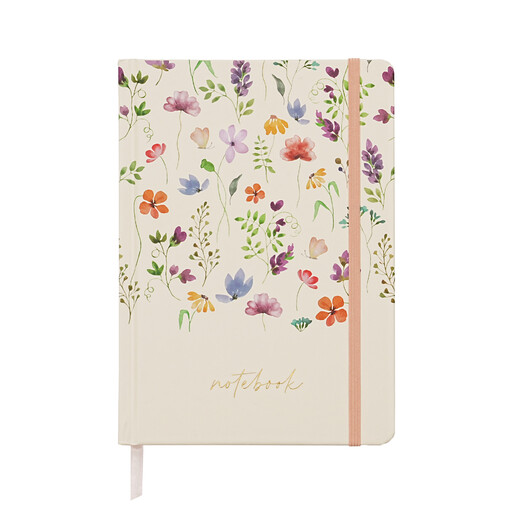
Why we chose it: For those seeking an object that is as beautiful as it is functional. Its elegant design is an invitation to creativity, while its technical features make it a reliable tool for journaling or more intensive note-taking.
Its thick 100 g/m? paper is designed to handle various inks without ever bleeding through. The hardcover effectively protects the pages, and the elastic closure prevents premature wear and tear.
An all-in-one notebook: 100 g/m? paper, decorative hardcover, ribbon bookmark, and elastic closure. It has everything you need.
We've curated a complete selection of products that meet our strictest quality criteria.
For everyday use with a ballpoint pen or pencil, 80 g/m? paper is sufficient. However, if you're a fan of fountain pens, gel ink rollers, or fine-tip markers, opt for a quality paper of 90 g/m? or 100 g/m?. This is the best way to prevent ink from bleeding through and to enjoy a smoother writing experience.
A hardcover is ideal if you often write without a stable surface (on public transport, standing in a meeting) or if you want to archive your notebook. A softcover, being lighter and more flexible, will slide more easily into a full bag. It all depends on your priority: protection and durability versus lightness and flexibility.
A lay-flat binding, most often found on Smyth-sewn (stitched) models, allows the notebook to open a full 180° without having to force it. The advantage is significant: you can write comfortably across the entire width of both pages, including near the central fold. This maximises the actual writing space in your lined notebook.