
Livraison le jour même ou le lendemain

Qualité garantie

Débloquez vos offres de bienvenue: Livraison GRATUITE | Jusqu'à -80 % | 30 jours d'essai gratuits à JoyPlus
Téléchargez l'application
An A5 lined notebook strikes the perfect balance between writing space and portability. It suits students, office workers, writers, artists and journaling enthusiasts alike, all of whom want to keep their ideas in a standard 14.8 × 21 cm format. But a pretty cover or the simple mention of "premium" isn't enough to guarantee the right choice.
Before you place an order, three common pitfalls keep cropping up:
The A5 format is ideal for taking notes in class, in meetings, for lists and for personal journaling. It offers enough room to write several paragraphs, while still being easy to slip into a backpack or messenger bag.
For jotting down an idea on the go or keeping a pocket journal, an A6 pocket notebook measures roughly 10.5 × 14.8 cm. It's even more portable, but its writing space is naturally more limited. Conversely, a larger format may be better suited to sketches, project plans and more developed texts.
Also consider how often you'll use it. A notebook for school and the office needs to withstand daily handling, whereas a journal destined to stay on a desk can focus more on aesthetics.
Expressed in g/m², paper weight alone doesn't determine paper quality. However, it remains a useful indicator for comparing two lined notebooks.
The shade of the paper can also affect how your notes look. Off-white or ivory gives a softer appearance, while classic white makes highly structured notes easier to read. If you write with a fountain pen, check the specifications provided by the manufacturer – no marketing promise can replace trying it with your own ink.
A hard cover protects the pages better when a notebook is carried alongside a laptop or books. Lighter, a soft cover is often more pleasant for on-the-go use.
Accessories aren't just a decorative detail:
If you're giving a notebook as a gift, the pattern, texture and presentation naturally become more important. In a professional setting, a plain or understated cover will fit more easily into the work environment.
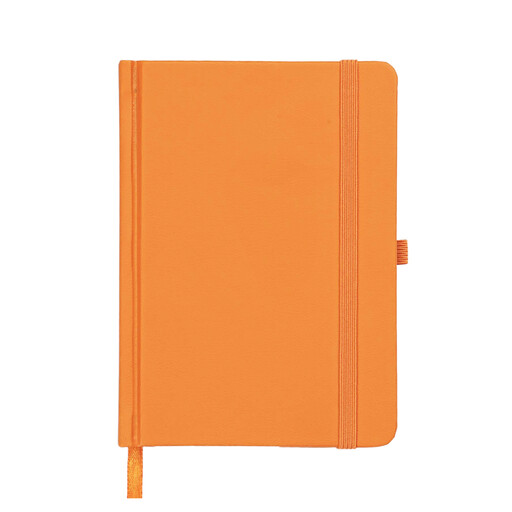
Why this choice suits this profile: Its A6 format fits easily in your hand and takes up very little space. It's perfect for starting out with a notebook for notes, a journal or simple daily lists.
The listing clearly states 80 sheets, 160 pages and 100 g/m² lined offset paper. This makes comparing this model straightforward.
A PU hard cover, a bookmark, an elastic closure and a pen loop. The product description mentions ten colour options.
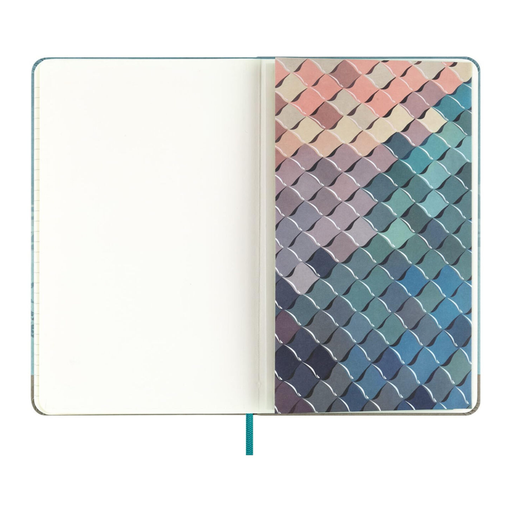
Why this choice suits this profile: This notebook combines a hard fabric cover inspired by Casa Batlló with finishes designed for both writing and collecting.
The listing specifies the Large format, 100 g/m² ivory ruled paper, 180° lay-flat opening and an expandable inner pocket.
The listing confirms two features: acid-free paper and paper from FSC-certified forests and other controlled sources.

Why this choice suits this profile: Its twin-wire binding lets you turn pages effortlessly and lay the notebook completely flat – a practical setup for classes, projects and meeting notes.
The listing clearly distinguishes the twin-wire binding, the hard cover and the 96 sheets of 100 g/m² cream lined paper.
An A5 format, an elastic closure, cream paper and a textured finish cover. The model is described as suitable for school, the office, journaling and as a gift.
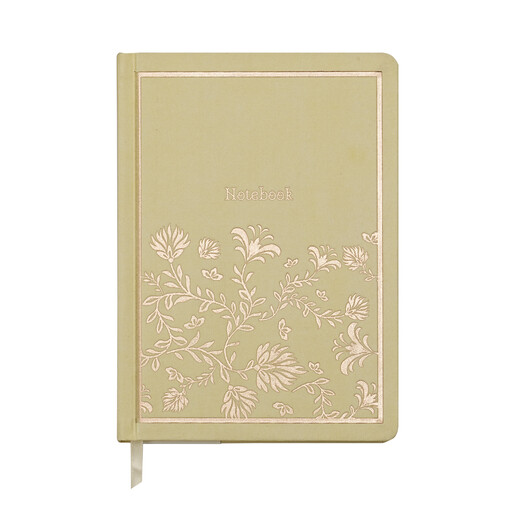
Why this choice suits this profile: Its floral fabric cover and decorative finishes will appeal to fans of original, expressive stationery.
The description specifies the number of sheets, the paper type, the accessories and the care instructions for preserving the cover.
96 sheets, 192 pages, 100 g/m² ivory lined paper, bookmark and elastic closure. Depending on the model, the finishes may include hot foil stamping, embossing or debossing.
We've put together a comprehensive, real-time updated selection of products that meet these strict criteria, as well as European safety requirements.
A notebook will stay in good condition for longer if you protect it from moisture, excessive heat and repeated bending of the cover. Store it flat or upright, without compressing the binding. For a PU cover, you can use a slightly damp soft cloth if the product listing allows it. With a fabric or printed cover, it's best to stick to a dry cloth.
Ribbons, elastic closures and pen loops contain small parts: keep them out of reach of children under 3 years old. The notebook's lifespan will mainly depend on how often you write in it, how you transport it and how you turn the pages.
Yes. Its format offers enough space for lessons, meetings, lists and meeting notes. A hard cover will protect your notes better inside a bag, while a spiral binding makes writing flat easier.
The A5 format measures approximately 14.8 × 21 cm and is suitable for detailed notes. At roughly 10.5 × 14.8 cm, the A6 format is more compact and better suited to reminders, quick ideas and journaling on the go.
It all depends on the writing instruments you use. 70 g/m² paper works well with everyday pens and keeps the notebook lightweight. Papers of 90 to 100 g/m² are denser and generally offer greater comfort, especially for regular use or heavier handwriting. Always check the manufacturer's precise specifications before buying.