
Livraison le jour même ou le lendemain

Qualité garantie

Débloquez vos offres de bienvenue: Livraison GRATUITE | Jusqu'à -80 % | 30 jours d'essai gratuits à JoyPlus
Téléchargez l'application
A notebook seems simple enough to choose… until it ends up in an already heavy bag, won’t lie flat or lets ink show through on the other side. Whether you’re a student, a professional, a journaling enthusiast or looking for a useful gift, it’s worth checking a few things before choosing an A5 or A6 notebook.
Disappointments usually come down to three easy-to-avoid mistakes:
The A6 pocket notebook measures around 10.5 × 14.8 cm. It slips easily into a handbag, shoulder bag or a suitably roomy pocket. It’s a handy size for lists, quick jottings, appointments and notes on your commute.
At around 14.8 × 21 cm, the A5 notebook gives you much more comfortable writing space. It’s better suited to a work or study notebook, meetings, journaling and creative writing. The trade-off is that it naturally takes up a little more room.
Before placing your order, check the dimensions given in centimetres. A5 and A6 are standard sizes, but the cover may be slightly larger than the paper.
Paper weight is measured in g/m². It won’t tell you everything about how comfortable a notebook is to write in, but it’s a useful way to compare different models.
A ruled notebook helps keep your handwriting neat, while a plain notebook is better suited to drawing, diagrams and bullet journalling. If you use a fountain pen or felt-tip pen, check the manufacturer’s guidance and test the ink on one page before filling the notebook.
A hard cover offers better protection for the pages of a notebook you carry every day. A fabric cover adds a more decorative finish and a pleasant feel, but is less resistant to damp and scuffing.
A spiral-bound notebook opens completely flat, making it easier to write across the whole page. On the other hand, its binding may take up more room in a pouch. An elastic closure and a ribbon bookmark help keep your notebook closed and make it easy to find your notes, but they’re no substitute for a pouch for loose papers.
For an 18-month undated planner, take a close look at the layout: monthly pages, undated weeks, space for notes and an introductory page. This kind of planner lets you start whenever you like, as long as you’re happy to fill in the dates by hand.
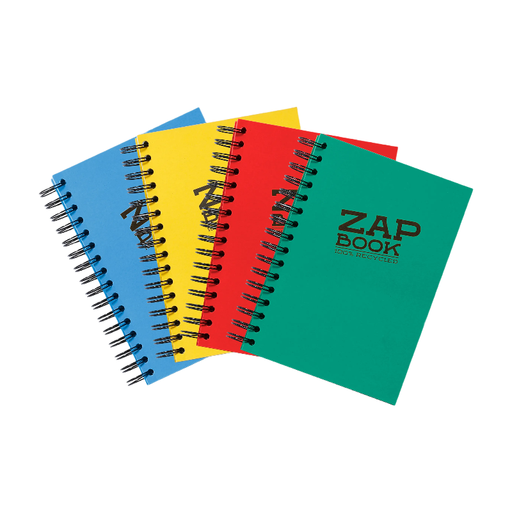
Why it’s a good fit: Its compact size is ideal for getting started with note-taking, lists and everyday sketches. The 80 g/m² recycled paper and 160 sheets give you plenty of writing space without adding bulk.
The product details specify the size, sheet count and paper weight, helping you avoid the common mix-up between the number of pages and the number of sheets.
Spiral binding, opens flat, plain paper that is 100 % recycled, acid-free and pH-neutral according to the product details.
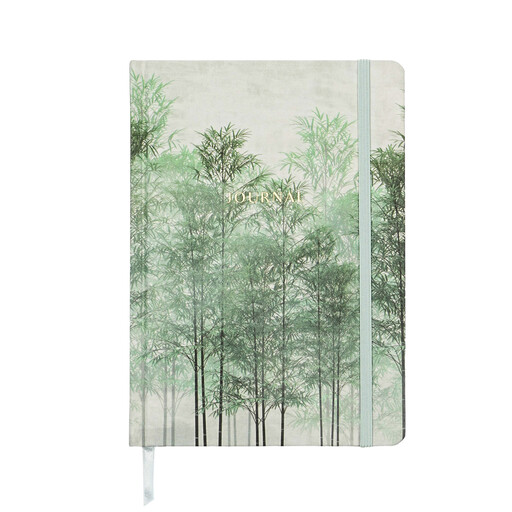
Why it’s a good fit: Its fabric cover and decorative details will appeal if you’re looking for a stylish notebook for journalling, your desk or a gift.
The description gives details about the cover material, sheet count and paper type, rather than relying on a vague promise about looks alone.
A5 size, 96 sheets, 100 g/m² ivory paper, hard fabric cover, ribbon bookmark and elastic closure.
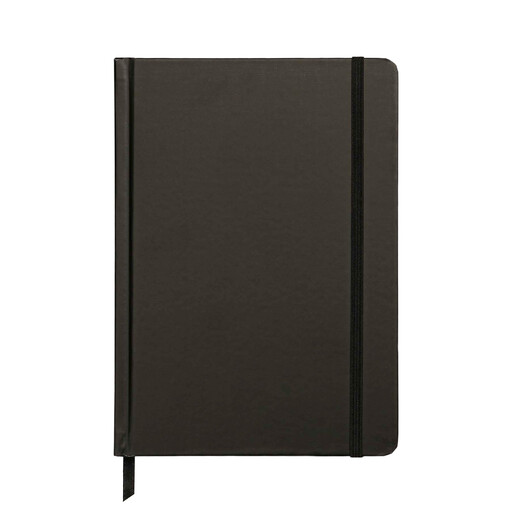
Why it’s a good fit: It’s well suited to work, study and project planning when your start date isn’t always the same.
The monthly and weekly layouts are clearly listed, along with a dedicated notes page. That makes it easier to check that the planner’s layout suits your needs before you buy.
224 pages, 100 g/m² ruled paper, hard cover, ribbon bookmark and elastic closure.
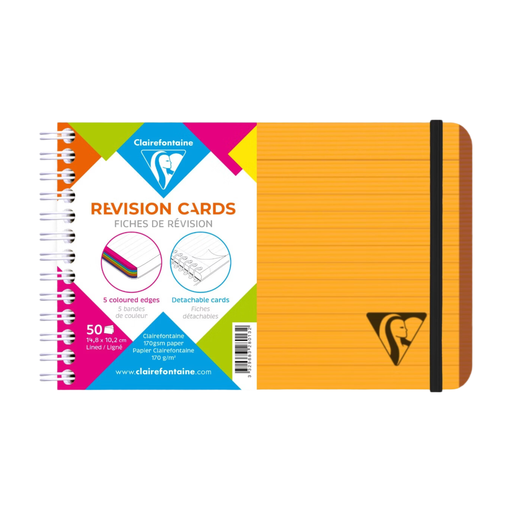
Why it’s a good fit: This compact set helps students organise definitions, formulae and key concepts by subject, without the bulk of a large ring binder.
The product details list 50 ruled cards, five coloured tabs and a cover that opens fully. It’s much more organised than a simple pack of loose cards.
170 g/m² cards, polypropylene cover, 15.2 × 10.2 cm size and five colour-coded sections.
We’ve brought together a complete selection, updated in real time, of products that meet these exacting criteria and European safety requirements.
How long it lasts depends on the number of pages, how often you write in it and how you carry it around. A hard cover offers better protection for a notebook you use every day, while a fabric cover should be kept away from damp. Avoid overloading the binding with thick documents, too, and store your notebook somewhere dry.
Check the condition of accessories such as the elastic, ribbon or pen loop regularly. Small parts should be kept out of reach of children under three, in line with the warnings provided with some products.
Yes, for lists, reminders, quick ideas and short meeting notes. For a long meeting or detailed lectures, A5 gives you more space and saves you from turning the pages constantly.
80 g/m² is suitable for everyday writing with a standard pen. 100 g/m² offers a thicker, more pleasant surface to write on. For well-organised revision cards, 170 g/m² provides a sturdier base, but also adds to the notebook’s size and weight.
Yes, if you don’t necessarily want to start organising your year in January or your schedule changes regularly. The trade-off is that you’ll need to add the dates by hand. So check that the monthly and weekly spreads suit the way you like to plan.