
Livraison le jour même ou le lendemain

Qualité garantie

Débloquez vos offres de bienvenue: Livraison GRATUITE | Jusqu'à -80 % | 30 jours d'essai gratuits à JoyPlus
Téléchargez l'application
The A5 lined notebook holds the promise of flawless organisation, an inspiring creative journal, or perfectly kept class notes. Yet, the purchase can quickly turn into a disappointment. Between paper that's too thin and soaks up ink, a binding that falls apart after a few weeks, or an attractive design that hides poor quality, it's easy to make the wrong choice.
As product selection experts at Joybuy, our mission is to help you see things more clearly. Let's forget the marketing jargon and focus on the criteria that truly matter to find the notebook that will be by your side every day, for a long time to come.
Before you even start comparing models, it's essential to know the three most common pitfalls that can ruin your writing experience:
To avoid these traps, three technical characteristics must be scrutinised. They are the real deciding factors for evaluating the quality of an A5 notebook.
Expressed in grams per square metre (gsm), paper weight determines the thickness and opacity of the paper. This is an absolutely non-negotiable criterion.
The choice depends on your use case, but quality craftsmanship always comes first.
Far from being mere gimmicks, certain accessories can radically transform your experience.
To guide you, here are a few options that meet specific needs, taking into account the quality criteria we've just discussed.
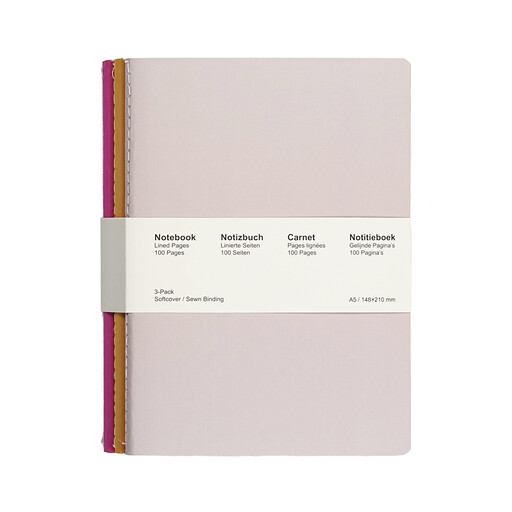
Why it's a match: Perfect for students and anyone who flies through pages. Sold in a pack of three, this lightweight and flexible notebook is as economical as it is practical, with a stitched binding that makes note-taking in class or meetings a breeze.
Its stitched binding, far more durable than simple glue, prevents pages from coming loose. The 80 gsm paper is an effective barrier against bleed-through for daily pen use.
Excellent value for money thanks to the three-pack. Lightweight, it opens perfectly flat.

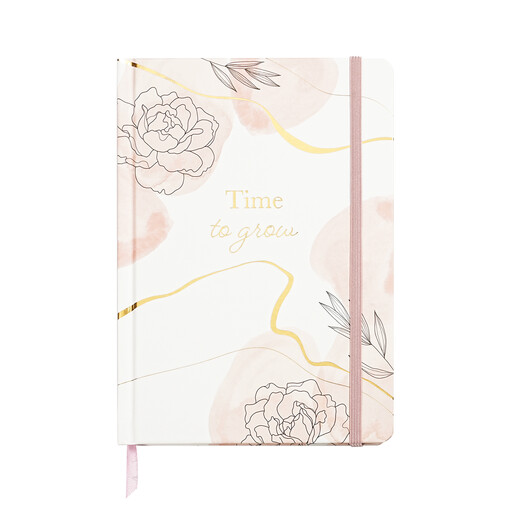
Why it's a match: For those who see a notebook as a personal object, a tool for self-expression. This beautiful notebook combines a refined aesthetic (fabric cover, premium finishes) with an impeccable design for *journaling*.
Its thick 100 gsm paper is a true safeguard against bleed-through, even with fountain pens or markers. Its durable fabric hardcover protects your writing and stands the test of time.
High-quality 100 gsm ivory paper. Premium fabric cover with impeccable finishes (gold foil, embossing). Includes ribbon bookmark and elastic closure.
Why it's a match: Its understated marble design and textured finish project a professional and elegant image. A designer notebook that sacrifices nothing in functionality, perfect for client appointments and strategic meetings.
Its textured hardcover is robust and effectively protects your notes. The 100 gsm paper ensures pristine pages without the slightest bleed-through, for consistently neat writing. The elastic closure secures the entire notebook.
Sophisticated and professional design. 100 gsm cream paper. Practical accessories included (bookmark, elastic closure).
We've curated a complete selection of products that meet our strictest quality criteria.
For versatile use (ballpoint pen, pencil), an 80 to 90 gsm paper is an excellent starting point. If you're a fan of fountain pens, markers, or if you do creative journaling (collages, etc.), don't hesitate to opt for a thick-paper notebook of 100 gsm or more. This will save you the frustration of ink bleeding through the page.
It all depends on your needs. A hardcover is recommended if your notebook is meant to be archived or if you need a portable writing surface. A softcover, which is lighter and more flexible, is ideal for lightening your bag. Whatever your choice, pay close attention to the quality of the binding (opt for a stitched binding!).
The most effective solution is to choose a notebook with paper that is at least 100 gsm. The colour of the paper also matters: an ivory or cream shade often offers better contrast and slightly higher opacity than pure white at the same weight. Finally, consider adapting your writing tools: with 80 gsm paper, a classic ballpoint pen will always be safer than a gel or liquid ink pen.