
Livraison le jour même ou le lendemain

Qualité garantie

Débloquez vos offres de bienvenue: Livraison GRATUITE | Jusqu'à -80 % | 30 jours d'essai gratuits à JoyPlus
Téléchargez l'application
An A5 hardcover notebook can accompany you through classes, workdays, journaling sessions, or make a thoughtful gift. Yet two notebooks in the same format can offer a very different experience. Paper that is too thin, an impractical closure, limited capacity or misunderstood dimensions: some of the features highlighted in product listings deserve a closer look before you place your order.
This 2026 selection is intended for students, professionals, journaling notebook enthusiasts and anyone looking to replace a traditional exercise book with a more structured writing companion.
A product listing may advertise 192 pages, equivalent to 96 sheets. This is clearly not the same capacity as a notebook containing 192 sheets. To compare models on an equal basis, always check both details.
An A5 notebook with 96 sheets is generally suitable for moderate daily use. For a long-term project, an undated planner or an 18-month undated diary may be a better choice, thanks to its monthly and weekly sections.
The term premium notebook often refers to appearance, finish or feel, but it does not correspond to any precise technical standard. A PU faux-leather, fabric or printed-cardboard cover will not offer the same resistance to moisture, friction and repeated trips inside a bag.
Instead, look at:
A notebook with an elastic strap and bookmark makes it easy to find your place and keeps the notebook closed inside a bag. However, the elastic does not protect the contents from water and may lose tension over time. If you carry loose sheets, also check whether the notebook includes inner flaps or pockets.
The A5 format measures approximately 14.8 × 21 cm. It provides more writing space than a pocket A6 notebook, while remaining easy to slip into most backpacks, work bags and briefcases.
Choose A5 for:
A6 is better suited to quick notes and ideas captured on the go. A4, like an A4 sketchbook, is more appropriate for drawing, diagrams and projects that require a generous writing surface.
Paper weight refers to the weight of the paper per square metre. The models featured here include notebooks made with 100 g/m² offset paper, which is denser than very lightweight school paper. It generally offers a more comfortable writing experience with ballpoint pens, rollerball pens or light markers, although it cannot guarantee complete opacity with every type of ink.
For structured note-taking, choose a lined notebook. For maths, tables and diagrams, squared paper is often more practical. In primary or secondary school, a Seyès exercise book generally remains the most suitable option, thanks to its ruling being designed around French school writing conventions.
A traditional notebook gives you complete freedom to organise its pages. An undated planner adds monthly and weekly sections, along with dedicated note areas. This structure allows you to start at any time of year and avoids the blank pages often left unused in a dated diary.
Before choosing, ask yourself whether you want to:
For regular school use, a pack of school exercise books may cost less than a decorative notebook. For a gift or personal use, the cover design and quality of the finishing touches will carry more weight.

Why this choice suits this profile: A compact format for lists, quick notes and dividing tasks across several notebooks, whether at school or in the office.
The listing clearly states the A7 format, squared paper and quantity of four notebooks. You can therefore be sure you are buying a pack rather than a single notebook at the price of a complete set.
Four notebooks, 50 sheets per notebook, top-opening spiral binding and squared paper.
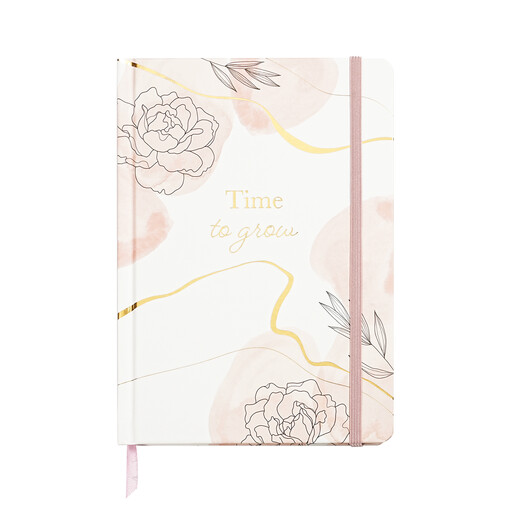
Why this choice suits this profile: The A5 format works equally well for lecture notes, meeting minutes, personal writing and professional appointments. With its decorative cover, the notebook can also make an elegant gift.
The listing specifies 96 sheets, 100 g/m² cream offset paper, a ribbon bookmark and an elastic closure.
148 × 210 mm format, hard cover, 100 g/m² cream lined paper and integrated accessories.
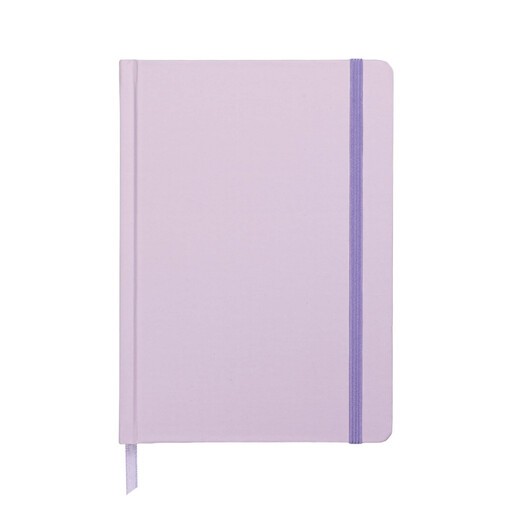
Why this choice suits this profile: This model is designed for anyone tracking goals, tasks or projects without waiting until January to get started.
The planner is undated: monthly and weekly pages can be used at your own pace, without pre-printed dates that might go unused.
112 sheets, 224 pages, 100 g/m² lined offset paper, hard cover and 14.8 × 21 cm format.
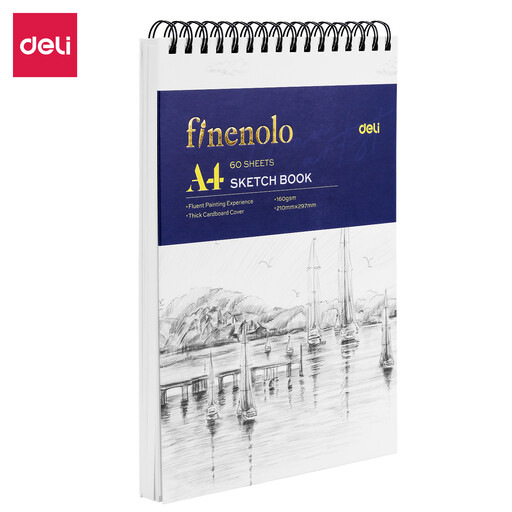
Why this choice suits this profile: Its large format is ideal for sketches, diagrams, art projects and notes that require plenty of room.
The listing states that the paper is suitable for pencil, charcoal, coloured pencil and light pen work, but not for heavily applied wet media without testing first.
A4 format, 60 sheets, top spiral binding and hard cover.
We have brought together an updated selection of products that meet these purchasing criteria and the safety requirements applicable in France.
It depends on how often you write, the weight of your bag and storage conditions. A hard cover protects pages from creasing more effectively than a soft cover, but it does not make the notebook waterproof. Keep it away from moisture and clean the cover with a soft cloth, following the manufacturer’s recommendations.
100 g/m² paper works well with many pens and light markers. However, it cannot guarantee complete opacity with very fluid inks, markers or wet media. For this type of use, test the ink on a page before filling the notebook.
A5 offers more room for detailed notes, journaling and planning. A6 is easier to carry and works well for lists and ideas captured on the go. The right choice therefore depends mainly on how much writing space you need and how much room is available in your bag.