
Livraison le jour même ou le lendemain

Qualité garantie

Débloquez vos offres de bienvenue: Livraison GRATUITE | Jusqu'à -80 % | 30 jours d'essai gratuits à JoyPlus
Téléchargez l'application
Bills, administrative correspondence, ongoing projects and study documents can quickly pile up on a desk. An A4 wall-mounted document organiser frees up valuable workspace while keeping paperwork visible and within easy reach. Whether you work from home, study, work as a secretary or run a small business, choosing the right model involves more than simply counting the compartments listed on the packaging.
Here are the key criteria to check before buying, the common pitfalls to avoid and several solutions suited to different uses.
A product described as A4-compatible may be too narrow for bulky folders, display books or flexible binders. Check the compartment’s internal dimensions rather than relying solely on the “A4” label. An internal width of around 31.5 cm is suitable for standard A4 sheets, but the truly usable space also depends on the depth and height of the opening.
A fully loaded wall-mounted letter organiser can quickly become heavy, particularly when holding files, magazines or several cardboard folders. The supplied screws may not be suitable for every type of wall. On plasterboard, use appropriate wall plugs; on a solid wall, choose fixings compatible with the masonry.
Also remember to account for the product’s own weight. A 14-compartment model weighs 3.52 kg when empty, so it must be installed on a stable surface with the documents distributed evenly.
A USB power strip with mains sockets can simplify a desk setup, but the number of outlets alone is not enough to determine whether it is suitable. Check the stated maximum power, whether overload protection is included and the length of the cable. A 2,500 W USB-C power strip should not be used to power a heater, air conditioner or any other high-consumption appliance when the manufacturer explicitly excludes such use.
To choose an A4 file organiser, measure the documents you actually intend to store. Loose sheets take up very little space, whereas folders, notebooks and bundles of invoices require greater depth.
Label plates make it possible to identify each category at a glance. They eliminate repeated searching and make the system easier to use when several people share the same workspace.
A metal wall-mounted magazine rack or powder-coated steel sorter provides a rigid structure. Manufacturers generally describe this finish as resistant to oxidation and rust. Even so, it is best to install the product indoors and protect it from excessive humidity.
Also inspect the edges and openings. Properly finished corners reduce the risk of catching a sheet or injuring yourself while handling documents. A simple dry cloth is usually sufficient for maintenance; avoid abrasive products, which may mark the coating.
Before drilling, check:
For the electrical equipment, plug the power strip into a suitable wall socket and never connect multiple power strips together. Observe the maximum 2,500 W rating shown on the relevant models and regularly inspect the condition of the cable, plug and housing. In a French home, the installation must remain compliant with the applicable regulations, particularly NF C 15-100 where they apply to the electrical circuit.
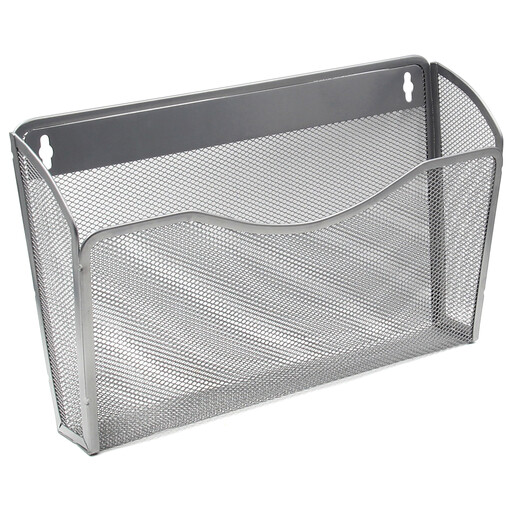
Why it suits them: A single compartment is enough for incoming mail, documents awaiting signature or an ongoing project in an entranceway, student bedroom or compact office.
Its stated dimensions of 35 × 9 × 21.5 cm make it easy to check the space required before installation, rather than relying on the A4 label alone.
Metal construction, powder-coated finish and mounting screws included; the compartment can be installed on its own or combined with other units.
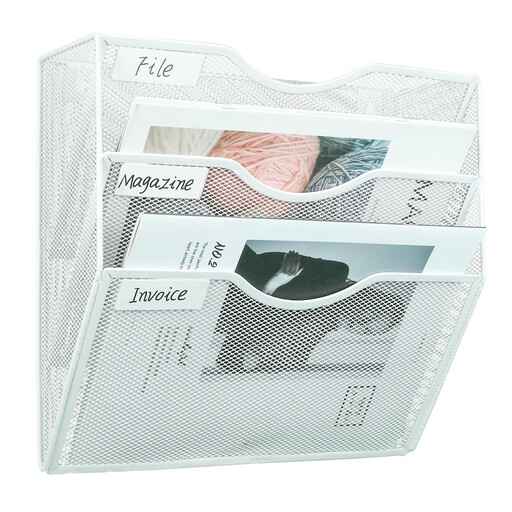
Why it suits them: Three tiers make it easy to sort mail, bills and follow-up files every day without taking up valuable desk depth.
The self-adhesive labels and curved openings keep categories visible and documents within immediate reach, without unnecessary handling.
External dimensions of 32.5 × 10.5 × 30 cm, stated weight of 0.85 kg and delivered fully assembled.
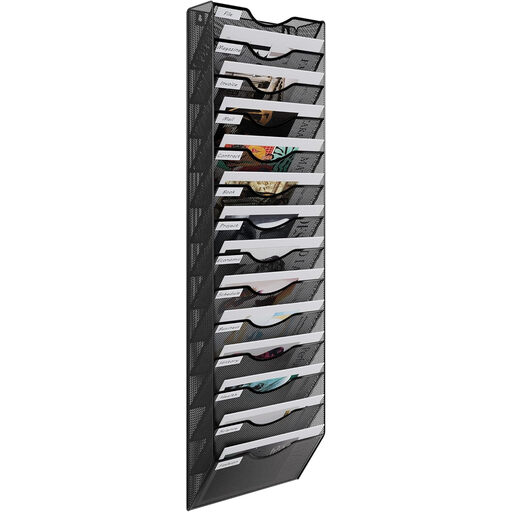
Why it suits them: Secretaries, professionals and small teams can assign one tier to each client, file or stage in the workflow.
Capacity is specified tier by tier: 14 compartments, each 7.5 cm high, rather than one overall capacity that is difficult to assess.
Stated total height of 112 cm, identification plates and a steel frame with a powder-coated finish.
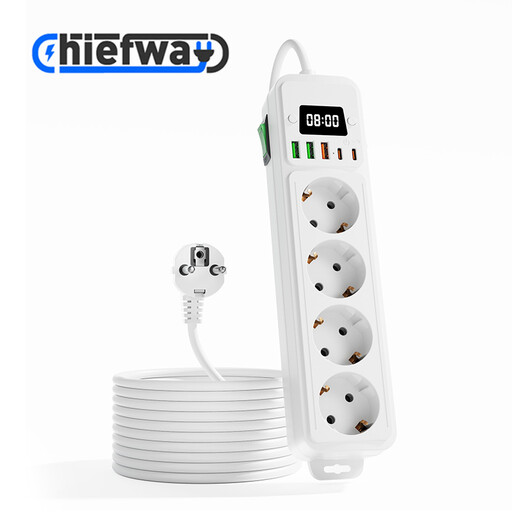
Why it suits them: This power strip is well suited to a desk running a computer, monitor, lamp and several rechargeable devices at the same time.
The specification lists 4 mains sockets, 3 USB-A ports, 2 USB-C ports, surge and overload protection, and a 2,500 W limit.
3 m cable, integrated digital clock and a PC plastic housing described as flame-retardant.
We have brought together an updated selection of solutions that meet these criteria, along with the usage precautions applicable in France.
A storage system is genuinely effective when it follows the real-life journey of your documents. You could dedicate compartments to categories such as “To process”, “To sign”, “To file” and “Temporary archive”. In a small business, labels can also correspond to departments or clients.
Avoid filling every tier to the brim. An overstuffed compartment makes documents difficult to remove and increases the strain placed on the wall fixings. For magazines or bulky files, a deeper multi-compartment wall-mounted file holder will often be a better choice than an ultra-slim model.
Yes, provided the internal width and depth are sufficient. Loose A4 sheets take up less space than thick folders. Check the dimensions of each compartment and allow a little extra room so documents can be removed without bending them.
Use wall plugs designed for this type of surface and take the total weight, including the product itself, into account. With a multi-tier model, distribute the documents evenly and regularly check that the fixings remain tight. If you are unsure about the wall structure, seek advice from a qualified building professional.
Its own power consumption depends on its components and whether it includes a digital display. Most of the energy cost comes from the connected devices and their standby consumption. Unplug the power strip during extended periods away and never exceed the stated maximum power rating.