
Livraison le jour même ou le lendemain

Qualité garantie

Débloquez vos offres de bienvenue: Livraison GRATUITE | Jusqu'à -80 % | 30 jours d'essai gratuits à JoyPlus
Téléchargez l'application
By Joybuy, your guide to informed purchases
Choosing an A4 sketchbook? It sounds simple enough. Yet every artist, student, or hobbyist knows that paper is the foundation of any creation. The wrong choice can be a disaster: colours that bleed, paper that tears at the first touch of an eraser, or a page that buckles under a marker stroke. Weight, grain, binding... Faced with a jungle of options, it's easy to feel overwhelmed.
This guide gets straight to the point: breaking down the essential criteria to help you find the perfect A4 sketch pad for your style and ambitions, without any unnecessary jargon.
Before diving into our top picks, let's review the three pillars that define a quality sketchbook.
Expressed in grams per square meter (g/m? or GSM), paper weight refers to the thickness and density of the paper. It's the number-one criterion, as it determines which techniques you can use.
The paper's surface directly influences your linework and how well pigments adhere.
The binding type has a direct impact on your ease of use.
Based on these criteria, we've selected three sketchbooks that caught our eye. Each one meets a specific need, from on-the-go sketching to illustrations meant to be preserved.
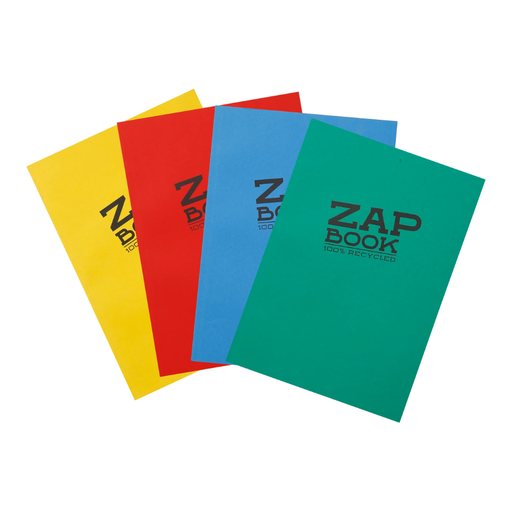
Its Standout Feature This notebook stands out for its eco-friendly design and generous page count. Made from 100% recycled drawing paper, it offers an impressive number of pages for heavy use, all at a very affordable price.
Pros:
Who is it for? Ideal for art students, artists who sketch prolifically, and anyone looking for an economical A4 drawing pad for their sketches, drafts, and notes.
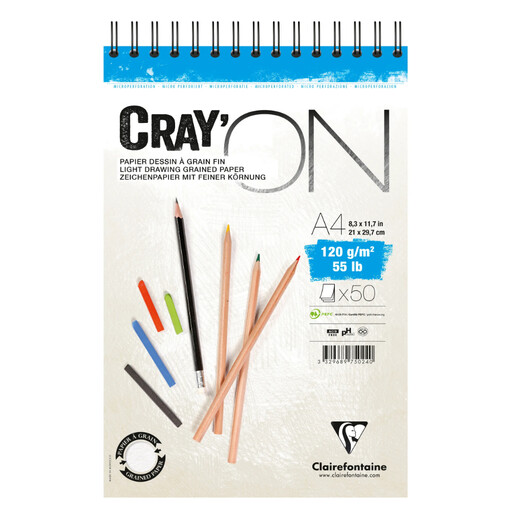
Its Standout Feature This pad's strength: its dual-sided paper. One side has a very fine grain, while the other is perfectly smooth. This rare technical versatility allows you to vary the finish within a single project.
Pros:
Who is it for? For artists and illustrators who favour dry media and require a reliable paper that allows for corrections and precision work.
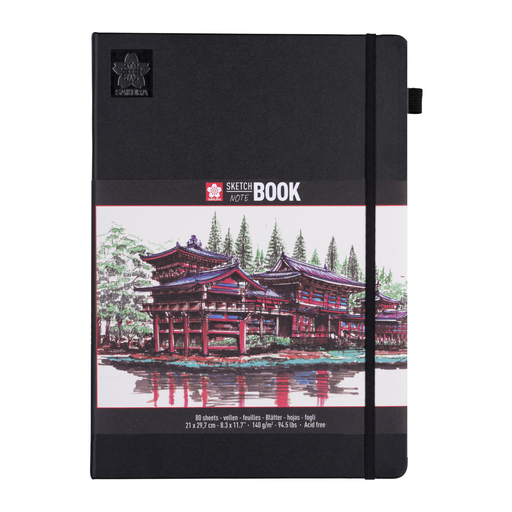
Its Standout Feature This artist's sketchbook is designed to be a true portable studio. Its hardcover, cream-coloured 140?g/m? paper, and finishing touches (pen holder, pocket, elastic closure) make it a complete tool for creatives on the go.
Pros:
Who is it for? The ideal travel companion for illustrators, designers, and artists who want a robust, professional sketchbook for their finished pieces, both in the studio and on the move.
Our selection focuses on dry media, but some creative projects require more specific papers. Think of the fineness of tracing paper or the translucency of butter paper.
If you work with layering or pattern reproduction, feel free to explore our full range of sketchbooks.
? Discover our selection of sketchbooks, including butter paper options
For quick sketches, an 80 to 100?g/m? paper is sufficient. For more detailed work involving shading, gradients, and frequent erasing, a weight of 120?g/m? or more is preferable: it offers better stability and resistance.
Yes, if you want to preserve your drawings for the long term. Standard paper yellows and becomes brittle over time due to acidity. An acid-free (or pH-neutral) paper ensures that your creations will maintain their original appearance for many years.
It's possible with fine-tipped markers that have a moderate ink flow. However, for alcohol markers or large blocks of colour, the risk of ink bleeding through the page (known as bleed-through) is very real. For heavy ink use, a paper of at least 140?g/m?, like the one in the Sakura notebook, is much more suitable.