
Livraison le jour même ou le lendemain

Qualité garantie

Débloquez vos offres de bienvenue: Livraison GRATUITE | Jusqu'à -80 % | 30 jours d'essai gratuits à JoyPlus
Téléchargez l'application
Back-to-school season is approaching, and with it, the eternal quest for the perfect supplies. For a student, a binder isn't just a storage accessory: it's the command center for a year of lectures, notes, and projects. Yet, finding the right model can be an uphill battle. Between marketing promises and the harsh reality of daily use, it's easy to end up with a binder that won't even last the semester. Before you start shopping, let's review the pitfalls you absolutely need to avoid.
To avoid making a mistake, a good choice must be based on objective criteria. Our mission, as product selection experts, is to help you identify the features that truly make a difference for intensive, on-the-go use.
For a binder to become a reliable ally throughout the year, three technical parameters must be carefully checked.
Make no mistake: the difference between an A4 and an A4+ size is anything but a minor detail. An A4+ student binder is slightly wider (around 26 x 32 cm) than a standard A4 binder (around 24 x 32 cm). This extra space is specifically designed so that A4 plastic pockets and dividers fit perfectly inside, without ever sticking out from the cover. Your documents are thus fully protected from bumps and friction in your bag.
The choice of cover material directly determines your binder's longevity.
The heart of a binder is its rings. A 4-ring A4+ binder ensures better weight distribution of the pages and a more stable hold than a two-ring model, which limits the risk of tearing at the perforations.
Capacity, on the other hand, is directly related to the spine width. For a high-capacity binder, opt for a spine of 40 mm or more, allowing you to store between 250 and 350 sheets. This is a versatile size, ideal for grouping several subjects or an entire semester of notes.
Every student has specific needs. Here is a selection of models that cater to different uses, all validated against the quality criteria we've just discussed.
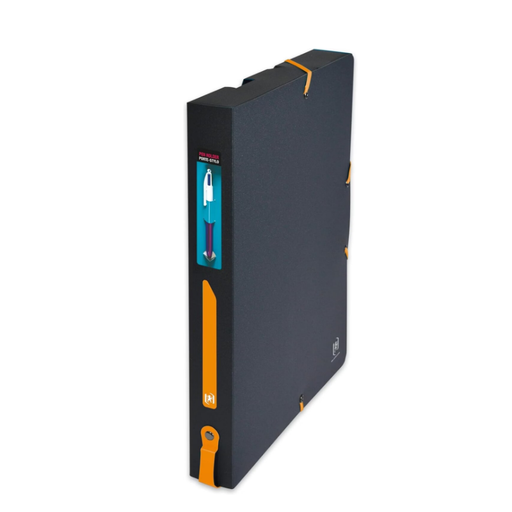
Why it's a great choice: Perfect for the student juggling classes, the library, and internships. This nomadic sorter binder is an all-in-one solution that combines the capacity of a binder with the convenience of a folder for easy transport.
Its A4+ size fully protects plastic pockets. Its rigid polypropylene cover and flat elastic closure withstand heavy use and secure the contents.
It includes a 3-flap folder at the back for temporarily storing unpunched documents (handouts, notices...). It's a true 2-in-1 tool.
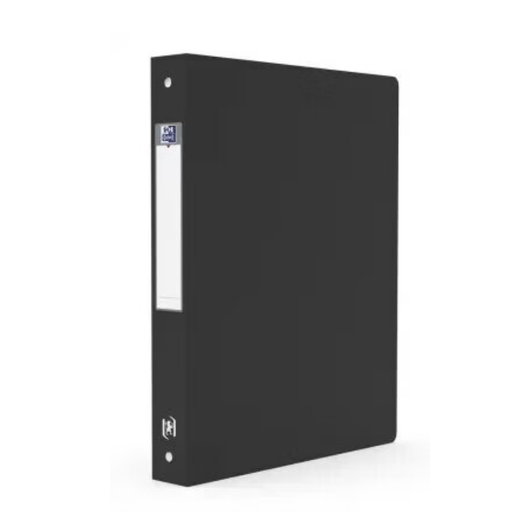
Why it's a great choice: For those who accumulate an impressive volume of notes and need a simple, reliable, and high-capacity tool. This binder is built for robustness and endurance, with no frills.
Its rigid, textured polypropylene cover resists scratches and won't warp. The solid 4-ring mechanism is designed for frequent use, preventing misalignment.
French-made and designed for pure functionality. Its 40 mm spine can hold about 250 sheets, and the spine label makes it easy to identify on a shelf.
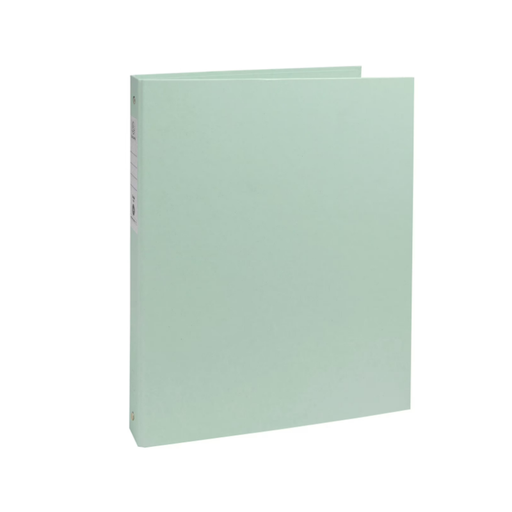
Why it's a great choice: For the student who wants to combine organization with environmental commitment. This binder is a sustainable option made from recycled materials without compromising on strength.
It debunks the "recycled means flimsy" myth. Its 100% recycled cardboard structure is designed to be ultra-durable and withstand heavy use, unlike low-end cardboard.
Blue Angel certified, it is made in France from post-consumer waste. Its natural finish without a plastic film coating makes it fully recyclable at the end of its life.
Explore our full selection of products that meet our quality criteria and current standards.
An A4 binder is designed for standard A4 sheets. An A4+ binder is wider to accommodate A4 sheets placed in plastic pockets or separated by dividers, without them sticking out from the cover. For organized and truly protected filing, the A4+ size is therefore highly recommended.
As a general rule, a binder with a 40 mm spine (which means rings of about 30 mm in diameter) can hold around 250 sheets of 80g/m? paper. This capacity can, of course, vary slightly depending on the paper's thickness and whether you add numerous dividers.
Polypropylene is a very low-maintenance material: a simple wipe with a damp cloth is enough to clean it. To preserve its shape and color, avoid exposing it to direct heat sources or prolonged sunlight. Most importantly, do not overload it beyond its recommended capacity to avoid straining the ring mechanism and ensure its longevity.