
Livraison le jour même ou le lendemain

Qualité garantie

Débloquez vos offres de bienvenue: Livraison GRATUITE | Jusqu'à -80 % | 30 jours d'essai gratuits à JoyPlus
Téléchargez l'application
Between piles of folders stacking up, crumpled sheets, and art supplies that aren't quite right, the A4 format can quickly become a challenge to manage. A student, a professional, a teacher, an artist, or a home user will all have different expectations. An A4 document organiser for everyday post isn't chosen the same way as an A4 sketchbook or an A4 watercolour pad.
Before placing your order, check the actual usable dimensions, the stated capacity, and the materials used. These criteria help you avoid disappointing purchases, even when the product presentation looks convincing.
A product advertised as A4 compatible can hold a 21 × 29.7 cm sheet without necessarily accommodating a thick A4 ring binder, a folder with flaps, or well-filled plastic pockets. For a wall-mounted A4 document holder, check the internal width, depth, and height of each compartment.
Documents need to be removed without being bent or jammed. Storage that is too narrow quickly becomes unusable, especially for invoices, administrative files, or teaching materials.
A mail sorter placed on a desk doesn't require the same precautions as a wall-mounted document organiser. Models that need fixing require a suitable wall, appropriate wall plugs, and a reasonable weight distribution.
A multi-tiered structure can free up a lot of desk space, provided it is installed correctly. Also check whether the product arrives pre-assembled or if the screws need tightening before first use.
Grammage alone isn't enough to determine the use of an art paper. An A4 drawing paper of 120 gsm can work very well with pencil, charcoal, or coloured pencils. On the other hand, an A4 watercolour paper must be designed to absorb a larger amount of water.
The texture, sizing, acid-free treatment, and resistance to corrections matter just as much. Using a lightweight pad for wet washes can cause buckling, colour transfer, or damage to the sheet.
The A4 format measures 21 × 29.7 cm. However, some products are designed to accommodate wider or folded documents. For example, A3 perforated pockets folded to A4 size can hold drawings, plans, or illustrations in A3 landscape orientation while remaining compatible with an A4 filing system.
To choose a storage or filing solution, check:
An A4XL ring binder may be more suitable than a standard A4 model if you use dividers or plastic pockets that usually stick out.
Powder-coated metal is common for wall storage and desk trays. This finish makes cleaning easier and improves surface durability. However, it does not replace the need for stable installation or adherence to the stated maximum capacity.
For ring binders, rigid polypropylene withstands repeated handling and everyday moisture well. For pockets, a thickness of 9/100th of a millimetre offers a more consistent feel than very thin plastic. Also examine the reinforcement strip around the perforations: it reduces the risk of tearing during frequent use.
For dry drawing, choose an acid-free sheet with a surface suited to your tools. The Clairefontaine Cray'ON R.I. pad has a weight of 120 gsm, extra-white cellulose, and two distinct sides: one with a very light grain, the other smooth. It is intended for sketching, charcoal, pastels, coloured pencils, and silverpoint.
For watercolour, a fine or medium-fine grain paper with double sizing offers a surface better suited to washes and wet exercises. The 300 gsm weight of the Clairefontaine Aquapad pad is an interesting criterion for art students, hobbyists, and anyone wanting to practise regularly.
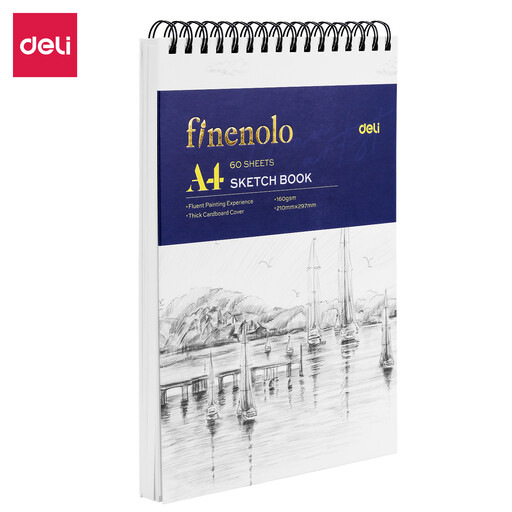
Why this choice suits this profile: Its A4 format and 60 sheets are ideal for students, beginners, and hobbyists who want to bring together sketches, notes, and diagrams in a portable medium.
The top binding allows you to lay the pad flat or fold the pages back. The product description also clearly states it is not intended for very wet media.
60 white sheets, top wire binding, and a format suited to pencil, charcoal, pen, and light drawing.
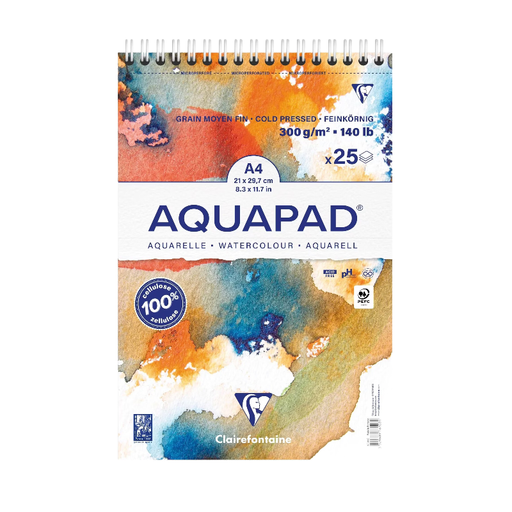
Why this choice suits this profile: Demanding users will appreciate the detailed technical specification, with natural cellulose, medium-fine grain, double sizing, and a weight of 300 gsm.
The weight and double sizing are clearly stated. This helps you avoid choosing a lightweight drawing paper for wet exercises.
25 pages, medium-fine grain surface, acid-free paper, and intended for watercolour, gouache, and fluid ink.
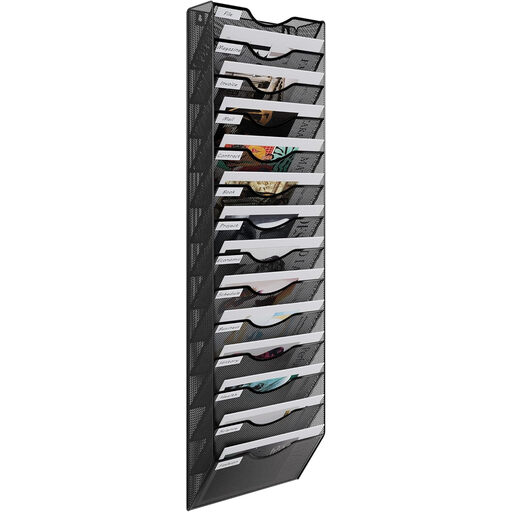
Why this choice suits this profile: With its 14 vertical compartments, this storage solution is ideal for offices, schools, and administrative spaces that manage several categories of documents.
The dimensions are clearly stated: 32.5 × 10.5 × 112 cm, with an internal width of 31.5 cm per compartment. However, ensure you have a secure fixing.
14 tiers, identification plates, powder-coated steel structure, and advertised as requiring no assembly.
We have compiled a comprehensive, real-time updated selection of products that meet these demanding criteria, as well as European safety standards.
A tray-style mail sorter works well when documents need to remain accessible on a flat surface. To free up your desk, opt for a wall-mounted A4 document holder with several compartments and labels. Always check the fixing system, internal width, and maximum load.
An A4 sketchbook is generally designed for dry drawing, notes, and sketches. Thicker A4 watercolour paper is treated to better resist water. The choice therefore depends on the technique you are using, not just the format.
Store paper pads flat, away from humidity and direct light. For ring binders and pockets, avoid overloading them. Metal storage can be cleaned with a soft cloth and should be inspected regularly, especially around the screws and anchor points.