
Livraison le jour même ou le lendemain

Qualité garantie

Débloquez vos offres de bienvenue: Livraison GRATUITE | Jusqu'à -80 % | 30 jours d'essai gratuits à JoyPlus
Téléchargez l'application
An A4 notebook can be used for taking notes in class, preparing for a meeting, organising documents or enjoying some drawing time. But not all models are created equal: ruling, paper weight, binding and filing system all have a direct impact on how comfortable it is to use.
Before you place your order, keep an eye out for these common pitfalls:
The A4 format measures approximately 21 × 29.7 cm. It offers enough space for detailed notes, tables and diagrams, while remaining compatible with most standard ring binders and folders.
For writing, several ruling options are available:
The Seyès ruling, very common in French school exercise books, doesn't serve the same purpose as an 8 mm ruled line or a 5 mm grid.
Paper weight is expressed in gsm. It corresponds to the weight of the paper for a given surface area, but on its own it isn't enough to predict writing comfort or resistance to different techniques.
A paper described as "smooth" or "white" isn't automatically suitable for watercolour. For painting, look for an explicit mention of watercolour paper, double sizing or water resistance.
A spiral binding often allows you to open the notebook completely flat, or even fold the pages back. It's practical for drawing on a table, in a lecture hall or on the go. A stitched or stapled notebook offers a different presentation, while a glued pad generally makes it easier to tear out sheets.
For archiving course notes or documents, perforated A4 sheets are particularly handy. However, the number of holes must match the binder you're using. Some models have four holes, others have nine universal perforations.
Finally, a 200-page notebook saves you from having to change pads regularly, but it will often be thicker and less portable than a 96-page model.
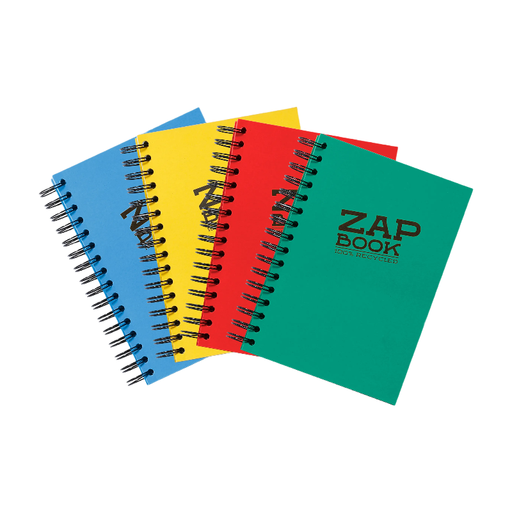
Why this choice suits this profile: Its A4 format and 160 sheets are ideal for everyday notes, preparatory sketches and writing exercises.
The spec clearly states the 80 gsm weight and the plain white paper: this notebook is clearly aimed at writing and dry techniques, not washes.
100% recycled, acid-free and pH-neutral paper; spiral binding for lay-flat opening.
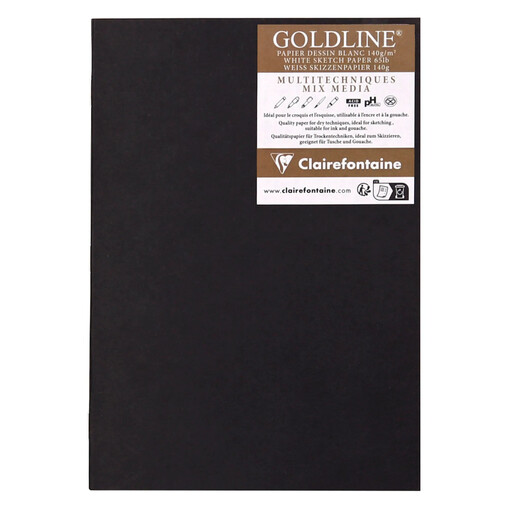
Why this choice suits this profile: This A4 notebook focuses on a polished presentation and 140 gsm paper, suitable for creative work you want to keep or present.
The paper weight and stated uses set it apart from a simple note-taking pad, without pretending to be a thick watercolour block.
140 gsm multi-technique white paper; stitched binding and soft black cover.
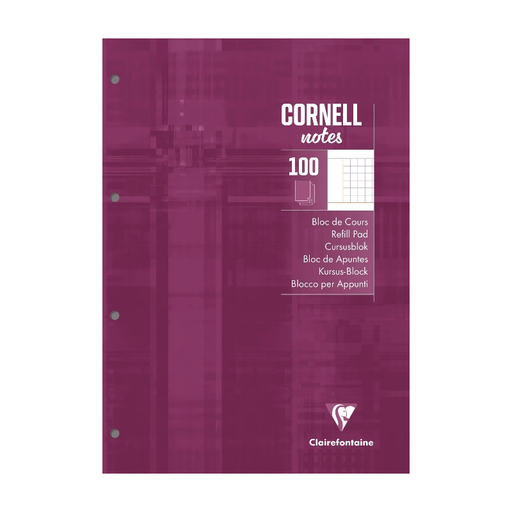
Why this choice suits this profile: Students, teachers and professionals who take a lot of notes benefit from a generous capacity and a 5 mm grid.
The 200 pages, micro-perforation and four holes are listed separately: both the capacity and the filing options are easy to assess.
90 gsm Clairefontaine Vélin Velouté paper; detachable sheets and hard cover for comfortable writing, even without a desk.
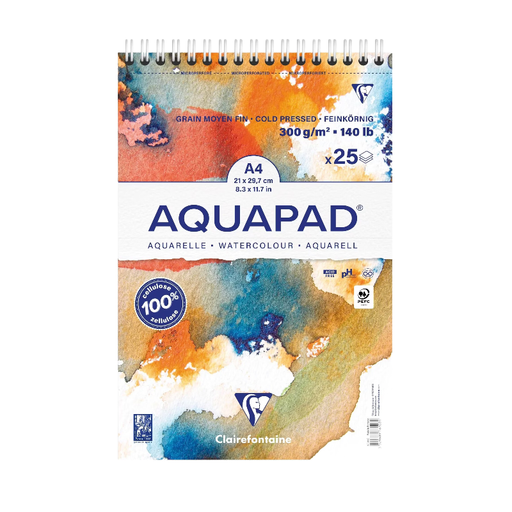
Why this choice suits this profile: Its 300 gsm watercolour paper is suitable for water-based painting exercises, gouache and fluid inks.
The paper weight, medium-fine grain and double sizing are all specified: this isn't a writing pad being used for watercolour by default.
25 pages of natural white cellulose paper, with a medium-fine grain surface and acid-free construction.
We've put together a comprehensive, real-time updated selection of products that meet these demanding criteria and European safety standards.
Yes, provided you choose an appropriate ruling and a paper weight of around 80 to 90 gsm. For lessons that mix diagrams and calculations, a 5 mm grid can help structure the page. A spiral binding offers more flexibility, while a glued or stapled notebook slips more easily into certain folders.
An A4 sketchbook is generally white and unruled. Its paper may be designed for pencil, charcoal, coloured pencils or light markers. Before using ink or water, always check the paper weight and recommended techniques. A standard 80 or 90 gsm notebook remains primarily intended for writing.
Store it flat or closed, in a dry place away from humidity and direct sunlight. For artwork, acid-free, pH-neutral paper can contribute to better material preservation, although it doesn't guarantee colour stability or compensate for poor storage conditions. As for perforated sheets, keep them in a suitable binder to prevent tearing around the holes.