
Livraison le jour même ou le lendemain

Qualité garantie

Débloquez vos offres de bienvenue: Livraison GRATUITE | Jusqu'à -80 % | 30 jours d'essai gratuits à JoyPlus
Téléchargez l'application
Whether it's for back to school, a new professional project, or simply restocking your stationery, choosing A4 graph-ruled double sheets might seem like a trivial task. Yet, in practice, unpleasant surprises are all too common: ink that bleeds and ghosts through the page, perforations that tear at the first attempt to file them, and a writing experience that is next to non-existent. It's enough to turn note-taking into a real ordeal.
Before you rush out and buy the first pack of student school supplies you see, let's review the pitfalls to avoid and the criteria that truly separate good paper from bad.
Stationery marketing can sometimes be misleading. To avoid falling into the trap, here are two essential points to watch out for.
To make the right choice every time, focus on these three objective technical characteristics.
Paper weight, expressed in grams per square metre (gsm), is the main indicator of the paper's thickness and opacity.
For A4 binder refills, the quality of the perforation is non-negotiable. Ensure the sheets have a universal perforation (usually 9 holes) compatible with most binders. On notepads, micro-perforations should guarantee a clean, effortless tear to produce a flawless A4 sheet.
The small grid ruling, or 5x5 grid ruling, is praised for its versatility: it's just as suitable for writing as it is for diagrams or tables. Pay attention to the colour and intensity of the grid lines. Lines that are too dark or thick can cause eye strain and make the page look cluttered. Opt for a discreet yet clear print.
Rather than an endless list, we've selected two standout products that meet very specific needs, based on the quality criteria we've just discussed.
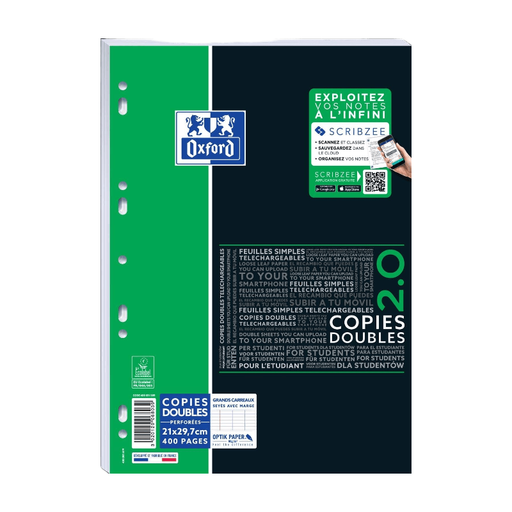
Why this product? Ideal for high school and university students who want to combine the best of both worlds: handwritten notes and digital organisation. Thanks to its compatibility with the SCRIBZEE app, scanning, saving, and sharing your notes becomes a breeze.
Its 90 gsm Optik Paper was specially designed to prevent any ink from bleeding through. It's the definitive solution to the number one problem with low-end paper.
The digital integration via SCRIBZEE, coupled with the paper's perfect whiteness, ensures optimal writing and reading comfort.
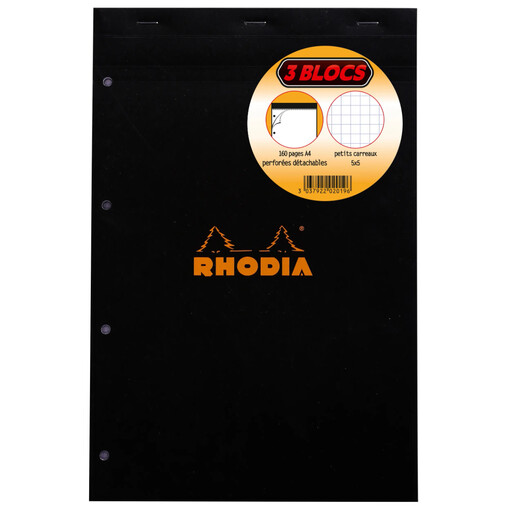
Why this product? For anyone who considers the pleasure of writing paramount, especially with a fountain pen. The Clairefontaine brushed vellum paper is the gold standard for its unparalleled smoothness and glide.
The micro-perforated sheets tear out flawlessly, so say goodbye to damaged perforations. And don't be fooled by its paper weight: this 80 gsm Clairefontaine paper outperforms many thicker papers in quality.
An unmatched glide quality thanks to the Clairefontaine vellum paper. Its notepad format with a stiff cardboard back allows for comfortable note-taking, anywhere.
Good paper is the foundation of everything. If your projects go beyond simple note-taking, discover our selection of materials designed for other creative uses.
A single sheet is one A4 page (2 sides, front and back). A double sheet, on the other hand, is a large A3 sheet folded in half, forming a small 4-page booklet in A4 format. This is the format often required for exams or important assignments because it prevents loose pages.
For quick notes with a pencil or ballpoint pen, a good 80 gsm paper gets the job done. However, if you're a fan of gel ink pens, markers, highlighters, or fountain pens, upgrading to 90 gsm makes all the difference. It guarantees perfectly crisp writing with no show-through, allowing you to confidently use both sides of your A4 5x5 double sheets.
Compatible Oxford double sheets have four discreet markers in the corners of each page. The free SCRIBZEE app, available on smartphones, uses the camera to detect them. It then scans the page, automatically cropping and optimising its legibility. Your handwritten notes are digitised in a flash, ready to be filed, shared, or synced to the cloud for access anywhere, anytime.