
Livraison le jour même ou le lendemain

Qualité garantie

Débloquez vos offres de bienvenue: Livraison GRATUITE | Jusqu'à -80 % | 30 jours d'essai gratuits à JoyPlus
Téléchargez l'application
Choosing a drawing sketchbook is a bit like choosing a creative partner: it's a highly personal decision. The paper must not only suit your technique but also spark your inspiration. Faced with a jungle of options, finding the perfect A4 drawing sketchbook that combines quality, durability, and comfort can quickly become a challenge.
This guide is here to light the way. We'll review the essential criteria to consider before you buy and present a selection of sketchbooks that stand out from the crowd. Our goal is to help you find the ideal companion for your artistic practice.
Before you dive in, a few key points are in order. Three main criteria will determine the character of your future sketchbook: the paper weight, its binding, and its cover.
Paper weight, expressed in g/m? (grams per square metre), defines the paper's thickness and sturdiness. Logically, a thick drawing paper will be more resilient and versatile.
The way the pages are bound and protected makes all the difference in usability.
Whether you're a seasoned professional, an art student, or a passionate hobbyist, here is our selection of sketchbooks suited for every profile.
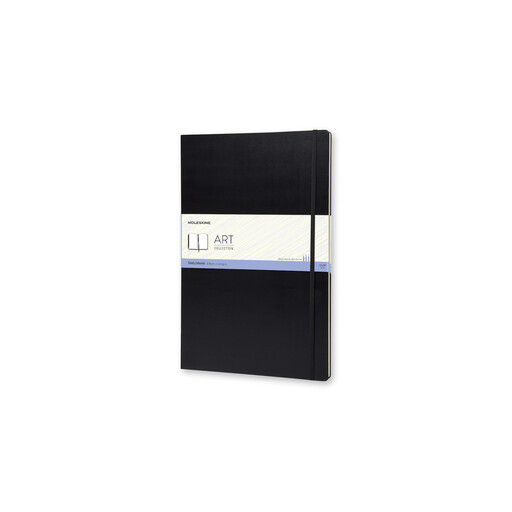
What Sets It Apart
The Moleskine A4 Art Sketchbook is a benchmark for demanding creatives. Its thick 165 g/m? paper provides a robust and smooth surface, perfect for a wide variety of media. Its clean, functional design, with a 180° lay-flat opening, makes it a straightforward and reliable tool. The Moleskine art name is a recognised seal of quality in the creative world.
Highlights
Who is it for?
For artists, illustrators, and students seeking a premium medium for their finished projects. Its sturdiness makes it equally at home in the studio or on the go.
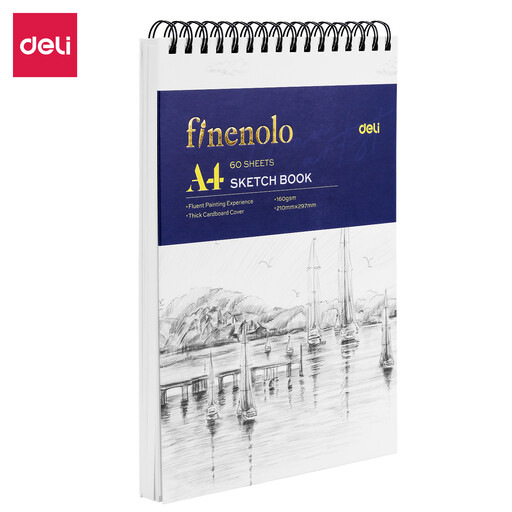
The Practical Advantage
This A4 sketchbook is all about practicality. Its top spiral binding allows pages to be folded back completely, which is particularly useful for working on an easel or in a tight space. Lightweight and functional, it's the ideal companion for visual note-taking and on-the-go sketching.
Highlights
Who is it for?
Ideal for students, designers, and amateur artists looking for an affordable and functional sketchbook for their daily exercises, preparatory sketches, and notes.
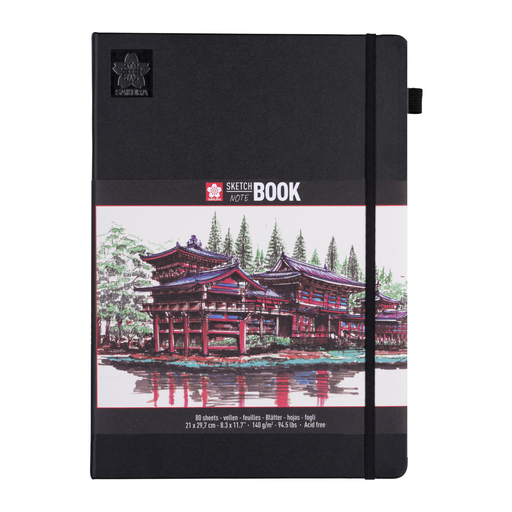
The Portable Studio
The Sakura sketchbook combines excellent paper with features designed for organised artists. Its cream-coloured 140 g/m? paper is a choice medium for ink and pencil. It stands out with its clever details, like the integrated pen holder and storage pocket, all protected by an illustrated hardcover.
Highlights
Who is it for?
For illustrators and creatives who work with fine-liners, felt-tip pens, and markers. The perfect choice for those who want a true portable drawing studio that is well-organised and durable.
Choosing a sketchbook is also a matter of feel: the grain of the paper under your fingers, the shade of a sheet, a specific format... If our selection doesn't check all your boxes, don't worry.
Feel free to explore a wider range to find the perfect gem that will elevate your style. Discover our complete collection of Paper Sketchbooks
It all depends on your preferred medium. For sketches in pencil or charcoal, a 90 to 120 g/m? paper will do the job. If you work with ink, markers, or light washes, opt for a thick drawing paper of at least 140 g/m? to prevent bleed-through. For very wet techniques like watercolour, you'll need to switch to a specialised paper of 300 g/m? (or more).
Yes, provided you choose a paper that is thick enough. A mixed-media sketchbook with a weight of 160 g/m? or more will handle light ink or watercolour washes without too much buckling. Our advice: always do a small test on a page at the back of the sketchbook. For heavily saturated washes, nothing beats real watercolour paper.
In common usage, the two terms are often interchangeable. Historically, the A4 sketchbook was used for drafts and quick ideas, often with thinner paper. The drawing book, however, was reserved for more finished works, with higher-quality paper. Today, this distinction has become increasingly blurred. Rely primarily on the technical specifications (paper weight, binding) rather than the name.