
Livraison le jour même ou le lendemain

Qualité garantie

Débloquez vos offres de bienvenue: Livraison GRATUITE | Jusqu'à -80 % | 30 jours d'essai gratuits à JoyPlus
Téléchargez l'application
A cluttered desk wastes time when you need to find a file, increases the risk of documents getting mixed up and leaves you with less room to work. But choosing office document storage isn’t simply a matter of picking the unit with the most drawers. Above all, its dimensions, usable capacity, mobility and level of protection should suit the way you work.
Whether you’re a professional, remote worker, student, teacher or simply organising your home, it’s worth avoiding a few common mistakes before you place your order.
A unit with lots of storage compartments can still be impractical if its drawers are too shallow for folders or A4 files. Always check the internal dimensions, not just the overall size of the unit. An A4 filing cabinet should hold documents without folding them or trapping them against the sides.
A deep pedestal or an oversized office cabinet can block a door, get in the way of your chair or make a power socket difficult to reach. In a small room, wall-mounted file storage, a vertical magazine rack or a desk organiser can free up your work surface.
Castors make a unit easier to move, but they don’t guarantee it will stay put. If you’re choosing a mobile office pedestal, look for a model with locking castors and a stable base. An anti-tip mechanism is a real bonus where available. Heavier documents should generally go in the lower compartments.
A4 measures 21 × 29.7 cm, but you’ll need a little extra room for wallets, binders and dividers. An office binder or thick document sorter may be larger than these dimensions. For letters and unpunched sheets, a multi-tier document organiser is often enough. If you use hanging files, check that the unit has rails compatible with the size you need.
You should also compare the stated capacity with the maximum load the unit can support. Some units give one limit per drawer and another for the whole structure. Stick to both limits to keep the unit stable and ensure the runners work properly.
Steel is well suited to heavy use and professional environments. MDF or chipboard panels often make for lighter units that are easier to fit into a living space. Powder-coated metal can generally be cleaned with a dry or slightly damp cloth. For wood and melamine-faced panels, avoid excess water and abrasive products.
Office supplies storage should also stop small items from falling out. Raised edges, non-slip feet and separate drawers are particularly useful for pens, staplers, paper clips and cables.
For bills, contracts and files containing personal information, a lockable filing cabinet provides extra protection against unauthorised access. However, it’s no substitute for a proper privacy policy or professional security measures.
Before attaching anything to a wall, identify the material — concrete, brick, plasterboard or metal — and choose compatible wall plugs. Distribute the load evenly. For magnetic models, the metal surface should be clean, flat and strong enough to support the unit.
The products below cater to a range of needs, from compact office storage and vertical filing to storing sensitive documents or choosing a mobile unit. The specifications shown are those provided in the product listings.

Why it suits this type of user : With seven compartments and a drawer, this model is ideal for a student, remote worker or anyone looking to organise everyday accessories without adding a bulky piece of furniture.
Its compact dimensions of 22 × 13 × 14 cm take up very little space, while the compartments stop small items from piling up in a single drawer.
Metal frame, seven compartments, built-in drawer and four non-slip EVA feet.
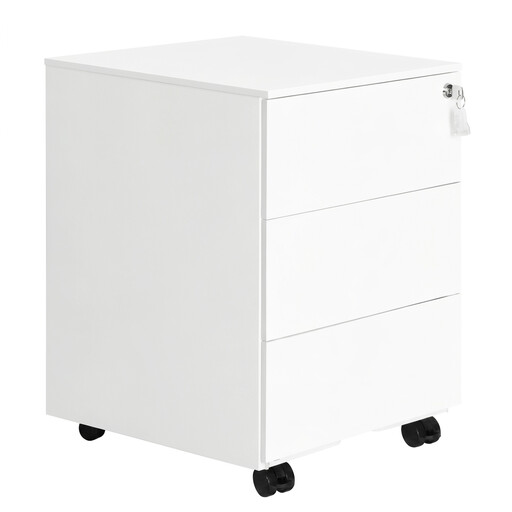
Why it suits this type of user : This steel pedestal fits easily into a professional or home office, particularly if you’re looking for a clean finish, quick access and enclosed storage.
The lock restricts direct access to documents, while the locking castors let you move the unit and then keep it firmly in place.
Three drawers, steel frame, stated load capacity of 15 kg per drawer and assembly limited to fitting the castors.
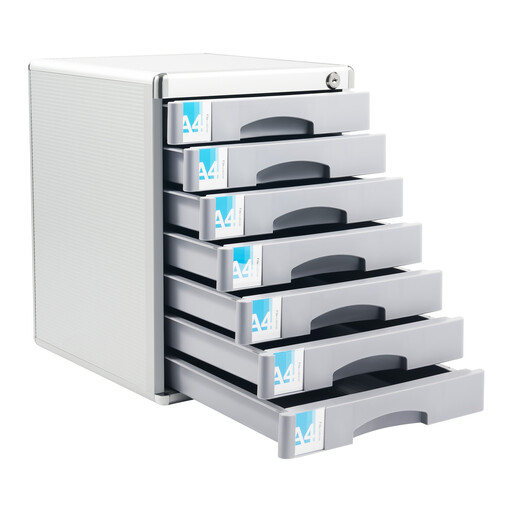
Why it suits this type of user : Public authorities, shops, schools and offices handling large volumes of files can organise them by drawer and identify them quickly using the labels.
The label windows save you from time-consuming searches, while the multi-level lock adds extra protection for stored files.
Seven drawers, compact dimensions of 30 × 36 × 40.5 cm, a lock with two keys and a stated load capacity of 3 kg per drawer.
We’ve put together a comprehensive selection, updated in real time, of products that meet these selection criteria as well as European safety requirements.
To keep your filing system clear, give each area a specific purpose: documents to action, current files, archives, stationery and post. A document sorter beside the printer can serve as a temporary holding area, while a closed unit can store files you consult less often.
A desk magazine rack or wall-mounted holder is ideal for documents you use regularly. For example, the magnetic wall display for ten A4 sheets can hold up to 20 pages when printed double-sided. Its polypropylene panels open up to 120 degrees. On a non-metallic surface, you can use screws instead, but these need to be purchased separately. Stick to the stated maximum capacity and distribute the sheets evenly to avoid putting strain on the holder.
For a few everyday documents, an office binder, vertical organiser or A4 filing cabinet will do the job nicely. If you need to store hanging files, choose a pedestal or cabinet with rails compatible with A4. Remember to check the maximum load for each compartment, too.
Start by identifying the wall material, then use suitable fixings. Check that the unit is level, tighten the screws without forcing them and increase the load gradually when you first test it. A magnetic holder can save you from drilling into a clean metal surface, but make sure its load capacity is within the manufacturer’s limits.
Its lifespan depends on the material, the load it carries, how often it’s opened and how well it’s maintained. Don’t overload it, clean it with a suitable product and regularly check the castors, brakes, screws and wall fixings. A stable unit used within its stated limits will generally remain functional for much longer than one that’s constantly overloaded.