
Livraison le jour même ou le lendemain

Qualité garantie

Débloquez vos offres de bienvenue: Livraison GRATUITE | Jusqu'à -80 % | 30 jours d'essai gratuits à JoyPlus
Téléchargez l'application
Choosing a new tumble dryer can quickly become a headache. Between promises of express drying, 'smart' features, and energy labels to decipher, it's easy to get lost. My role, as a product expert at Joybuy, is to cut through the noise for you. Let's break down the key points to watch out for to make the right choice, especially if you're eyeing a high-performance model like a 9kg Samsung heat pump tumble dryer.
Before you even start comparing models, it's crucial to know the pitfalls that can turn a good deal into a bitter regret.
To avoid these disappointments, it's best to focus on a few essential technical characteristics.
The main difference between tumble dryers lies in their technology. While standard condenser models use a very energy-intensive heating element, a heat pump tumble dryer operates in a closed loop, much like a refrigerator in reverse. It recovers and reuses hot air, allowing it to dry laundry at a much lower temperature.
A 9kg capacity is the standard for a family of 3 to 5 people. It's the perfect volume for drying a duvet, a mountain of towels, or the whole week's laundry in a single load. Also, consider day-to-day convenience:
Rather than an endless list of models, we've matched user profiles with appliances that meet specific needs, all while avoiding the pitfalls we've just discussed.
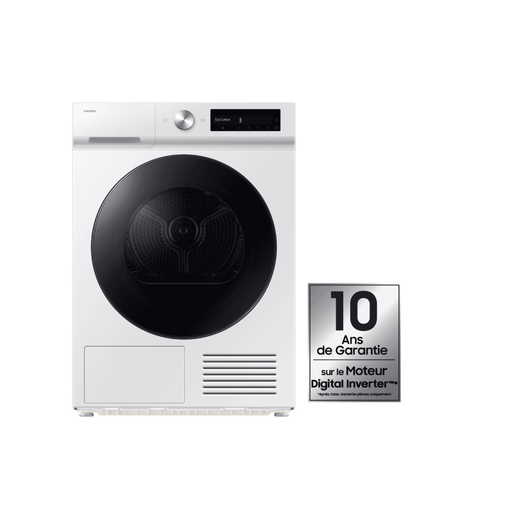
Why it's a match: This tumble dryer is designed for those who want top-tier performance and optimisation. Its 9kg capacity, excellent A+++ energy rating, and SmartThings connectivity make it the ideal partner for managing family laundry without skyrocketing your electricity bill.
Its Optimal Dry sensors and QuickDrive technology adjust the drying time to the actual load, putting an end to over-drying and over-consumption. The SmartThings connectivity offers true control (energy tracking, cycle suggestions), far more than just a simple end-of-programme notification.
The perfect combo: ultra-low consumption (A+++ Class), optimised speed, and smart features that genuinely simplify daily life.
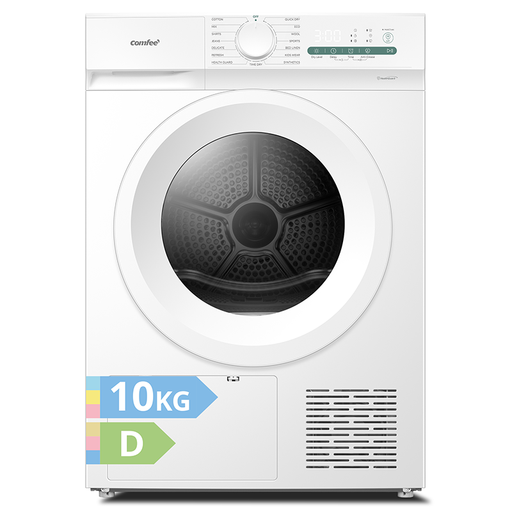
Why it's a match: With its extra-large 10kg capacity, this model is aimed at large families who run laundry non-stop. It makes heat pump technology accessible thanks to a very competitive price.
It bypasses the trap of exorbitant running costs. While its energy rating (D on the new label) isn't that of a premium model, its heat pump technology is still much more frugal than a standard condenser dryer. An excellent compromise for large laundry volumes.
An XXL capacity of 10kg to handle the whole tribe's laundry, while still benefiting from the energy savings of a heat pump.
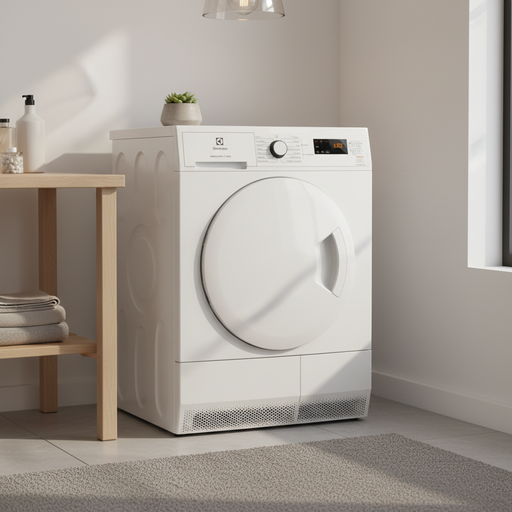
Why it's a match: This 8kg condenser model is a viable option for those who only use their tumble dryer occasionally and for whom the purchase price is the number one criterion.
This model is a perfect example of the long-term cost trap. Its E energy class will result in a much steeper electricity bill than a heat pump model. It's only suitable if its use remains very, very occasional.
An often lower purchase price and simple, proven technology. Its OptiSense sensors help limit over-drying, but they can't work miracles against the high consumption of condenser technology.
The lifespan of a heat pump tumble dryer is similar to that of a standard model, around 10 to 12 years. The key to its longevity? Regular maintenance. Remember to clean the door filter after each cycle and the condenser (usually located at the bottom of the appliance) every 5 to 10 uses, as recommended by the manufacturer.
It all depends on its technology. A high-performance heat pump model, like an A+++ rated (old label) 9kg Samsung tumble dryer, consumes about 194 kWh per year. In comparison, an old B-rated condenser model could exceed 600 kWh per year. Choosing a low-consumption tumble dryer therefore has a direct and massive impact on your bill.
No, installation is a breeze. Since it operates in a closed loop, there's no exhaust vent to drill to the outside. You just need to plug it into a standard grounded outlet. The only precaution is to place it in a well-ventilated room and leave some space around it, as indicated in the manual, to ensure good air circulation.