
Livraison le jour même ou le lendemain

Qualité garantie

Débloquez vos offres de bienvenue: Livraison GRATUITE | Jusqu'à -80 % | 30 jours d'essai gratuits à JoyPlus
Téléchargez l'application
Upgrading to LED lighting is a smart move to improve your visibility and safety on the road. The problem?is that the market for 9005 LED bulbs (also called HB3 bulbs) is a jungle of often misleading marketing promises. Our mission?is to help you navigate this overwhelming market, identify the criteria that truly matter, and sidestep the most common traps for a 100% successful purchase.
Before you take the plunge, watch out for these three classic mistakes that can be costly (and leave you stranded on the side of the road)?:
To make a truly informed choice, forget the marketing hype and focus on the three technical characteristics that make all the difference in performance and safety.
This is the number one criterion. A good car LED kit must, above all, perfectly replicate the beam pattern of the original halogen bulb. To achieve this, look for models with a "1:1" design, where the position and size of the LED chips are a carbon copy of the halogen filament.
This precision ensures that the light is projected exactly as it should be by your headlight's reflector. The result?? A perfectly crisp LED low beam with a sharp cut-off line that illuminates the road and shoulders without ever blinding oncoming drivers. A precise beam isn't just a matter of safety; it's essential for being road-legal.
The staggering 50,000-hour lifespan isn't a myth, but it comes with one condition?: flawless heat dissipation. Two main technologies compete?:
Demand high-quality materials (like aviation-grade aluminium) and, for a high-power bulb, ensure it is equipped with a high-performance fan.
Modern vehicles (most post-2005 models) are equipped with an electronic monitoring system called CANbus. Since an LED bulb consumes far less power than a halogen one, the onboard computer thinks there's a fault (a burnt-out bulb) and triggers an alert.
To avoid this headache, it is imperative to choose bulbs certified as "CANbus Ready" or "error-free CANbus". These integrate a circuit (a resistor or driver) that tricks the computer by simulating normal power consumption. This is the only way to guarantee seamless integration and a truly plug-and-play installation.
To help you see things more clearly, here are three models that perfectly illustrate these criteria, each meeting a specific need.
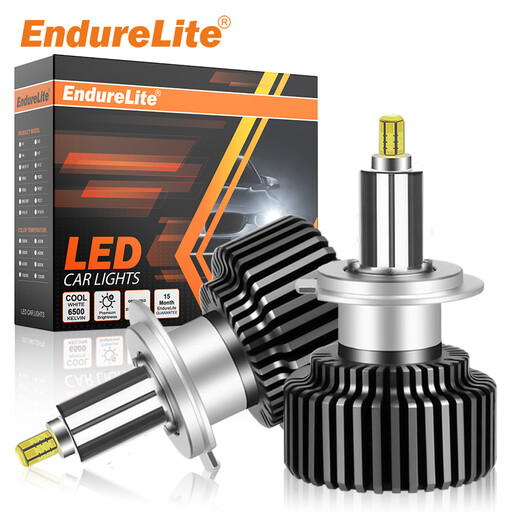
Why we chose it : The perfect model for those who want a significant visibility boost without the hassle. It checks all the boxes : an excellent balance of power, longevity, and installation simplicity for daily driving.
Its design, modelled after original bulbs, ensures a clean and precise beam pattern. Its integrated CANbus system is compatible with most vehicles, saving you from dashboard errors.
An unbeatable performance-to-price ratio, with a dead-simple installation and broad compatibility.
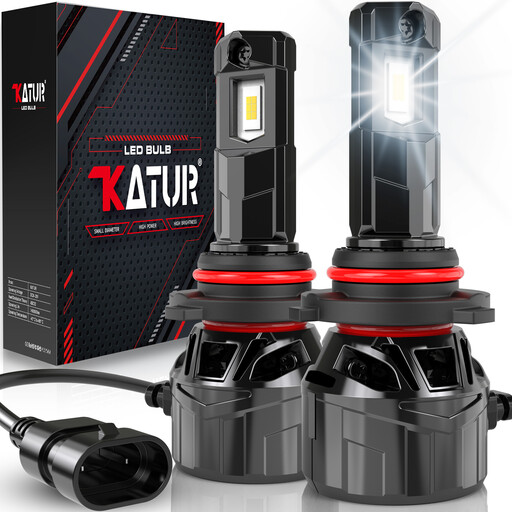
Why we chose it : For high-mileage drivers and those who navigate poorly lit country roads. Here, the goal is clear : maximum light output for very long-range visibility.
Its high power is managed by a state-of-the-art cooling system, combining a 16,000 RPM fan and copper heat pipes. The result : no risk of overheating or performance drops.
Raw lighting power and ultra-efficient cooling for maximum, long-lasting visibility.
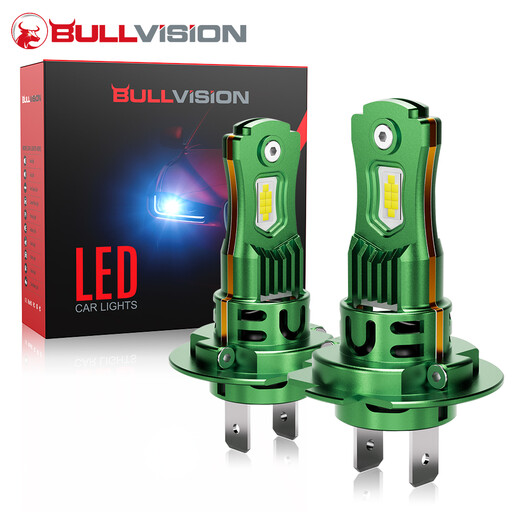
Why we chose it : The perfect option for those who want a "zero-headache" installation. The absolute priority is simplicity, thanks to a design that eliminates the need for adapters or modifications.
Its compact 1:1 design guarantees a perfect fit in the headlight housing, even in the tightest spaces. The integrated CANbus system is designed for maximum compatibility, drastically reducing the risk of errors.
A 1:1 design for an ultra-simple plug-and-play installation, with no adapter needed on most vehicles.
Discover our full selection of products that meet our demanding selection criteria and safety standards.
Let's be clear?: automotive lighting regulations are very strict. To be certified for on-road use, aftermarket bulbs must have a specific certification (like ECE in Europe). However, the majority of LED kits on the market do not have this certification. It is therefore your responsibility to check the current legislation in your region and, most importantly, to have the beam pattern professionally adjusted after installation to never dazzle other road users.
If your vehicle was manufactured after 2005, and especially if it's a European brand (like Peugeot, Renault, Volkswagen, BMW, Mercedes, etc.), it almost certainly uses a CANbus system. The tell-tale signs?: a "Check Headlight" error message on the dashboard, or flickering headlights after installation. Opting for a "CANbus Ready" model solves the problem at the source in most cases.
A color temperature of 6000K corresponds to a pure white light, very close to daylight. It provides striking contrast and remarkable clarity, which is highly valued for night driving. Be aware, however?: in foggy or heavy rain conditions, a slightly warmer light (around 4300K-5000K) may offer better penetration and generate less glare. Nevertheless, 6000K remains the best all-around compromise for versatile daily use.