
Livraison le jour même ou le lendemain

Qualité garantie

Débloquez vos offres de bienvenue: Livraison GRATUITE | Jusqu'à -80 % | 30 jours d'essai gratuits à JoyPlus
Téléchargez l'application
Are you thinking about replacing the halogen bulbs in your car, SUV, van, motorbike or quad with 9005 HB3 LED bulbs for headlights? This upgrade can simplify maintenance and change the colour temperature of your lighting, but not every model will suit every vehicle.
Before ordering a set of LED bulbs for your car, there are three pitfalls to avoid:
The designation 9005 generally corresponds to the HB3 format. However, you should not rely solely on the appearance of your original bulb. Instead, consult your vehicle’s manual, the label on the old bulb, or the manufacturer’s catalogue.
Also check the specific function involved:
An LED bulb does not automatically turn a halogen headlight into a road-legal unit for all purposes. In the UK, check the approval markings applicable to your vehicle and the intended use. After installation, adjusting the beam is essential to avoid dazzling other drivers. As for the term plug and play, it mainly means the connection uses the existing socket: it does not remove the need to check the result on the road.
1:1 format LED bulbs aim to replicate the position of the halogen source within the reflector. This geometry matters more than the brightness stated on the spec sheet. A chip that is too far away or poorly aligned can create dark spots or produce a scattered beam.
6000K white light offers a cool tint, popular for its daylight-like appearance. However, it does not guarantee greater range or better visibility in the rain. To compare two models, look at the beam shape, the chip position and the adjustment options for your headlight.
LED bulbs with a fan typically use an aluminium housing and an active cooling system. The product listing may mention the fan speed, the presence of a heat pipe, or an advertised lifespan of 50,000 to 60,000 hours. These figures describe the design and the conditions anticipated by the manufacturer; they do not represent a guaranteed lifespan in every vehicle.
An IP65 or IP68 rating indicates the level of dust and water resistance under defined conditions. It does not guarantee that the connector or headlight housing will remain perfectly sealed if the original dust cap is not refitted correctly. So check the space available behind the headlight unit, especially if the fan is built into the bulb.
Some cars monitor the electrical consumption of the bulbs. Replacing a halogen with a 9005 LED bulb can then trigger a dashboard message or cause flickering. Models advertised as CANbus compatible include a device designed to reduce this risk, but this compatibility is never universal.
European vehicles with sensitive electronics may require an additional adaptor. Before choosing, note down the make, model, year of manufacture and the function of the light. Keep your original bulbs so you can revert to the previous setup if needed.
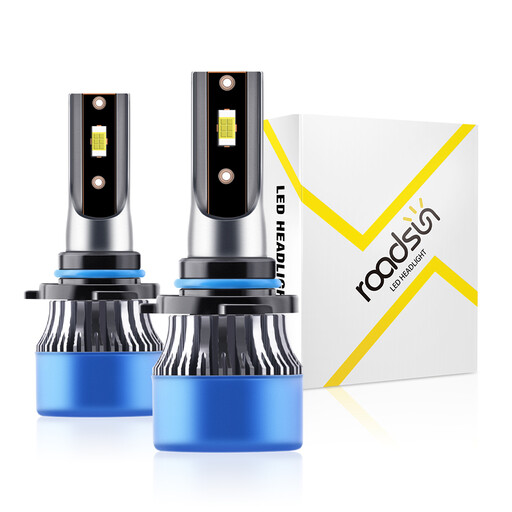
Why this choice suits this profile: its 1:1 format and plug-and-play connection make it ideal for a first installation on a vehicle with a 9005/HB3 socket.
The product listing states a 1:1 format, an integrated fan and IP68 protection: three things to check before being swayed by a simple brightness claim.
6000K colour temperature, active cooling, operation claimed from -40°C to 85°C and compatibility with cars, SUVs, trucks or leisure vehicles.
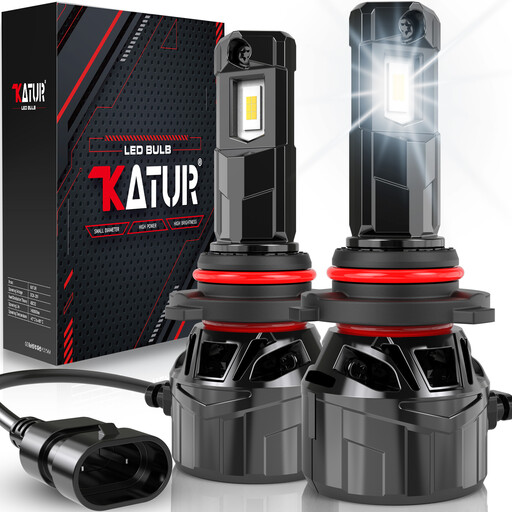
Why this choice suits this profile: this model targets drivers looking for a compact unit with enhanced cooling and integrated electronics.
The mini format and 1:1 design help avoid space issues behind the headlight, while the CANbus system is designed to reduce alerts on certain vehicles.
Pair advertised at 30,000 lumens, turbo fan at 16,000 rpm, copper heat pipes and electrical compatibility 9–32V according to the product listing.
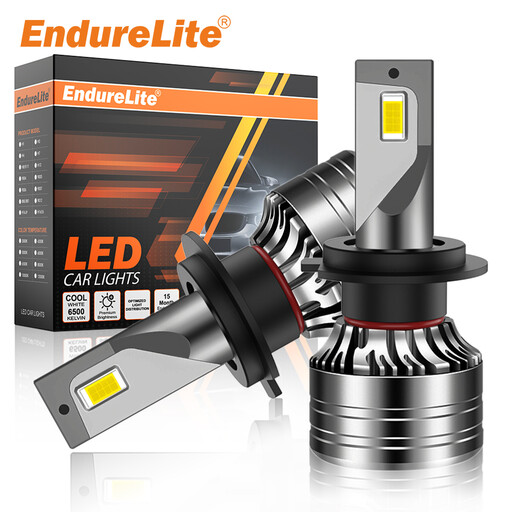
Why this choice suits this profile: its positioning as a driving light, fog light or headlight can suit vehicles used regularly on road, track or private land.
The listing mentions fan cooling, a 1:1 design and IP68 protection: three useful features for frequent use in varying conditions.
6000K light, pair advertised at 15,000 lumens, active cooling and an advertised lifespan of 50,000 hours.
We have put together a comprehensive, real-time selection of products that meet these demanding criteria, as well as European safety regulations.
A bulb may be advertised as compatible with 98 or 99% of vehicles without being suitable for your model. If in doubt, consult the technical specifications and check the return conditions before placing your order.
In most automotive catalogues, 9005 and HB3 refer to the same base format. However, you must still confirm the reference specified by the manufacturer: a simple visual resemblance is not enough.
They can be connected directly if the socket and available space match. However, some vehicles may require a CANbus decoder or electrical adaptation. After fitting, check for any faults and ensure the bulb is properly locked in place.
It depends on the actual wattage, the vehicle’s voltage and the electronic circuit. The stated lumen count does not allow you to calculate the power consumption or running cost directly. To compare models properly, check the wattage, the nominal voltage and the number of bulbs included in the kit.