
Same-day & Next-day Delivery

Quality Guaranteed

Unlock Your Welcome Offers: FREE Delivery | Up to 80% OFF | Free 30-day JoyPlus trial
Download the APP
In a household, a tumble dryer needs to handle towels, children’s clothes, bed linen and sometimes pet-hair-covered fabrics without sending electricity bills soaring. An 8 kg heat pump tumble dryer meets the needs of many households, but available models differ considerably in terms of energy consumption, noise levels and maintenance.
Before reaching for your bank card, it is worth separating genuinely verifiable features from marketing claims. Here are the key criteria to assess, followed by a selection of appliances suited to different needs.
An 8 kg drum is generally suitable for the everyday laundry of a couple or a medium-sized family. However, this capacity refers to the weight of dry laundry, not the drum’s apparent volume. A thick duvet or a stack of towels can quickly take up all the available space.
A 10 kg tumble dryer may be more practical for a large family or for combining several loads. However, it may consume more energy if cycles are regularly run with only a partial load. Capacity should therefore match your habits, rather than simply reflecting an attractive promotion.
The European energy label ranges from A to G. An appliance rated C or D may cost less to run than an older model, but a meaningful comparison should also consider the stated consumption in kWh, programme duration and frequency of use.
Heat pump technology recovers some of the heat generated during operation. Drying usually takes place at a lower temperature than with a conventional condenser dryer, which can help protect fibres more effectively. Nevertheless, consult the complete technical specifications instead of relying solely on the phrase “energy-efficient tumble dryer”.
UV light, a refresh programme or a two-layer filter can be useful. However, these features do not replace washing, regular filter cleaning or the precautions required for each type of fabric.
In a household with pets, focus above all on an easy-to-remove filter, a sufficiently large filtering surface and a programme specifically designed for pet hair. If you have sensitive skin, follow textile-care recommendations and avoid fragranced products if you react to them.
Both types of appliance collect moisture in a tank or through a drainage system, but they operate differently. A heat pump tumble dryer uses a closed-loop system and a more moderate drying temperature. It may therefore be better suited to delicate clothing, provided you follow the care symbols.
A conventional condenser model may have a lower purchase price, but its electricity consumption deserves careful scrutiny. In both cases, check whether a direct drainage hose can be connected, the water-tank capacity and how easily the filter can be accessed.
An appliance rated at 64 or 66 dB(A) will still be audible in a living area. If the tumble dryer is to be installed near a bedroom, look for a quiet programme, a delay-start function and good stability on the floor. Also remember to measure the available space: a standard appliance is often around 60 cm wide and 85 cm high, but its depth may exceed 60 cm.
Moisture sensors can shorten a cycle when the laundry is already dry. The number of programmes matters less than having modes suited to your needs: cotton, synthetics, wool, delicates, sportswear, refresh or bulky fabrics.
Different drying levels can also prevent cycles from running longer than necessary. For delicate garments, select a low temperature and always consult the care label.
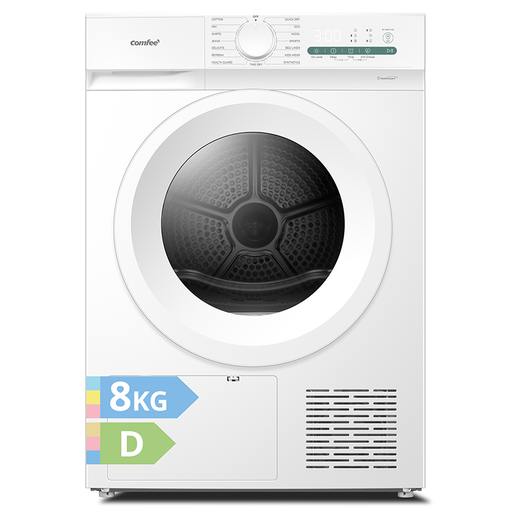
Why this model may suit you: its capacity covers everyday laundry, while the LED display and various drying levels focus on straightforward operation without unnecessary extras.
The product sheet specifies heat pump technology and an energy class of D: two details that should be compared with the consumption of other appliances.
8 kg capacity, three advertised drying levels, a refresh programme and a two-layer filter, according to the product sheet.
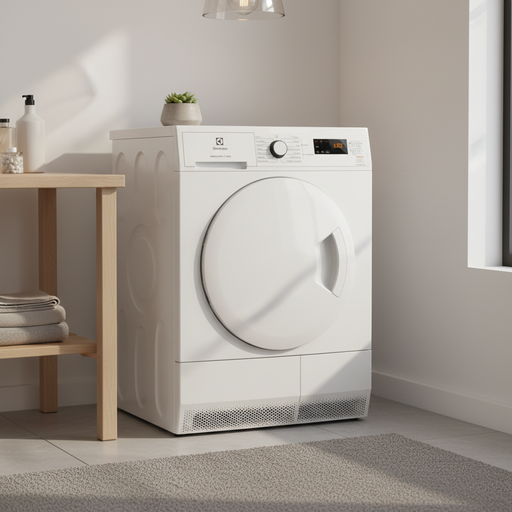
Why this model may suit you: OptiSense sensors adjust the cycle duration according to the detected moisture level. A practical approach that prevents the appliance from running longer than necessary.
The product sheet specifies energy class E, annual consumption of 235 kWh and a noise level of 66 dB(A): sufficiently concrete data for comparing models.
Reversible door, advertised propane refrigerant and a collection tank made from recycled materials, according to the manufacturer.
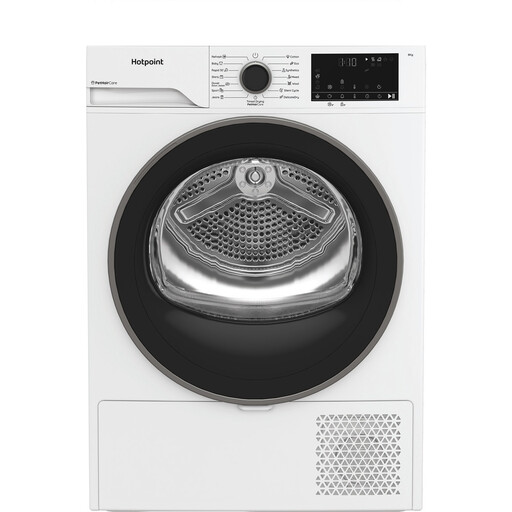
Why this model may suit you: the steam-based PetHairCare cycle and Easy Cleaning 2-in-1 filter are designed for households that regularly need to remove pet hair from clothing.
The pet-hair function is based on a clearly identified cycle and an accessible filter, rather than a broad promise without supporting details.
Class C, an advertised noise level of 64 dB, drum lighting, delay start and announced spare-parts availability for 15 years.
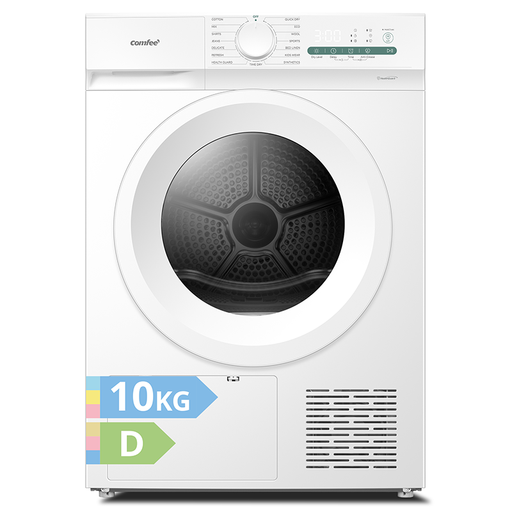
Why this model may suit you: its 10 kg drum is designed for large loads of laundry, sheets and towels. It also features heat pump technology and an LED display.
The large capacity addresses a practical need. However, it is still essential to check consumption and avoid routinely running half-empty cycles.
Advertised 10 kg capacity, class D, refresh and rapid-drying programmes, plus a UV function mentioned in the manufacturer’s specifications.
Tumble dryer sheets can reduce static electricity and leave a subtle fragrance on laundry. However, they are not suitable for every fabric and may leave residue on certain filters or technical textiles. Follow the recommendations in the tumble dryer manual and on the garment care label.
These products contain surfactants and fragrances. Keep them out of children’s reach, avoid contact with the eyes and do not use them on silk or textiles that are incompatible with tumble drying.
We have put together an up-to-date selection of products that meet these selection criteria and the safety requirements applicable in France and the European Union.
Yes, this capacity is generally suitable for a medium-sized family’s regular laundry. If you often dry bulky bed linen or run several loads back to back, a 10 kg model may reduce the number of cycles required.
It depends on the consumption in kWh shown on the label, your electricity tariff and the number of cycles you run. To estimate the cost, multiply the consumption of one cycle by your electricity rate, then by the number of cycles per month. The energy class alone is not enough to calculate the exact expense.
Clean the filter after every cycle, empty the water tank when necessary and remove dust from the areas specified in the manual. Avoid overloading the drum and separate heavy fabrics from delicate garments. Regular maintenance helps preserve airflow and drying performance.